STEM Education Trends 2026: Future Careers for US High Schoolers
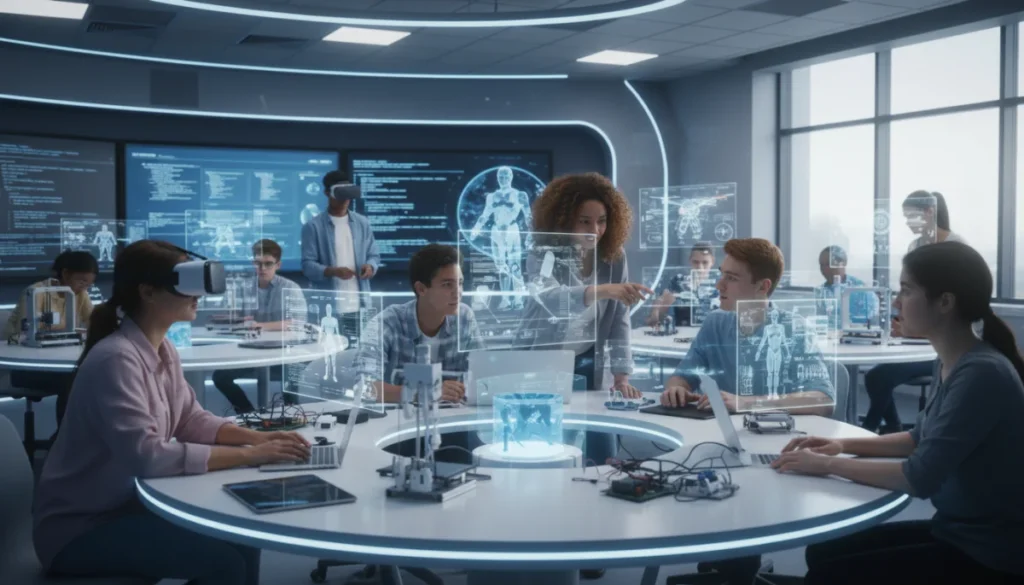
Understanding the evolving landscape of STEM Education Trends in 2026 is critical for US high schoolers to strategically prepare for the demands and opportunities of future careers.
Are you a US high schooler wondering what the future holds for your career? The world of science, technology, engineering, and mathematics (STEM) is transforming at an unprecedented pace. Keeping up with STEM Education Trends in 2026 isn’t just about getting good grades; it’s about equipping yourself with the skills and knowledge that will define the jobs of tomorrow.
The Rise of Artificial Intelligence and Machine Learning
Artificial intelligence (AI) and machine learning (ML) are no longer concepts from science fiction; they are fundamental drivers of innovation across nearly every industry. For high schoolers, understanding the basics of these technologies will be as crucial as understanding basic algebra once was. These fields offer a plethora of career paths, from developing intelligent systems to analyzing vast datasets to extract meaningful insights.
As AI continues to integrate into daily life, from personalized education platforms to advanced medical diagnostics, the demand for professionals who can design, implement, and manage these systems will skyrocket. This isn’t just about coding; it’s about critical thinking, problem-solving, and ethical considerations surrounding AI’s impact.
Foundational Skills for AI and ML
To thrive in an AI-driven world, specific foundational skills are becoming indispensable. These skills extend beyond mere programming, encompassing a broader understanding of data and logic.
- Data Literacy: Understanding how to collect, interpret, and utilize data effectively.
- Programming Proficiency: Strong command of languages like Python, R, and Java.
- Statistical Analysis: Grasping probability, statistics, and algorithmic thinking.
- Ethical AI Considerations: Developing an awareness of the societal implications and biases in AI.
Developing these competencies now will provide a significant advantage. High schoolers should seek out opportunities to engage with data science projects, coding clubs, or online courses that introduce AI concepts. The ability to work with complex data sets and apply computational thinking to real-world problems will be highly valued by employers.
The continuous evolution of AI and ML means that learning must be an ongoing process. High schoolers who cultivate a curiosity for these fields and commit to lifelong learning will be best positioned to lead the next wave of technological advancement. The impact of AI and ML is pervasive, touching everything from entertainment to environmental science, creating diverse and exciting career avenues.
Immersive Technologies: VR, AR, and the Metaverse
Virtual Reality (VR), Augmented Reality (AR), and the nascent Metaverse are rapidly moving from niche applications to mainstream platforms. These immersive technologies are set to revolutionize how we interact, learn, work, and entertain ourselves. High schoolers entering the workforce in 2026 will find themselves in a landscape where these technologies are integral to many professional roles.
Consider the applications: VR for surgical training, AR for architectural design visualization, or the Metaverse for remote collaboration and digital commerce. The creative and technical skills required to build and maintain these virtual worlds are in extremely high demand, offering exciting pathways for those with an interest in design, programming, and user experience.
Career Paths in Immersive Tech
The development of immersive technologies opens up a wide array of specialized roles, many of which are just beginning to be defined. These roles require a blend of technical expertise and creative vision.
- VR/AR Developer: Creating virtual environments and augmented experiences.
- 3D Modeler/Animator: Designing assets and characters for virtual worlds.
- UI/UX Designer: Ensuring intuitive and engaging user interfaces within immersive spaces.
- Simulation Engineer: Building realistic training and testing environments.
Beyond direct development, there’s a growing need for professionals who can integrate these technologies into existing industries. For instance, educators using VR for interactive lessons or marketers creating AR campaigns. High school students interested in these areas should explore game design, 3D printing, and graphic design courses. Engaging with platforms like Unity or Unreal Engine can provide invaluable hands-on experience.
The potential of immersive technologies is still largely untapped, making it a fertile ground for innovation and career growth. Those who can envision and build the future of digital interaction will find themselves at the forefront of this exciting trend. Preparing for these roles means embracing interdisciplinary learning, combining technical skills with creative problem-solving.
Biotechnology and Personalized Medicine
The fields of biotechnology and personalized medicine are experiencing a renaissance, driven by advancements in genomics, bioinformatics, and gene editing. These areas promise groundbreaking solutions to health challenges, from curing diseases to extending human longevity. For high schoolers with a passion for biology, chemistry, and health sciences, these trends represent a future brimming with purpose and discovery.
Personalized medicine, in particular, focuses on tailoring medical treatment to each individual’s unique genetic makeup, environment, and lifestyle. This approach is transforming healthcare, moving away from a one-size-fits-all model. The complexity of these fields requires a strong foundation in scientific principles and an aptitude for analytical thinking.
Key Areas of Growth in Biotech
The rapid pace of innovation in biotechnology is creating new specializations and expanding existing ones. These areas require a deep understanding of biological systems and often involve advanced computational tools.
- Genomic Sequencing: Analyzing DNA to understand genetic predispositions and diseases.
- CRISPR Technology: Gene editing for therapeutic purposes and agricultural improvements.
- Bioinformatics: Using computational tools to manage and interpret biological data.
- Drug Discovery and Development: Creating new medications tailored to individual needs.
High schoolers can prepare by excelling in science classes, particularly biology and chemistry, and by engaging in science fairs or research projects. Understanding data analysis and basic coding can also be highly beneficial, as bioinformatics plays an increasingly central role. Volunteering in hospital labs or participating in summer science programs can provide valuable exposure to real-world applications.
The ethical implications of these advancements are also a critical component of the field, requiring professionals with strong moral reasoning and a commitment to responsible innovation. The intersection of science, ethics, and technology makes biotechnology a dynamic and profoundly impactful career choice for the next generation.
Cybersecurity: Protecting Our Digital Future
As our lives become increasingly digitized, the importance of cybersecurity has never been greater. From protecting personal data to safeguarding national infrastructure, cybersecurity professionals are the unsung heroes of the digital age. This field is experiencing explosive growth, offering stable and high-demand careers for those with an analytical mind and a keen interest in problem-solving.
Cyber threats are constantly evolving, requiring professionals who are adaptable, continuously learning, and proactive in their approach. This isn’t just about preventing hacks; it’s about understanding complex systems, anticipating vulnerabilities, and developing resilient defenses. High schoolers considering this path will find a challenging yet incredibly rewarding career.
Essential Cybersecurity Skills
A career in cybersecurity demands a robust set of technical and soft skills. These skills are crucial for identifying threats, implementing security measures, and responding to incidents effectively.
- Network Security: Understanding network protocols and vulnerabilities.
- Operating Systems: Proficiency in Linux, Windows, and macOS security.
- Programming: Knowledge of languages like Python, C++, and Java for scripting and analysis.
- Problem-Solving: The ability to analyze complex issues and devise effective solutions.
High schoolers can begin by exploring computer science courses, joining cybersecurity clubs, or participating in Capture The Flag (CTF) competitions. Learning about ethical hacking and digital forensics can also provide valuable practical experience. Many online resources and certifications are available to help build foundational knowledge and skills in this critical area.
The demand for skilled cybersecurity professionals far outstrips the supply, making it an excellent field for job security and career growth. Those who are naturally curious about how systems work and enjoy the challenge of outsmarting adversaries will find great satisfaction in protecting our digital future. This field continuously evolves, requiring a commitment to ongoing education and adaptation to new threats.
Sustainable Engineering and Green Technology
With increasing global awareness of climate change and environmental sustainability, the demand for sustainable engineering and green technology solutions is surging. This trend encompasses a broad range of disciplines, from renewable energy development to eco-friendly infrastructure design and sustainable manufacturing processes. High schoolers passionate about making a positive impact on the planet will find numerous fulfilling career paths here.
Sustainable engineering focuses on designing and implementing solutions that meet current needs without compromising the ability of future generations to meet their own needs. This involves innovative approaches to energy production, resource management, waste reduction, and urban planning. It’s a field that requires creativity, technical prowess, and a strong commitment to environmental stewardship.
Opportunities in Green Tech
The green technology sector is diverse, offering roles that combine traditional engineering principles with environmental science and policy. These careers are at the forefront of addressing some of the world’s most pressing challenges.
- Renewable Energy Engineer: Designing and optimizing solar, wind, and geothermal systems.
- Environmental Engineer: Developing solutions for pollution control and waste management.
- Sustainable Urban Planner: Creating eco-friendly and resilient cities.
- Materials Scientist: Innovating new sustainable materials and recycling processes.
High schoolers can prepare by focusing on physics, chemistry, and environmental science courses. Participation in environmental clubs, community sustainability projects, or engineering design challenges can provide practical experience and demonstrate commitment. Exploring topics like energy efficiency, sustainable agriculture, and climate science will also be beneficial.
The growth in this sector is not just driven by environmental concerns but also by economic opportunities and technological advancements. Professionals in sustainable engineering and green technology will play a crucial role in building a more resilient and environmentally responsible future. This field offers a chance to combine technical skills with a powerful sense of purpose.
Quantum Computing: The Next Frontier
Quantum computing, once a theoretical concept, is rapidly advancing towards practical applications. While still in its early stages, it holds the promise of solving problems currently intractable for even the most powerful classical computers. From drug discovery and materials science to cryptography and financial modeling, quantum computing is poised to revolutionize numerous industries. For high schoolers with exceptional mathematical and scientific aptitude, this represents a cutting-edge field with immense potential.
Understanding quantum mechanics is fundamental to this area, which requires a deep dive into physics and advanced mathematics. While widespread commercial applications are still some years away, the foundational research and development are happening now, creating opportunities for those who are prepared to tackle complex, abstract challenges.
Pathways to Quantum Careers
Entering the field of quantum computing requires a highly specialized academic background, but initial steps can be taken during high school. These early explorations can set the stage for advanced studies.
- Theoretical Physics: A strong understanding of quantum mechanics and advanced physics.
- Advanced Mathematics: Proficiency in linear algebra, calculus, and discrete mathematics.
- Computer Science: Basic programming skills and algorithmic thinking.
- Problem Solving: The ability to think abstractly and tackle complex, novel problems.
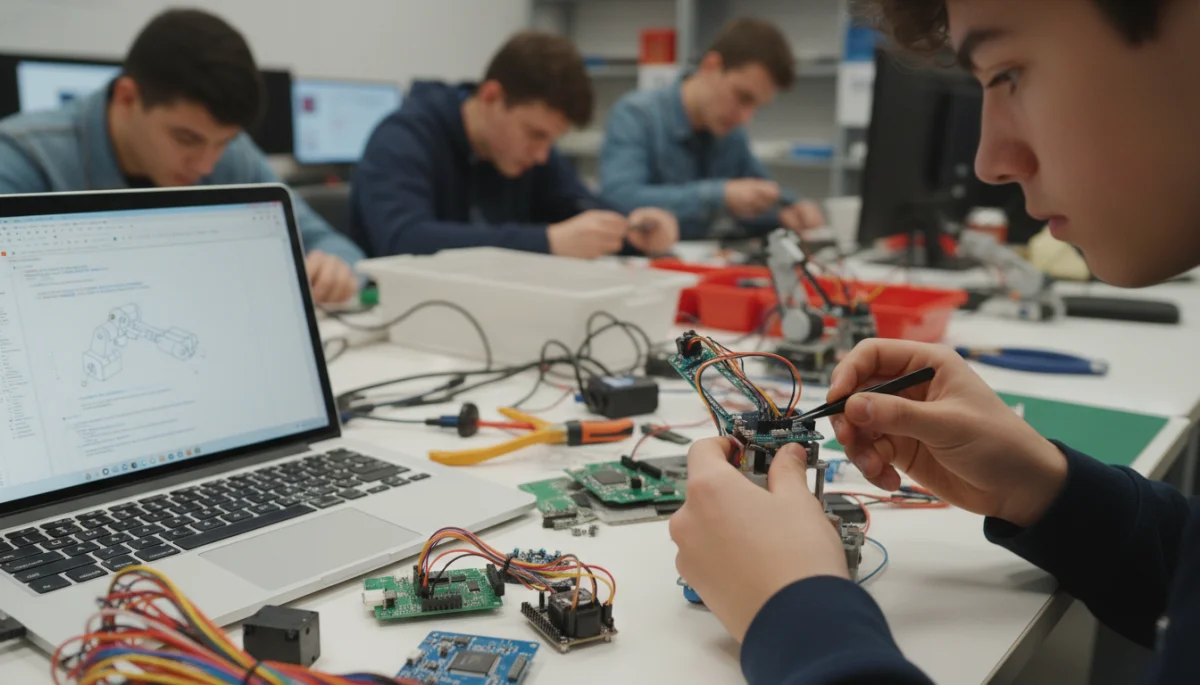
High school students interested in quantum computing should focus on excelling in advanced math and physics courses. Exploring introductory quantum mechanics concepts through online courses or specialized summer programs can also be beneficial. Engaging with computational thinking challenges and developing strong analytical skills will be crucial for navigating this complex field.
The quantum computing landscape is evolving rapidly, and those who enter it will be at the forefront of a technological revolution. While it demands rigorous intellectual effort, the potential for groundbreaking discoveries and transformative applications makes it an incredibly exciting and impactful career path for the brightest young minds. This frontier of computing offers unparalleled opportunities for innovation.
Interdisciplinary Skills and Lifelong Learning
Beyond specific technological trends, one overarching theme for all future STEM careers is the increasing importance of interdisciplinary skills and a commitment to lifelong learning. The problems of 2026 and beyond are rarely confined to a single discipline; they require integrated solutions that draw from diverse areas of knowledge. High schoolers who cultivate adaptability and intellectual curiosity will be best equipped to navigate this dynamic future.
The ability to collaborate across different fields, communicate complex ideas clearly, and critically evaluate new information will be as valuable as any technical skill. The pace of technological change means that what is cutting-edge today may be obsolete tomorrow, making continuous learning a necessity rather than an option. Embracing this mindset early is key to sustained success.
Cultivating Future-Ready Attributes
Developing a broad set of skills that transcend specific technical domains will make high schoolers more adaptable and resilient in their future careers. These attributes are highly sought after in virtually all STEM fields.
- Critical Thinking: Analyzing information objectively and forming reasoned judgments.
- Problem-Solving: Identifying issues, developing strategies, and implementing solutions effectively.
- Communication: Clearly articulating ideas, both verbally and in writing, to diverse audiences.
- Collaboration: Working effectively in teams and across different disciplines.
- Adaptability: Embracing new technologies and learning new skills continuously.
High schoolers should seek out projects that require them to integrate knowledge from multiple subjects, participate in team-based challenges, and practice presenting their ideas. Developing strong research skills and an inquisitive mindset will also be invaluable. Engaging with diverse perspectives and learning to synthesize information from various sources prepares students for the complex, interconnected challenges of the future.
Ultimately, the most successful professionals in 2026 will be those who view learning not as a finite process but as an ongoing journey. By fostering a growth mindset and embracing the interconnectedness of knowledge, US high schoolers can confidently step into a future filled with innovation and opportunity, regardless of the specific STEM path they choose.
| Key Trend | Future Impact |
|---|---|
| AI & Machine Learning | Drives innovation across all sectors; creates demand for data scientists and AI developers. |
| Immersive Technologies | Transforms interaction, learning, and work; needs VR/AR developers and 3D artists. |
| Biotechnology & Personalized Medicine | Revolutionizes healthcare; high demand for bioinformaticians and genetic engineers. |
| Cybersecurity | Essential for digital protection; offers stable careers in network security and forensics. |
Frequently Asked Questions About STEM Careers
The most in-demand STEM skills for 2026 include data literacy, AI/ML proficiency, cybersecurity expertise, and critical thinking. Strong programming abilities, particularly in Python, along with soft skills like collaboration and adaptability, are also crucial for success in evolving fields.
High schoolers can prepare by excelling in math and science courses, participating in coding clubs or science fairs, and exploring online resources or summer programs related to emerging technologies like AI or immersive tech. Developing strong problem-solving and critical thinking skills is also essential.
While a four-year degree remains valuable, the emphasis is shifting towards demonstrated skills and continuous learning. Certifications, bootcamps, and practical project experience are increasingly recognized. Some entry-level STEM roles may not require a traditional degree if candidates possess the right technical competencies and a strong portfolio.
Ethics plays a critical role in all future STEM careers, especially with advancements in AI, biotechnology, and data privacy. Professionals must consider the societal impact of their work, ensure fairness in algorithms, and maintain responsible innovation. Ethical considerations are becoming an integral part of STEM education and practice.
Fields like cybersecurity, sustainable engineering, and AI/machine learning are projected to offer significant job security due to ongoing demand and the critical nature of their work. Healthcare STEM roles, particularly in personalized medicine and bioinformatics, also show robust growth and stability as technology transforms medical practices.
Conclusion
The landscape of STEM careers in 2026 will be defined by rapid technological advancement, increased interdisciplinary collaboration, and a constant need for adaptability. For US high schoolers, understanding these STEM Education Trends is not merely academic; it’s a strategic imperative for shaping a successful and impactful future. By focusing on foundational skills in areas like AI, immersive technologies, biotechnology, cybersecurity, and sustainable engineering, coupled with a commitment to lifelong learning and critical thinking, the next generation can confidently navigate the evolving job market. The opportunities are vast and exciting, waiting for those prepared to embrace innovation and contribute to solving the world’s most pressing challenges.
