Protect Investments: Interest Rate Hikes & 0.5% Shift
Understanding new interest rate hikes is essential for protecting personal investments, as even a 0.5% shift can significantly impact portfolios, necessitating proactive financial adjustments.
In today’s dynamic economic landscape, understanding the new interest rate hikes is more critical than ever. Even a seemingly small 0.5% shift can have far-reaching implications for your financial well-being and investment portfolio. This article will guide you through the intricacies of rising interest rates, helping you identify potential risks and implement effective strategies to safeguard your hard-earned assets.
The mechanics of interest rate hikes
Interest rate hikes are a fundamental tool used by central banks, like the Federal Reserve in the United States, to manage the economy. When inflation rises, central banks often increase interest rates to cool down economic activity by making borrowing more expensive. This, in turn, can reduce consumer spending and business investment, eventually leading to a slowdown in price increases. Understanding this mechanism is the first step in comprehending its impact on your investments.
A 0.5% increase, while appearing modest, can trigger a cascade of effects across various financial sectors. It influences everything from mortgage rates and credit card APRs to the returns on savings accounts and the valuation of stocks and bonds. This ripple effect means that investors need to be acutely aware of how these changes translate into real-world financial shifts.
Why central banks raise rates
Central banks primarily raise rates to combat inflation, which erodes purchasing power. By making money more expensive to borrow, they aim to reduce the money supply and slow down an overheating economy. This delicate balancing act is crucial for long-term economic stability.
- Controlling inflation: High inflation can devalue savings and reduce economic stability.
- Stimulating savings: Higher rates can encourage people to save more, reducing consumption.
- Managing economic growth: Prevents the economy from growing too quickly, which can lead to unsustainable bubbles.
The decision to raise rates is not taken lightly; it involves careful consideration of various economic indicators, including employment data, GDP growth, and consumer price indices. These decisions aim to foster sustainable economic growth without allowing inflation to spiral out of control. Therefore, staying informed about economic news and central bank announcements is paramount for any savvy investor.
Impact on fixed-income investments
Fixed-income investments, such as bonds, are particularly sensitive to interest rate fluctuations. When interest rates rise, newly issued bonds typically offer higher yields, making older bonds with lower yields less attractive. This decreased demand for older bonds causes their market value to fall. Consequently, investors holding existing bonds may see a depreciation in their capital, even if they plan to hold them to maturity.
The duration of a bond plays a significant role in its sensitivity to interest rate changes. Bonds with longer maturities are generally more susceptible to price swings than those with shorter maturities. This is because their cash flows are spread out over a longer period, making the present value calculation more sensitive to changes in the discount rate. Investors who rely heavily on fixed-income assets must therefore carefully assess their portfolio’s duration risk.
Understanding bond price movements
The inverse relationship between bond prices and interest rates is a cornerstone of fixed-income investing. When rates go up, bond prices go down, and vice versa. This is because the fixed coupon payments of an older bond become less appealing compared to the higher yields offered by new bonds.
- New bonds vs. old bonds: New issues offer higher yields, reducing the appeal of existing bonds.
- Duration risk: Longer-duration bonds are more sensitive to interest rate changes.
- Reinvestment risk: When bonds mature, reinvesting at higher rates can be beneficial, but interim price declines can be a concern.
To mitigate this risk, some investors opt for a laddering strategy, where they diversify their bond holdings across different maturities. This approach ensures that a portion of their portfolio matures regularly, allowing them to reinvest at prevailing interest rates and potentially benefit from rising yields. Active management of a bond portfolio becomes crucial during periods of rising interest rates.
Effects on equity markets
Rising interest rates also have a significant impact on equity markets, though the relationship can be more complex than with fixed-income investments. Higher interest rates increase the cost of borrowing for companies, which can reduce their profitability and slow down expansion plans. This often translates into lower earnings expectations and, consequently, lower stock valuations.
Growth stocks, in particular, tend to be more vulnerable to rising interest rates. These companies often rely on debt to fund their rapid expansion, and their future earnings are discounted more heavily in present value calculations when interest rates are higher. Conversely, value stocks or dividend-paying stocks might perform relatively better, as their current earnings and dividends become more attractive compared to fixed-income alternatives.
Sector-specific impacts
Different sectors of the stock market react differently to interest rate hikes. For instance, financial institutions like banks often benefit from higher rates because they can charge more for loans, increasing their net interest margins. However, sectors that are highly dependent on consumer spending or large capital investments, such as housing and automotive, may face headwinds.
- Technology and growth stocks: Often negatively impacted due to reliance on future earnings and debt financing.
- Financial sector: Can benefit from higher lending rates and increased profit margins.
- Utilities and consumer staples: Tend to be more stable, offering defensive plays during economic uncertainty.
Investors should review their equity portfolios for sector concentration and consider rebalancing to sectors that are historically more resilient or even beneficiaries of rising rates. Diversification across various industries and market capitalizations can help cushion the impact of these shifts. Understanding these nuances is key to protecting your personal investments.
Real estate and interest rate adjustments
The real estate market is another area where interest rate hikes have a profound and direct impact. Higher interest rates translate into higher mortgage costs, which can significantly reduce housing affordability for prospective buyers. This can lead to a slowdown in housing demand, potentially causing property values to stagnate or even decline in some markets.
For homeowners with adjustable-rate mortgages (ARMs), a 0.5% rate hike can mean an immediate increase in their monthly payments. This can strain household budgets and lead to increased financial stress. Even those with fixed-rate mortgages are indirectly affected, as the broader slowdown in the housing market can impact their property’s equity growth.
Mortgage implications
The cost of borrowing for a home is directly tied to prevailing interest rates. A rise in these rates means that the same loan amount will cost more over its lifetime, potentially disqualifying some buyers or forcing others to settle for smaller homes. This cooling effect on demand can be significant.
- Increased mortgage payments: ARMs see immediate payment increases.
- Reduced affordability: Higher rates make homeownership less accessible.
- Impact on property values: Slower demand can lead to price stagnation or declines.
Investors in real estate, whether directly through property ownership or indirectly through real estate investment trusts (REITs), need to consider the sensitivity of their holdings to interest rate changes. REITs, for example, can be affected by both rising borrowing costs for their properties and changes in investor sentiment towards income-generating assets. A thorough analysis of debt levels and cash flow is essential for real estate investors during such periods.
Strategies to protect personal investments
Protecting your personal investments during a period of rising interest rates requires a proactive and well-thought-out strategy. The goal is not just to avoid losses but also to position your portfolio to potentially benefit from the new economic environment. Diversification, asset allocation, and liquidity management are crucial components of this defensive strategy.
One effective strategy is to re-evaluate your asset allocation. Consider shifting some funds from interest-rate-sensitive assets, like long-duration bonds, into those that are more resilient or even thrive in a rising rate environment. This might include short-term bonds, dividend-paying stocks, or certain commodities. It’s also a good time to ensure your emergency fund is robust, providing a buffer against unexpected financial shocks.
Diversification and rebalancing
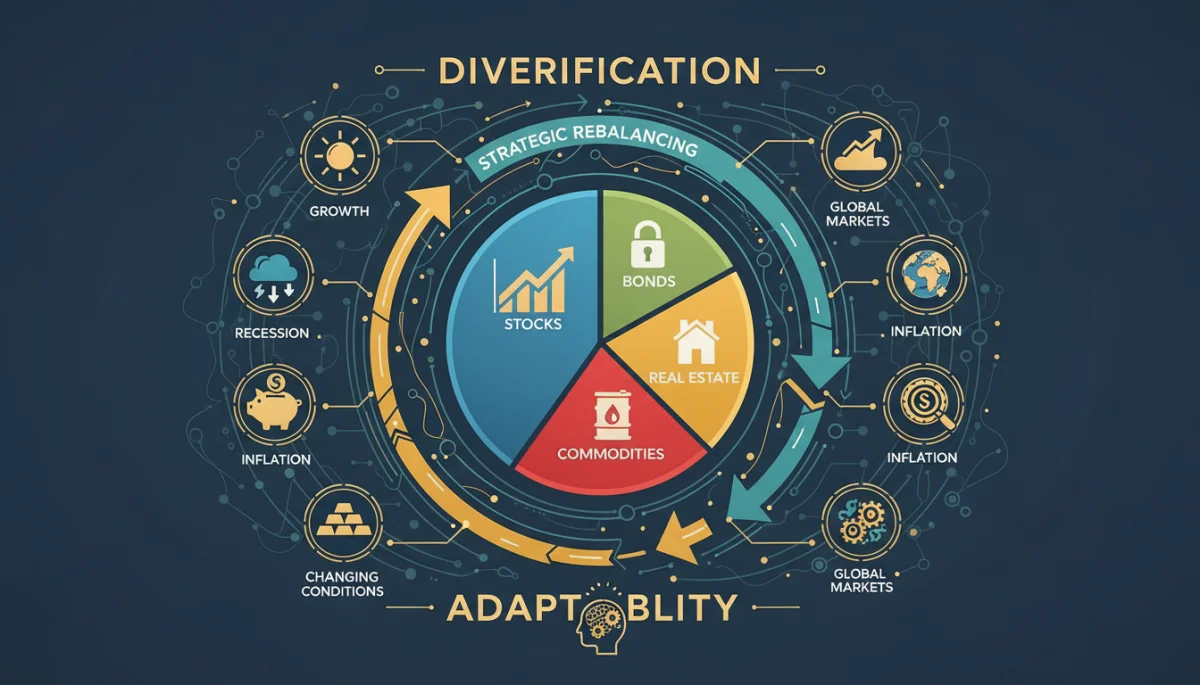
Diversification remains a cornerstone of prudent investing. Spreading your investments across different asset classes, sectors, and geographies can help mitigate risk. When interest rates rise, some asset classes may underperform, while others may hold steady or even gain. Regular rebalancing ensures your portfolio stays aligned with your risk tolerance and financial goals.
- Short-term bonds: Less sensitive to rate hikes than long-term bonds.
- Value stocks: Often perform better than growth stocks in rising rate environments.
- Inflation-protected securities (TIPS): Designed to protect against inflation.
- Commodities: Can act as a hedge against inflation.
Consider consulting a financial advisor to help you tailor a diversification and rebalancing strategy that fits your individual circumstances. They can provide personalized advice on how to adjust your portfolio to minimize the negative impacts of rising rates and capitalize on new opportunities. Being proactive rather than reactive is key.
Long-term financial planning in a rising rate environment
Beyond immediate adjustments, rising interest rates necessitate a review of your long-term financial plan. This includes re-evaluating your retirement savings, debt management strategies, and overall financial goals. A 0.5% shift can alter the trajectory of your financial future, making thoughtful planning essential.
For those with significant debt, especially variable-rate loans, prioritizing debt reduction can be a wise move. Paying down high-interest debt frees up cash flow and reduces your exposure to further rate increases. On the savings front, higher rates can be a boon for savers, offering better returns on cash and certificates of deposit (CDs). Integrating these considerations into your long-term plan will help ensure financial resilience.
Debt management and savings optimization
Effective debt management is crucial when interest rates are on the rise. High-interest credit card debt and variable-rate loans can become significantly more expensive, eating into your disposable income. Conversely, optimizing your savings can help you take advantage of higher yields.
- Prioritize high-interest debt: Focus on paying off credit cards and personal loans first.
- Refinance fixed-rate debt: If rates are still relatively low, consider locking in a fixed rate for mortgages or student loans.
- Maximize high-yield savings: Take advantage of better returns on savings accounts and CDs.
Regularly reviewing your budget and financial goals will allow you to adapt to changing economic conditions. Financial planning is not a one-time event; it’s an ongoing process that requires continuous attention and adjustment. By taking a holistic view of your finances, you can navigate interest rate hikes with greater confidence and protect your personal investments effectively.
| Key Point | Brief Description |
|---|---|
| Bond Market Impact | Rising rates typically decrease existing bond values due to lower comparative yields. |
| Equity Market Volatility | Higher borrowing costs can reduce corporate profits, affecting stock valuations, especially growth stocks. |
| Real Estate Sensitivity | Increased mortgage rates reduce affordability and can slow housing market demand. |
| Strategic Adjustments | Diversify, rebalance portfolios, and manage debt to mitigate risks and capitalize on opportunities. |
Frequently asked questions about interest rate hikes
Generally, rising interest rates are good news for savers. Banks tend to offer higher annual percentage yields (APYs) on savings accounts, money market accounts, and Certificates of Deposit (CDs). This means your money earns more interest, helping to offset inflation’s impact on your purchasing power over time.
If you have a variable-rate mortgage, paying it off faster can reduce your exposure to increasing monthly payments. For fixed-rate mortgages, the decision depends on your overall financial goals and other investment opportunities. Consider the interest rate on your mortgage versus potential returns from other investments.
No, not all stocks are negatively impacted. While growth stocks can suffer, certain sectors like financials (banks) often benefit from higher lending rates. Defensive stocks in sectors like utilities and consumer staples may also show resilience due to their stable earnings and dividend payouts, offering relative safety.
An inverted yield curve occurs when short-term bond yields are higher than long-term bond yields. This is often seen as a reliable indicator of an impending economic recession. It signals that investors expect future interest rates to fall, suggesting a slowdown or contraction in economic activity.
The frequency of interest rate changes depends on economic conditions and central bank policy. In periods of high inflation or rapid economic shifts, rates might change more frequently, sometimes at every policy meeting. During stable periods, changes are less common, often remaining steady for extended durations.
Conclusion
Navigating the complexities of new interest rate hikes, particularly a 0.5% shift, demands informed decision-making and strategic adjustments to your personal investments. By understanding the mechanics of these changes and their specific impacts on fixed-income, equity, and real estate markets, you can better prepare your portfolio. Proactive diversification, smart debt management, and continuous financial planning are not just defensive measures; they are opportunities to adapt and potentially strengthen your financial position in an evolving economic climate. Staying vigilant and seeking expert advice will be your greatest assets in protecting your wealth.
