HSAs in 2026: Maximize Tax Benefits for Medical Expenses
Health Savings Accounts (HSAs) in 2026 present a triple tax advantage, allowing tax-deductible contributions, tax-free growth, and tax-free withdrawals for qualified medical expenses, making them a powerful tool for financial planning and healthcare cost management.
Navigating healthcare costs can often feel like a complex maze, but understanding tools like Health Savings Accounts (HSAs) in 2026: Maximizing Tax Benefits for Medical Expenses can transform that challenge into an opportunity for significant financial relief. These accounts offer a unique blend of tax advantages and flexibility, making them an indispensable component of a savvy personal finance strategy. Are you leveraging your HSA to its fullest potential?
Understanding the Core of HSAs in 2026
Health Savings Accounts have become a cornerstone for individuals and families seeking to manage healthcare costs while simultaneously building tax-advantaged savings. In 2026, the fundamental structure and benefits of HSAs remain largely consistent, continuing to offer a powerful incentive for those enrolled in high-deductible health plans (HDHPs). These accounts are not merely spending vehicles; they are long-term investment tools designed to cover future medical expenses.
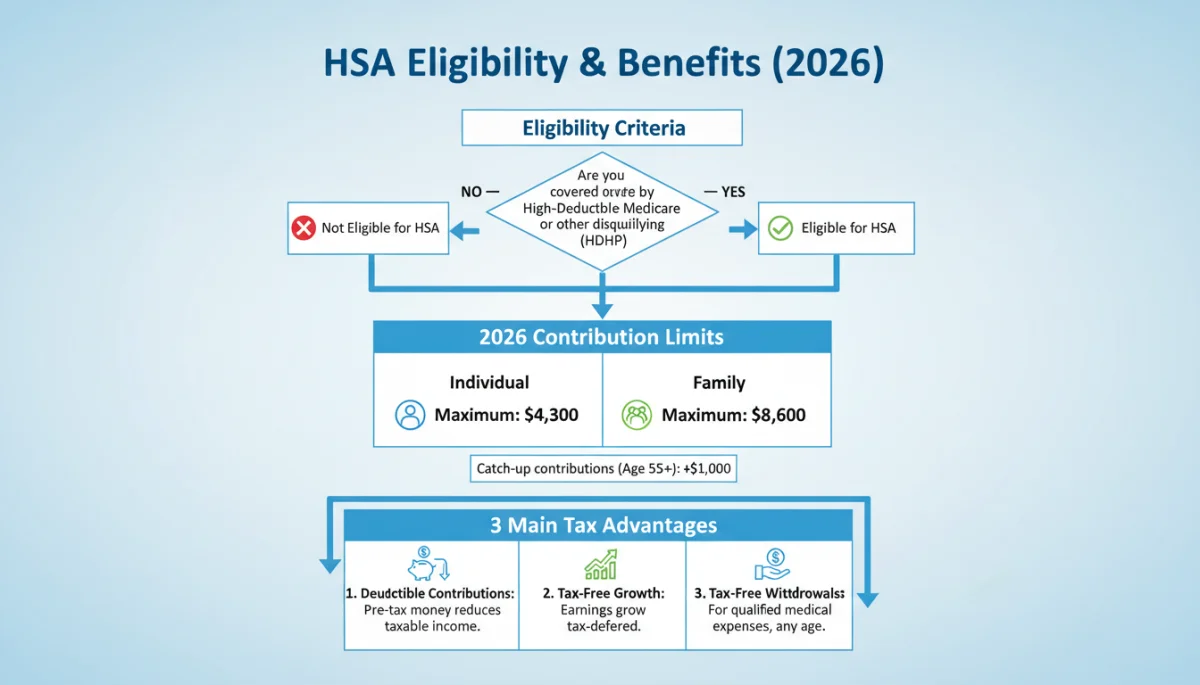
The core appeal of an HSA lies in its unparalleled tax advantages. Contributions are tax-deductible, reducing your taxable income in the year they are made. The funds in the account grow tax-free, much like a 401(k) or IRA, and withdrawals for qualified medical expenses are also entirely tax-free. This ‘triple tax advantage’ makes HSAs one of the most tax-efficient savings vehicles available in the United States.
Eligibility Requirements for 2026
To be eligible to contribute to an HSA in 2026, you must be covered by an HDHP, have no other health coverage (with some exceptions), not be enrolled in Medicare, and not be claimed as a dependent on someone else’s tax return. The IRS defines HDHPs annually, specifying minimum deductibles and maximum out-of-pocket expenses. It’s crucial to verify your health plan meets these criteria to ensure your eligibility.
- High-Deductible Health Plan (HDHP) Enrollment: This is the primary requirement. Your health insurance must meet the IRS’s definition of an HDHP for the year 2026.
- No Other Health Coverage: Generally, you cannot have other health coverage, such as a spouse’s non-HDHP plan, Medicare, or TRICARE.
- Not a Dependent: You cannot be claimed as a dependent on another individual’s tax return.
- Not Enrolled in Medicare: Once you enroll in Medicare, you are no longer eligible to make new HSA contributions.
Understanding these eligibility rules is the first step toward unlocking the significant financial benefits an HSA offers. Misunderstanding these criteria can lead to penalties, so it’s always wise to consult with a tax professional or your health plan administrator.
In essence, HSAs in 2026 maintain their status as a critical financial tool for healthcare planning. By adhering to eligibility requirements and understanding the fundamental tax benefits, individuals can effectively leverage these accounts to reduce their tax burden and secure their medical future.
2026 Contribution Limits and Catch-Up Contributions
The IRS sets specific limits on how much individuals and families can contribute to an HSA each year, and these figures are typically adjusted for inflation. For 2026, it’s essential to be aware of these updated limits to maximize your savings without exceeding the allowed thresholds. Contributions can be made by you, your employer, or even a third party on your behalf, though all contributions count towards your annual limit.
Exceeding the contribution limits can result in a 6% excise tax on the excess amount, so careful tracking of contributions is paramount. Many HSA providers offer tools and resources to help account holders monitor their contributions and stay within the IRS guidelines. Employers often manage contributions directly from payroll, which simplifies the process for many.
Individual and Family Contribution Limits
For 2026, the IRS has announced the following contribution limits for HSAs:
- Self-Only Coverage: Individuals with self-only HDHP coverage can contribute up to a certain amount (e.g., $4,150, though this figure is illustrative and subject to official IRS announcement for 2026).
- Family Coverage: Those with family HDHP coverage can contribute a higher amount (e.g., $8,300, again, illustrative and subject to official IRS announcement for 2026).
These limits are crucial for financial planning, allowing you to strategically allocate funds to your HSA to take full advantage of the tax benefits. Remember, these are maximums, and you can contribute any amount up to these limits.
Catch-Up Contributions for Those 55 and Older
Recognizing that healthcare costs often increase with age, the IRS permits individuals aged 55 and older to make additional ‘catch-up’ contributions to their HSAs. This provision allows older account holders to further bolster their healthcare savings as they approach retirement.
- Additional Catch-Up Amount: Individuals aged 55 and over can contribute an extra $1,000 per year (this figure is generally stable but always check official IRS guidance). This catch-up contribution applies to each eligible spouse, provided they have their own HSA.
This catch-up provision offers a significant advantage for those nearing retirement, enabling them to accumulate a larger tax-free nest egg specifically for medical expenses, which can be substantial in later life. It underscores the long-term benefit of HSAs as a retirement planning tool.
Staying informed about the specific contribution limits for 2026, including catch-up contributions, is vital for maximizing the financial efficacy of your HSA. These limits are not just arbitrary numbers; they are key to optimizing your tax savings and securing your healthcare future.
The Triple Tax Advantage: Unpacking the Benefits
The allure of an HSA lies primarily in its unique ‘triple tax advantage,’ a combination of tax benefits that sets it apart from many other savings vehicles. This powerful triad—tax-deductible contributions, tax-free growth, and tax-free withdrawals for qualified medical expenses—makes HSAs an exceptionally efficient tool for managing healthcare costs and building wealth.
Understanding each component of this advantage is key to appreciating the full scope of what an HSA can offer. It’s not just about saving money; it’s about strategically optimizing your financial resources to address one of life’s most significant recurring expenses: healthcare.
Tax-Deductible Contributions
When you contribute to an HSA, those contributions are tax-deductible. This means the amount you contribute is subtracted from your gross income, lowering your taxable income for the year. This immediate tax benefit can result in significant savings on your annual tax bill.
For example, if you contribute the maximum amount to your HSA, that entire amount reduces your adjusted gross income (AGI), potentially placing you in a lower tax bracket or reducing your overall tax liability. This upfront tax break is a powerful incentive for consistent contributions.
Tax-Free Growth and Earnings
One of the most attractive features of an HSA is that the funds within the account grow tax-free. This means any interest, dividends, or capital gains earned on your HSA investments are not subject to taxes as long as they remain in the account. This allows your savings to compound more rapidly over time.
Many HSA providers offer investment options, allowing you to invest your unused funds in mutual funds, stocks, or other assets. This long-term growth potential transforms your HSA from a mere savings account into a robust investment vehicle, particularly beneficial for those planning for retirement healthcare costs.
Tax-Free Withdrawals for Qualified Medical Expenses
Perhaps the most celebrated aspect of the HSA is that withdrawals used for qualified medical expenses are entirely tax-free. This includes a wide range of expenses, from doctor visits and prescription medications to dental care, vision care, and even certain long-term care services.
- Qualified Medical Expenses: This category is broad and includes deductibles, co-payments, prescriptions, dental care, vision care, and many other services and products outlined by IRS Publication 502.
- No Time Limit for Reimbursement: You can pay for medical expenses out-of-pocket and reimburse yourself from your HSA years later, as long as the expense was incurred after your HSA was established. This allows your investments to grow longer.
This triple tax advantage makes HSAs an incredibly versatile and powerful tool for both short-term healthcare budgeting and long-term financial planning. Maximizing these benefits requires a clear understanding of the rules and strategic planning.
In summary, the triple tax advantage of HSAs in 2026 offers a compelling reason to utilize these accounts. By leveraging tax-deductible contributions, tax-free growth, and tax-free withdrawals, individuals can significantly reduce their healthcare burden and enhance their financial well-being.
Strategic Use of HSAs: Beyond Just Spending
While HSAs are designed to cover current medical expenses, their true power lies in their potential as a long-term savings and investment vehicle. Many financial experts advocate for treating an HSA as a supplemental retirement account, especially for healthcare costs, rather than just a checking account for immediate medical bills. This strategic approach allows you to maximize the triple tax advantage over decades.
The key to this strategy is to pay for current medical expenses out-of-pocket, if financially feasible, and allow your HSA funds to grow untouched. This approach capitalizes on the tax-free growth, potentially leading to a substantial sum available for medical expenses in retirement, when healthcare costs are often highest.
Investing HSA Funds for Growth
One of the most underutilized aspects of HSAs is their investment capability. Once your account reaches a certain threshold (often a few hundred dollars, depending on the provider), you can typically invest your HSA funds in a variety of options, similar to a brokerage account.
- Diversified Investment Options: Many HSA providers offer a range of investment choices, including mutual funds, exchange-traded funds (ETFs), and even individual stocks.
- Long-Term Compounding: By investing your HSA funds, you allow the balance to grow through the power of compound interest, all tax-free. This growth can be significant over many years.
Choosing appropriate investments depends on your risk tolerance and time horizon. For younger individuals, a more aggressive investment strategy might be suitable, while those closer to retirement might opt for more conservative options. The goal is to grow your principal while maintaining liquidity for potential future medical needs.
Saving Receipts for Future Reimbursement
A lesser-known but highly effective strategy is to save all your medical expense receipts and defer reimbursement from your HSA for years, or even decades. The IRS does not impose a time limit on when you must reimburse yourself for qualified medical expenses, as long as the expense was incurred after your HSA was established.
This means you can pay for a $20 co-pay today with your regular checking account, save the receipt, and then, 20 years later, withdraw $20 (plus potentially more, if you’ve accumulated enough receipts) from your HSA tax-free. This allows your HSA investments to grow for a longer period, maximizing the tax-free growth component.
By adopting a strategic approach to your HSA, viewing it as a powerful savings and investment tool rather than just a spending account, you can unlock its full potential. This involves making conscious decisions to invest funds, pay out-of-pocket when possible, and meticulously save receipts for future tax-free reimbursements, ultimately bolstering your financial security for years to come.
Navigating Qualified Medical Expenses in 2026
Understanding what constitutes a ‘qualified medical expense’ is fundamental to maximizing the tax benefits of your HSA. The IRS provides clear guidelines, and staying informed about these rules for 2026 will ensure your withdrawals remain tax-free. Using HSA funds for non-qualified expenses can lead to penalties and taxes, so precision is key.
The definition of qualified medical expenses is broad, encompassing a wide array of services, products, and treatments that are primarily for the diagnosis, cure, mitigation, treatment, or prevention of disease, or for the purpose of affecting any structure or function of the body. This includes not only traditional medical care but also many less obvious health-related costs.
Examples of Qualified Expenses
The list of qualified medical expenses is extensive, as detailed in IRS Publication 502. Some common examples include:
- Doctor Visits and Hospital Stays: Co-pays, deductibles, and out-of-pocket costs for physician visits, specialist consultations, and inpatient or outpatient hospital services.
- Prescription Medications: Costs for prescribed drugs and insulin.
- Dental and Vision Care: Expenses for dental check-ups, cleanings, braces, eyeglasses, contact lenses, and eye surgeries.
- Over-the-Counter (OTC) Medications: Since the CARES Act, many OTC medications no longer require a prescription to be HSA-eligible.
- Medical Equipment: Crutches, wheelchairs, blood sugar testing kits, and other necessary medical devices.
- Acupuncture and Chiropractic Care: If for medical treatment, these are generally covered.
It’s important to keep receipts and documentation for all expenses for which you use HSA funds. In case of an audit, you’ll need to prove that withdrawals were for qualified medical expenses to avoid taxes and penalties.
Non-Qualified Expenses to Avoid
While the list of qualified expenses is broad, there are many health-related costs that are explicitly not covered by HSAs. Using your HSA for these items will result in the withdrawal being treated as taxable income, plus a 20% penalty if you are under age 65.
- Cosmetic Procedures: Generally, procedures solely for aesthetic improvement are not covered unless medically necessary.
- General Health Items: Toothpaste, toiletries, vitamins (unless prescribed for a specific medical condition).
- Health Club Memberships: Unless prescribed by a doctor for a specific medical condition.
- Insurance Premiums: Generally, health insurance premiums are not qualified, with a few exceptions like long-term care insurance, COBRA premiums, and Medicare Part A or B premiums for those 65 and older.
Carefully reviewing IRS Publication 502 or consulting with a tax professional is highly recommended to ensure all your HSA withdrawals are for qualified medical expenses. This diligence protects your tax advantages and prevents unnecessary penalties.
By meticulously understanding and adhering to the guidelines for qualified medical expenses in 2026, you can confidently utilize your HSA funds. This knowledge ensures you maximize the tax-free benefit while avoiding any potential pitfalls or penalties associated with improper use.
HSAs in Retirement: A Powerful Long-Term Strategy
Beyond covering immediate medical needs, HSAs shine as a powerful retirement planning tool, particularly for healthcare expenses. The ability to carry over unused funds year after year, combined with the triple tax advantage, positions HSAs as an invaluable asset for your golden years. As you approach retirement, healthcare costs often become a more significant concern, and an HSA can provide substantial financial relief.
The funds in your HSA never expire, meaning they can accumulate and grow tax-free for decades. This makes them an excellent complement to traditional retirement accounts like 401(k)s and IRAs, specifically earmarked for one of the largest expenses retirees face.
Funding Healthcare in Retirement
Healthcare costs in retirement can be substantial, often ranking among the top expenses for older adults. An HSA provides a dedicated, tax-advantaged fund to address these costs.
- Medicare Premiums: Once you enroll in Medicare at age 65, your HSA can be used to pay for Medicare Part A, B, D, and Medicare Advantage plan premiums, tax-free. This is a significant benefit, as these premiums can be a considerable burden.
- Long-Term Care Premiums: You can also use HSA funds to pay for qualified long-term care insurance premiums, up to certain age-based limits.
- Out-of-Pocket Costs: Deductibles, co-pays, and other out-of-pocket expenses not covered by Medicare can also be paid tax-free from your HSA.
The flexibility to use HSA funds for such a wide range of retirement healthcare costs makes it an indispensable tool for financial security in later life. It offers a cushion against unexpected medical bills and helps manage predictable ones.
The Age 65 Advantage: HSA as a Retirement Account
Once you reach age 65, the rules for HSA withdrawals become even more flexible. While withdrawals for non-qualified medical expenses are normally subject to a 20% penalty (in addition to being taxed as ordinary income) if you’re under 65, this penalty disappears once you turn 65.
After age 65, funds withdrawn from your HSA for non-qualified expenses are only subject to ordinary income tax, similar to a traditional IRA or 401(k) withdrawal. This makes your HSA function like an additional retirement account, providing a source of tax-deferred income that can be used for any purpose, not just medical expenses, after you’ve covered your healthcare needs.
Therefore, maximizing your HSA contributions throughout your working life, investing the funds, and letting them grow tax-free can create a significant financial resource for your retirement. This strategic foresight ensures you are well-prepared for the healthcare costs that lie ahead, offering peace of mind and financial stability in your later years.
Choosing the Right HSA Provider and Managing Your Account
Selecting the appropriate HSA provider is a crucial step in maximizing the benefits of your Health Savings Account. Not all providers are created equal, and their offerings can vary significantly in terms of fees, investment options, customer service, and user-friendliness. Making an informed choice ensures that your HSA works optimally for your financial goals in 2026 and beyond.
Beyond selection, effective management of your HSA account is vital. This involves regular monitoring of your balance, tracking contributions and withdrawals, and understanding the investment performance of your funds. Proactive management ensures you stay within IRS guidelines and continue to benefit fully from the account’s advantages.
Factors to Consider When Choosing a Provider
When evaluating HSA providers, several key factors should influence your decision:
- Fees: Look for providers with low or no monthly maintenance fees, transaction fees, or investment fees. High fees can erode your earnings over time.
- Investment Options: If you plan to invest your HSA funds, assess the range and quality of investment choices offered. A diverse selection of low-cost funds is ideal.
- User Experience: A user-friendly online portal and mobile app can simplify managing your account, tracking expenses, and making investments.
- Customer Service: Accessible and knowledgeable customer support can be invaluable when you have questions or encounter issues.
- FDIC Insurance: Ensure that the cash portion of your HSA is FDIC-insured, protecting your funds up to legal limits.
Some employers partner with specific HSA providers, but you often have the flexibility to choose your own. Researching and comparing options is well worth the effort to find a provider that aligns with your financial strategy.
Tips for Effective HSA Management
Once you’ve chosen a provider, effective management practices will ensure you get the most out of your HSA:
- Automate Contributions: Set up automatic contributions from your paycheck or bank account to ensure consistent funding and reach your annual limits.
- Track Expenses Meticulously: Keep detailed records and receipts for all qualified medical expenses, even those you pay out-of-pocket, for potential future tax-free reimbursement.
- Review Investment Performance: Regularly check the performance of your HSA investments and rebalance your portfolio as needed, just as you would with other retirement accounts.
- Understand Distribution Rules: Be clear on what constitutes a qualified medical expense and the implications of non-qualified withdrawals to avoid penalties.
By carefully selecting your HSA provider and employing diligent management strategies, you can optimize your Health Savings Account to its fullest potential. This proactive approach ensures you maximize tax benefits, grow your savings efficiently, and confidently manage your healthcare finances in 2026 and beyond.
| Key Aspect | Brief Description |
|---|---|
| Eligibility | Must be enrolled in a High-Deductible Health Plan (HDHP) and meet other IRS criteria. |
| Triple Tax Advantage | Tax-deductible contributions, tax-free growth, and tax-free withdrawals for qualified medical expenses. |
| Investment Potential | Funds can be invested for long-term, tax-free growth, acting as a retirement healthcare fund. |
| Retirement Benefits | After 65, withdrawals for non-medical expenses are taxed only as ordinary income, no penalty. |
Frequently Asked Questions About HSAs in 2026
For 2026, the IRS typically adjusts limits for inflation. While exact figures are usually announced late in the preceding year, they generally increase. For illustrative purposes, self-only coverage might be around $4,150, and family coverage around $8,300, plus an additional $1,000 catch-up contribution for those 55 and older.
No, once you enroll in Medicare (including Part A, even if premium-free), you are no longer eligible to contribute to an HSA. However, you can still use existing HSA funds tax-free for qualified medical expenses, including Medicare premiums, after enrollment.
If you use HSA funds for non-qualified expenses before age 65, the withdrawal is subject to ordinary income tax and a 20% penalty. After age 65, the 20% penalty is waived, but the withdrawal is still taxed as ordinary income, similar to a traditional IRA.
Yes, employers can contribute to employee HSAs. These contributions are not considered taxable income to the employee and count towards the annual IRS contribution limit. Employer contributions are a great way to boost your HSA savings and maximize tax benefits.
HSAs generally offer more flexibility than FSAs. HSA funds roll over year to year and are portable, meaning they stay with you even if you change jobs. FSA funds typically have a ‘use-it-or-lose-it’ rule, though some allow limited rollovers or grace periods.
Conclusion
Health Savings Accounts (HSAs) in 2026: Maximizing Tax Benefits for Medical Expenses remain an indispensable tool for personal finance, offering a unique blend of tax advantages and long-term savings potential. By understanding eligibility, adhering to contribution limits, and strategically utilizing the triple tax benefits, individuals can effectively manage current healthcare costs while building a robust financial reserve for the future. Whether used for immediate medical needs or as a powerful retirement savings vehicle, an HSA provides unparalleled flexibility and tax efficiency, empowering you to take proactive control of your health and financial well-being.
