Gift Tax Exclusions 2026: Your Personal Finance Guide
The 2026 gift tax exclusions are crucial for individuals planning personal financial transfers, offering opportunities to strategically manage wealth and minimize tax liabilities through annual and lifetime exemptions.
Understanding the intricacies of gift tax exclusions for 2026: what you need to know for personal financial transfers is paramount for anyone looking to manage their wealth effectively. As we approach 2026, staying informed about these tax provisions can significantly impact your financial planning and legacy goals.
Understanding the Basics of Gift Tax
The gift tax is a federal tax on the transfer of property by one individual to another while receiving nothing, or less than full value, in return. It applies whether the donor intends the transfer to be a gift or not. While it might sound daunting, the IRS provides various exclusions and exemptions that allow individuals to make substantial gifts without incurring tax liabilities or even needing to file a gift tax return.
These provisions are designed to enable individuals to share their wealth with family and friends, support charitable causes, or even assist with significant expenses like education or medical care, all while navigating the tax code efficiently. It’s a critical component of comprehensive estate planning.
What Triggers a Gift Tax?
A gift tax is generally triggered when a transfer of property or money exceeds the annual exclusion amount for a given year. It’s important to differentiate between gifts that are taxable and those that are not. Many common transfers, such as paying for someone’s medical expenses directly to the provider, are not considered taxable gifts.
- Direct transfers: Giving cash or property directly to an individual.
- Indirect transfers: Payments made on behalf of another person, such as mortgage payments or car loans.
- Transfers for less than full value: Selling an asset to a family member for significantly less than its market value.
Understanding these triggers is the first step in effective gift tax planning, ensuring that your generosity doesn’t lead to unexpected tax burdens.
Who Pays the Gift Tax?
In most scenarios, the donor – the person making the gift – is responsible for paying the gift tax. The recipient of the gift typically does not owe income tax on the value of the gift received. However, there are rare circumstances where the recipient might agree to pay the gift tax, but this must be explicitly arranged and reported to the IRS.
This distinction is crucial for both parties involved in a financial transfer. Donors should always be aware of their potential tax liability, and recipients can generally rest assured that they won’t be taxed on the gifts they receive.
Annual Gift Tax Exclusion for 2026
The annual gift tax exclusion is arguably the most fundamental and widely utilized tool in gift tax planning. This exclusion allows individuals to gift a certain amount of money or property to as many people as they wish each year without incurring gift tax or affecting their lifetime exclusion amount. For 2026, this amount is projected to reflect inflation adjustments.
This exclusion is critical for individuals who wish to gradually transfer wealth over time, reducing the size of their taxable estate. It’s a powerful strategy for estate planning that can be leveraged year after year to benefit multiple recipients.
Projected Exclusion Amount for 2026
While the definitive figure for the 2026 annual gift tax exclusion will be officially announced later, it is generally adjusted for inflation. Based on current trends and projections, financial experts anticipate a slight increase from previous years. It’s vital to consult official IRS publications or a qualified tax advisor for the precise figure once it’s released.
This adjustment ensures that the exclusion maintains its purchasing power over time, providing consistent benefits to donors. Keeping an eye on these annual updates is a key part of proactive financial management.
How the Annual Exclusion Works
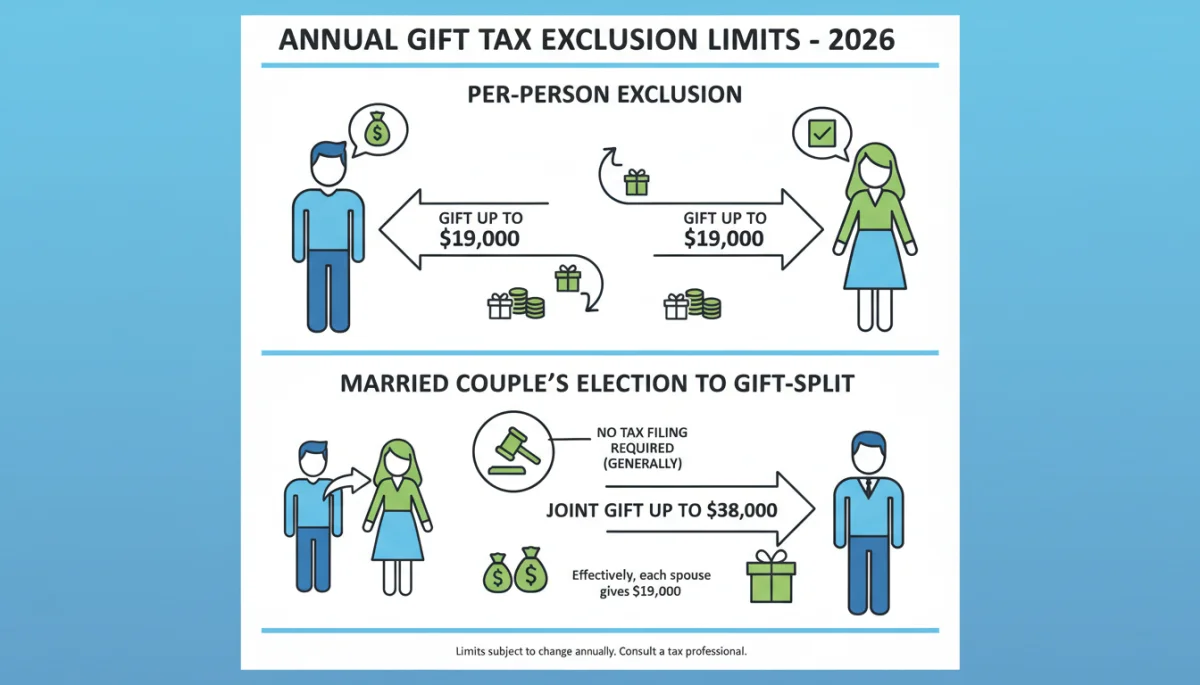
The annual exclusion is applied on a per-donee basis. This means you can give the maximum exclusion amount to each individual you choose, without limit on the number of recipients. For example, if the exclusion for 2026 is $18,000, you could give $18,000 to your child, $18,000 to your grandchild, and $18,000 to a friend, all without triggering gift tax.
Furthermore, if you are married, you and your spouse can combine your annual exclusions, effectively doubling the amount you can give to each recipient without tax implications. This spousal gifting strategy can be incredibly powerful for couples looking to reduce their combined estate.
- Multiple recipients: Gift to an unlimited number of individuals.
- Spousal splitting: Married couples can combine exclusions.
- No gift tax return: Gifts within this limit generally don’t require filing Form 709.
This mechanism offers significant flexibility and opportunity for strategic gifting, making it a cornerstone of many estate plans.
Lifetime Gift Tax Exemption and Estate Tax
Beyond the annual exclusion, the United States tax code also provides a lifetime gift tax exemption. This exemption represents the total amount an individual can gift over their lifetime, or leave to heirs at death, without incurring federal gift or estate taxes. The lifetime exemption amount is significantly higher than the annual exclusion and is also subject to inflation adjustments.
Understanding the interplay between the annual exclusion and the lifetime exemption is critical for long-term wealth transfer strategies. Gifts exceeding the annual exclusion amount begin to chip away at your lifetime exemption, but generally do not trigger immediate gift tax unless the lifetime exemption has been exhausted.
Current and Projected Lifetime Exemption
The lifetime gift and estate tax exemption has seen substantial increases in recent years. For 2026, it is projected to continue its upward trend, though potential legislative changes could alter this trajectory. It’s crucial for individuals with significant assets to monitor these figures closely, as they directly impact estate planning decisions.
The current political and economic landscape can influence these figures, making it essential to stay informed about any proposed tax reforms that could affect your wealth transfer plans. Professional guidance can be invaluable in navigating these complexities.
How Gifts Impact Your Estate
Any gifts made that exceed the annual exclusion amount will reduce your remaining lifetime exemption. This reduction directly impacts the amount of your estate that can pass to heirs tax-free upon your death. For example, if you gift $100,000 above the annual exclusion, your lifetime exemption will be reduced by that $100,000.
The unified credit system means that the gift tax and estate tax exemptions are linked. Using your lifetime exemption during your life reduces the amount available to your estate at death. Strategic use of the annual exclusion helps preserve your lifetime exemption for larger future transfers or for your estate.
In essence, thoughtful use of both the annual exclusion and the lifetime exemption can significantly reduce the overall tax burden on your wealth, ensuring more of it goes to your intended beneficiaries.
Specific Exemptions Beyond the Annual Exclusion
While the annual gift tax exclusion and lifetime exemption are broad tools, the IRS also provides specific exemptions for certain types of transfers. These specific exemptions are not subject to the annual exclusion limits and do not reduce your lifetime exemption, making them incredibly valuable for particular financial situations.
These exemptions are designed to encourage certain types of transfers, such as those related to education, healthcare, or supporting a spouse. Understanding these specific provisions can open up additional avenues for tax-free wealth transfer.
Educational Expenses
One of the most powerful specific exclusions is for educational expenses. You can pay tuition directly to an educational institution for any individual (relative or not) without it counting as a taxable gift, regardless of the amount. This exclusion applies specifically to tuition, not to books, supplies, dormitory fees, or other related expenses.
This provision is a fantastic way to support a loved one’s education without impacting your annual or lifetime gift tax exemptions. It’s a direct and efficient method for wealth transfer focused on human capital development.
- Direct payment: Payments must go directly to the educational institution.
- Tuition only: Exclusively covers tuition fees.
- Unlimited amount: No cap on the amount of tuition paid.
Leveraging this exclusion can be a significant benefit for families planning to fund higher education.
Medical Expenses
Similar to educational expenses, payments made directly to a medical provider for the medical care of another individual are also exempt from gift tax. This includes expenses for diagnosis, cure, mitigation, treatment, or prevention of disease, and payments for medical insurance premiums.
This exclusion is particularly beneficial for supporting family members with significant health needs, allowing donors to cover substantial medical costs without any gift tax implications. It ensures that essential healthcare can be provided without additional tax burdens.
Gifts to Spouses
Gifts between spouses who are U.S. citizens are generally unlimited and do not trigger gift tax. This is known as the marital deduction. This provision allows spouses to transfer assets freely between each other without tax consequences, which is a cornerstone of estate planning for married couples.
However, if your spouse is not a U.S. citizen, different rules apply, and there is an annual exclusion limit for gifts to non-citizen spouses to prevent assets from leaving the U.S. tax system without proper taxation.
Charitable Contributions
Gifts to qualifying charitable organizations are also exempt from gift tax. This encourages philanthropy and allows individuals to support causes they care about while also receiving potential income tax deductions for their contributions. There is no limit to the amount you can give to charity without incurring gift tax.
This exemption is a powerful tool for philanthropic individuals and can be integrated into broader estate planning strategies to achieve both charitable and tax efficiency goals.
Strategies for Personal Financial Transfers in 2026
With a clear understanding of gift tax exclusions and exemptions, individuals can develop strategic approaches to personal financial transfers. Proactive planning is key to maximizing the benefits of these provisions and achieving your financial and philanthropic objectives.
Effective strategies often involve a combination of annual gifting, leveraging specific exemptions, and considering the long-term impact on your estate. It’s not just about minimizing taxes, but also about ensuring your wealth serves its intended purpose.
Maximizing Annual Exclusion Gifting
One of the simplest yet most effective strategies is to consistently utilize the annual gift tax exclusion. By gifting the maximum allowable amount each year to multiple recipients, you can systematically reduce the size of your taxable estate over time without impacting your lifetime exemption.
For married couples, this strategy can be supercharged by combining their annual exclusions. For instance, if the exclusion is $18,000, a couple could gift $36,000 to each child or grandchild annually, significantly accelerating wealth transfer.
Using 529 Plans for Educational Gifts
Leveraging 529 college savings plans offers a unique opportunity for accelerated gifting. You can elect to treat a lump-sum contribution to a 529 plan as if it were made ratably over a five-year period, effectively using five years’ worth of annual exclusions in a single year. This allows for a much larger initial contribution to grow tax-free for educational purposes.
While this uses up five years of your annual exclusion for that specific beneficiary, it can be an excellent way to front-load educational savings and maximize tax-free growth. It’s a powerful tool for grandparents and parents alike.
Consider Grantor Retained Annuity Trusts (GRATs)
For individuals with substantial wealth, more sophisticated strategies like Grantor Retained Annuity Trusts (GRATs) can be highly effective. A GRAT allows you to transfer appreciating assets into an irrevocable trust while retaining an annuity payment for a set term. At the end of the term, any appreciation in the trust’s assets above the IRS-determined interest rate passes to your beneficiaries gift-tax-free.
GRATs are complex instruments that require careful planning and professional advice but can be incredibly powerful in minimizing gift and estate taxes on future asset appreciation, especially in a low-interest-rate environment.
Importance of Documentation
Regardless of the strategy employed, meticulous documentation of all gifts is paramount. For gifts exceeding the annual exclusion, even if covered by the lifetime exemption, filing Form 709 (United States Gift and Generation-Skipping Transfer Tax Return) is required. This establishes the reduction of your lifetime exemption and avoids future complications.
Maintaining clear records of who received what, when, and how much, is essential for demonstrating compliance with IRS regulations and for accurate estate planning down the line. Good record-keeping protects both the donor and the recipient.
Potential Changes and Future Outlook
The landscape of tax law is ever-evolving, and gift tax exclusions are no exception. While the annual exclusion typically adjusts for inflation, larger legislative changes could impact the lifetime exemption and other provisions. Staying informed about potential reforms is a critical aspect of long-term financial planning.
Political developments, economic conditions, and societal priorities can all influence tax policy. Therefore, a flexible and adaptable approach to wealth transfer is always advisable.
Legislative Uncertainty
Tax laws, especially those concerning wealth transfer, are often subjects of political debate. Future administrations or congressional actions could lead to significant changes in the gift and estate tax landscape. These changes could include alterations to exemption amounts, tax rates, or even the fundamental structure of the tax itself.
It is wise to plan with some degree of flexibility, considering both current law and potential future scenarios. Consulting with a tax professional who stays abreast of legislative developments is invaluable.
Impact of Inflation
The annual gift tax exclusion and the lifetime exemption are indexed for inflation. This means they are adjusted periodically to account for changes in the cost of living. While these adjustments are generally small year-over-year, they ensure that the real value of the exclusions is maintained over time.
Understanding the impact of inflation helps in projecting future exclusion amounts and planning for long-term wealth transfer strategies. It’s a factor that steadily influences the effectiveness of your gifting efforts.
Seeking Professional Guidance
Given the complexity and potential for change in gift tax laws, seeking professional guidance is highly recommended. Estate planning attorneys, certified public accountants (CPAs), and financial advisors specializing in wealth transfer can provide tailored advice based on your specific circumstances and goals.
These professionals can help you navigate the intricacies of the tax code, ensure compliance, and develop a robust strategy that aligns with your financial objectives and minimizes tax liabilities. Their expertise is an investment in your financial future.
Common Mistakes to Avoid in Gift Tax Planning
Even with a solid understanding of gift tax exclusions, common pitfalls can undermine even the best-laid plans. Being aware of these mistakes can help you avoid unnecessary complications and ensure your financial transfers are as effective as possible.
Careful attention to detail and a thorough understanding of the rules are essential to prevent errors that could lead to unexpected tax consequences or administrative burdens.
Failing to Document Gifts
One of the most frequent mistakes is failing to adequately document gifts, especially those that exceed the annual exclusion amount. As mentioned earlier, even if no tax is due because of the lifetime exemption, gifts above the annual exclusion require filing Form 709. Without proper documentation, proving compliance to the IRS can become a significant challenge.
Keep detailed records of all gifts, including the date, amount, recipient, and the specific property gifted. This documentation is crucial for both current tax reporting and future estate planning.
Misunderstanding Direct vs. Indirect Payments
Another common error involves misunderstanding what constitutes a direct payment for educational or medical expenses versus an indirect gift. For tuition and medical payments to be exempt from gift tax, they must be paid directly to the institution or provider, not reimbursed to the individual who incurred the expense.
Paying a student directly for their tuition, who then pays the school, would be considered a taxable gift subject to the annual exclusion. This subtle distinction is important for utilizing these specific exemptions correctly.
Ignoring the Generation-Skipping Transfer (GST) Tax
For individuals planning to make substantial gifts to grandchildren or other beneficiaries who are two or more generations younger, the Generation-Skipping Transfer (GST) tax can become a factor. This is a separate tax in addition to the gift tax, designed to prevent individuals from avoiding estate tax by skipping a generation.
Like the gift tax, there is a GST tax exemption that generally mirrors the lifetime gift tax exemption. Planning for GST tax is a complex area that requires expert advice to ensure compliance and avoid unexpected liabilities.
Not Reviewing Plans Regularly
Tax laws, personal circumstances, and financial goals can all change over time. Failing to regularly review and update your gift tax and estate plan is a significant oversight. What was an optimal strategy in one year might become less effective or even problematic in another.
It is advisable to review your estate and gift tax plans at least annually, or whenever there are significant life events such as births, deaths, marriages, divorces, or substantial changes in wealth. This proactive approach ensures your plans remain aligned with your objectives and current tax law.
| Key Aspect | Brief Description |
|---|---|
| Annual Exclusion | Amount you can gift to each person annually without tax or filing; projected to adjust for inflation. |
| Lifetime Exemption | Total amount you can gift or leave at death tax-free over your lifetime, linked to estate tax. |
| Specific Exemptions | Exclusions for direct payments towards tuition or medical expenses, and gifts to U.S. citizen spouses. |
| Strategic Gifting | Utilizing annual exclusions, 529 plans, and documentation to maximize tax-efficient wealth transfer. |
Frequently Asked Questions About Gift Tax Exclusions
The primary purpose of the annual gift tax exclusion is to allow individuals to make small gifts to multiple recipients each year without needing to file a gift tax return or use up their lifetime exemption. It simplifies wealth transfer for common gifts.
No, paying for someone’s rent directly does not qualify for the specific educational or medical expense exclusions. It would be considered a taxable gift subject to the annual exclusion limit. Only direct payments for tuition or medical care are specifically exempt.
The lifetime gift tax exemption and the estate tax exemption are unified, meaning they use the same credit amount. Any portion of the exemption used for gifts during your lifetime reduces the amount available for your estate upon your death, impacting your heirs.
No, gifts made to qualifying charitable organizations are generally exempt from gift tax. There is no limit to the amount you can give to charity without incurring gift tax, encouraging philanthropic endeavors.
While gifts below the annual exclusion don’t require filing Form 709, documenting all transfers provides clear records for future reference, especially if questions arise from the IRS or for comprehensive estate planning. Good records prevent confusion.
Conclusion
Navigating the landscape of gift tax exclusions for 2026: what you need to know for personal financial transfers is a critical aspect of effective wealth management and estate planning. By understanding and strategically utilizing the annual exclusion, lifetime exemption, and specific exemptions for education and medical expenses, individuals can significantly optimize their financial transfers. Staying informed about potential legislative changes and avoiding common pitfalls through meticulous documentation and regular plan reviews are essential. Ultimately, proactive engagement with these tax provisions, ideally with professional guidance, empowers you to achieve your financial goals while ensuring your legacy is transferred efficiently and tax-effectively to future generations.
