File a Successful Consumer Complaint in 2026: 30-Day Solutions
Effectively filing a consumer complaint in 2026 requires understanding your rights, meticulous documentation, and strategic communication to achieve swift resolutions, ideally within 30 days.
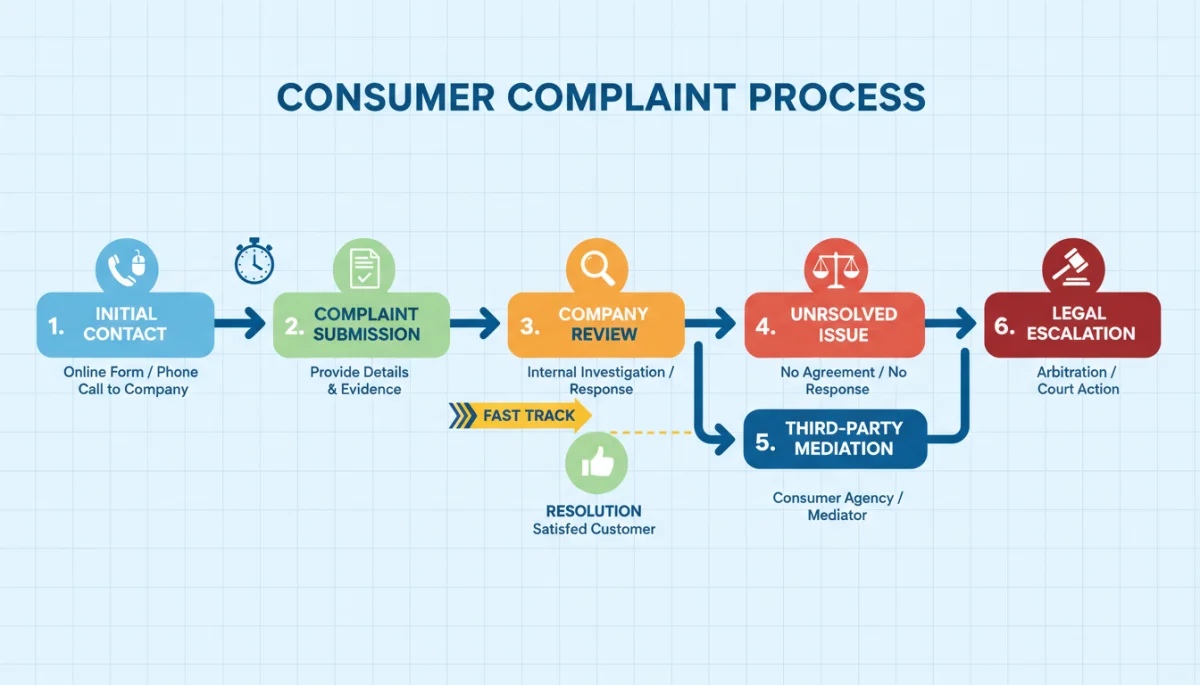
Navigating consumer disputes can often feel like an uphill battle, but in 2026, empowering yourself with the right knowledge and strategies is key to achieving a swift resolution. This guide will show you how to file a successful consumer complaint in 2026: practical solutions for resolving disputes within 30 days, ensuring your voice is heard and your rights are protected.
Understanding Your Consumer Rights in 2026
Before initiating any complaint, a fundamental understanding of your consumer rights is paramount. These rights form the bedrock of your claim, providing the legal and ethical framework for your dispute. In 2026, consumer protections continue to evolve, particularly with the rise of AI-driven services, data privacy concerns, and increasingly complex digital transactions.
Familiarizing yourself with federal and state-specific regulations applicable to your situation will significantly strengthen your position. This proactive step ensures you are not just complaining, but asserting a recognized right, which lends credibility and weight to your communication.
Federal consumer protections
Several federal agencies are tasked with safeguarding consumer interests. Understanding their roles can help you direct your complaint appropriately.
- Federal Trade Commission (FTC): Addresses unfair or deceptive business practices, including false advertising and fraud.
- Consumer Financial Protection Bureau (CFPB): Protects consumers in the financial marketplace, covering issues with mortgages, credit cards, and banking.
- Food and Drug Administration (FDA): Oversees the safety of food, drugs, cosmetics, and medical devices.
- National Highway Traffic Safety Administration (NHTSA): Handles complaints related to vehicle safety.
State-specific laws and agencies
Beyond federal protections, each state has its own set of consumer laws and dedicated agencies. These can offer additional layers of protection or specific remedies not available at the federal level.
For instance, some states have strong Lemon Laws for vehicles or specific regulations regarding service contracts. Your State Attorney General’s office or a local consumer protection agency can provide valuable information on these nuanced regulations. They often have resources or even direct complaint mechanisms tailored to local issues.
Knowing your rights is the first and most critical step in filing a successful consumer complaint. It allows you to articulate your grievance with confidence and precision, setting the stage for an effective resolution. By leveraging both federal and state protections, you create a robust foundation for your case.
Meticulous Documentation: Your Complaint’s Backbone
The success of any consumer complaint hinges significantly on the quality and completeness of your documentation. Think of your records as the evidence in a legal case; without solid proof, your claims may be difficult to substantiate. In 2026, digital records are more prevalent than ever, making this step both easier and more critical.
Start gathering all relevant information as soon as a problem arises. This immediate action prevents details from being forgotten or misplaced, ensuring accuracy when you formally file your complaint. A well-organized collection of documents not only supports your narrative but also demonstrates your seriousness and attention to detail.
What to collect and organize
Every piece of interaction or transaction related to your dispute should be meticulously documented. This includes both physical and digital artifacts.
- Purchase receipts and invoices: Proof of purchase, date, and amount spent.
- Contracts and warranty information: Details of agreements, terms, and conditions.
- Correspondence (emails, chat logs, letters): Records of communication with the business, including dates, times, and names of representatives.
- Product details (model numbers, serial numbers): Specific identifiers for goods or services.
- Photographs or videos: Visual evidence of damage, defects, or service issues.
- Bank statements or credit card records: Verification of payments made.
The importance of a complaint log
Maintaining a detailed complaint log is an often-overlooked but incredibly valuable practice. This log should be a chronological record of every action you take and every interaction you have regarding your complaint.
For each entry, include the date, time, method of contact (phone, email, in-person), the name of the person you spoke with, a summary of the discussion, and any agreed-upon next steps. This log serves as a comprehensive timeline, proving invaluable if your complaint escalates or if you need to recall specific details months later. It also shows a consistent effort to resolve the issue, which can be favorable in mediation or arbitration. Proper documentation is not just about proving what happened; it’s about demonstrating your diligence and commitment to resolving the issue fairly.
Initial Contact: Direct Communication with the Business
Before escalating your complaint to external agencies, the first and most direct approach should always be to communicate with the business itself. Many companies, especially reputable ones, prefer to resolve issues internally to maintain customer satisfaction and avoid negative publicity. This initial contact is often the quickest path to a resolution, potentially within your 30-day target.
Approach this communication with a clear, calm, and factual tone. Emotional outbursts or aggressive language can hinder progress. Remember, your goal is a resolution, not a confrontation. Be prepared to articulate your problem precisely and state what outcome you are seeking.
Effective communication strategies
How you communicate can significantly impact the outcome. A structured and polite approach often yields the best results.
- Start with customer service: Many companies have dedicated customer service departments equipped to handle initial complaints.
- Be clear and concise: State the problem, the relevant dates, and what you want as a resolution.
- Reference your documentation: Mention that you have detailed records to support your claim.
- Set a reasonable timeframe: Politely request a response or resolution within a specific period, e.g., 7-10 business days.
Escalating within the company
If your initial contact with customer service does not yield a satisfactory result, it’s time to escalate within the company structure. This usually involves contacting a supervisor, manager, or a dedicated customer relations department.
When escalating, reiterate your previous attempts to resolve the issue, referencing your complaint log. Clearly explain why the initial resolution was unsatisfactory. Many businesses have internal escalation protocols designed to address more complex or persistent issues. Sometimes, simply reaching a higher-level decision-maker can unlock new solutions or offer a fresh perspective on your case. Document every step of this escalation, including names, titles, and outcomes of conversations, to maintain a robust record of your efforts.
Leveraging Online Platforms and Social Media
In 2026, the power of online platforms and social media in consumer advocacy cannot be overstated. While direct communication remains essential, public forums can amplify your complaint and often prompt a faster response from businesses keen to protect their brand reputation. However, this approach requires careful consideration and a strategic mindset.
The goal is to generate constructive attention to your issue, not to engage in unproductive rants. A well-articulated public complaint, backed by facts, can be an incredibly effective tool for resolution, often within the desired 30-day window, as companies monitor these channels closely.
Consumer review websites and forums
Platforms like the Better Business Bureau (BBB), Yelp, or industry-specific review sites offer avenues to publicly share your experience. These sites are often monitored by businesses, and a public complaint can trigger a response from their dedicated resolution teams.
When posting, adhere to a factual tone, presenting the problem and your attempts to resolve it. Avoid emotional language. Many businesses have a strong incentive to resolve complaints posted on these sites to maintain a positive public image and a good rating. A well-documented, public complaint can often lead to a direct outreach from the company, bypassing previous roadblocks.
Strategic use of social media
Social media platforms like X (formerly Twitter), Facebook, and Instagram can be powerful tools for gaining a company’s attention. Many businesses have dedicated social media teams that monitor mentions and direct messages.
- Tag the company’s official handle: This ensures your complaint is seen by their social media team.
- Use relevant hashtags: Increase visibility and reach a wider audience, including other consumers facing similar issues.
- Post concisely and factually: Summarize your issue and your desired resolution. Attach relevant photos or screenshots if appropriate and permissible.
- Maintain professionalism: Even in a public forum, a professional demeanor will be more effective than an aggressive one.
Publicly sharing your experience, when done strategically and respectfully, can be a potent catalyst for resolution. It puts a company’s reputation on the line, often compelling them to act quickly to address your concerns and prevent further negative exposure.
External Agencies and Legal Avenues
When direct communication and online platforms fail to yield a satisfactory result within your timeframe, it’s time to consider external agencies and, if necessary, legal avenues. These options provide an independent third party to mediate or adjudicate your dispute, offering a structured path to resolution.
While these steps might extend beyond the initial 30-day target for a full resolution, initiating contact with these bodies within that period demonstrates diligence and can prompt the business to reconsider its stance. The threat of external intervention often motivates companies to settle.
Government regulatory bodies
As mentioned earlier, federal and state agencies exist to protect consumers. Filing a complaint with the appropriate regulatory body can trigger an investigation or mediation process. These bodies include:
- FTC and CFPB: For broad consumer protection and financial issues.
- State Attorney General’s Office: Handles a wide range of consumer complaints at the state level.
- Department of Motor Vehicles (DMV): For vehicle-related issues, including dealerships and repairs.
- State licensing boards: For complaints against licensed professionals (e.g., contractors, doctors).
These agencies don’t always directly resolve individual disputes, but they can mediate, investigate patterns of misconduct, and apply pressure on businesses to comply with regulations. Their involvement signals a serious escalation.
Arbitration and mediation
Many contracts include arbitration clauses, requiring disputes to be settled through an independent arbitrator rather than in court. Mediation is a less formal process where a neutral third party helps both sides reach a mutually agreeable solution.
These methods can be faster and less expensive than traditional litigation. They offer a structured environment for both parties to present their case and work towards a compromise. Check your original contract or purchase agreement for any dispute resolution clauses. Engaging in these processes early can often lead to a resolution without the need for court.
Small claims court and legal counsel
As a last resort, small claims court offers an accessible avenue for consumers to pursue monetary damages without the need for extensive legal representation. The limits for claims vary by state, but it’s designed for disputes involving smaller sums.
For more complex or high-value disputes, consulting with legal counsel becomes advisable. An attorney can assess the strength of your case, navigate legal complexities, and represent your interests. While legal action can be time-consuming, it provides the ultimate recourse for unresolved consumer complaints, ensuring your rights are fully upheld.
Following Up and Achieving Resolution
Filing a complaint is only half the battle; consistent follow-up is crucial to ensuring your issue progresses towards a satisfactory resolution, especially within a 30-day timeframe. Many complaints languish due to a lack of persistent engagement from the consumer. Your proactive follow-up demonstrates commitment and keeps your case on the radar of the relevant parties.
Even after escalating to external agencies, it’s important to maintain communication and provide any additional information requested promptly. A resolution isn’t just about getting a response; it’s about achieving the outcome you initially sought.
Consistent communication and record-keeping
Continue to update your complaint log with every new development, communication, or promise made. If a business or agency provides an expected timeline for resolution, mark it on your calendar and follow up if you don’t hear back by that date.
- Send polite reminders: If you haven’t received a response, a courteous follow-up email or call can re-energize your case.
- Confirm understanding: Ensure you clearly understand any proposed resolutions or next steps.
- Provide requested information promptly: Delays on your part can slow down the entire process.
Your records are your strongest asset throughout this phase. They prevent miscommunication and provide a clear history of all interactions, which is invaluable if further escalation becomes necessary.
Evaluating and accepting a resolution
Once a resolution is offered, carefully evaluate whether it meets your initial expectations and adequately addresses the harm or inconvenience you experienced. Sometimes, a full refund or replacement isn’t possible, and a fair compromise might be the best available outcome.
Before accepting, ensure you understand all terms of the resolution. Get everything in writing to avoid future misunderstandings. If the resolution involves a partial refund or credit, confirm when and how you will receive it. If you accept a resolution, it’s often wise to send a final communication confirming your acceptance and thanking the relevant parties for their assistance. This closes the loop professionally and ensures all parties are on the same page, bringing your complaint to a successful and documented conclusion.
| Key Step | Brief Description |
|---|---|
| Document Everything | Keep meticulous records of all interactions, purchases, and evidence related to your complaint. |
| Communicate Directly | First, contact the business’s customer service and escalate internally if needed. |
| Leverage Public Platforms | Use review sites and social media strategically to gain attention and prompt resolution. |
| Know When to Escalate | If internal efforts fail, involve government agencies or consider legal avenues like small claims court. |
Frequently asked questions about consumer complaints
The ideal first step is always direct communication with the business. Start with their customer service department, clearly stating your issue and desired resolution. Keep a detailed record of this interaction, including dates, times, and names. This often resolves issues quickly without external intervention.
Documentation is critically important. It serves as concrete evidence for your claims. Collect all receipts, contracts, emails, and even photos/videos. A thorough paper trail strengthens your case, makes it easier to track progress, and is essential if escalation to external agencies becomes necessary.
Yes, social media can be a powerful tool for quick resolution if used strategically. Many companies monitor their social channels closely for brand reputation. A concise, factual post tagging the company can often elicit a rapid response from their dedicated resolution teams, accelerating the complaint process.
If the business doesn’t respond within 30 days, it’s time to escalate. Consider filing a complaint with government regulatory bodies like the FTC or your State Attorney General’s office. You might also explore mediation, arbitration, or small claims court, depending on the nature and value of your dispute.
Often, initial steps like contacting the business or government agencies are free. However, if you pursue arbitration, mediation, or small claims court, there might be filing fees or administrative costs. Consulting with a lawyer will also incur legal fees, so weigh the cost against the potential recovery.
Conclusion
Mastering the art of filing a successful consumer complaint in 2026 is about more than just voicing dissatisfaction; it’s about strategic action, meticulous preparation, and persistent follow-up. By understanding your rights, documenting every detail, engaging effectively with businesses, and knowing when to leverage external resources, you significantly increase your chances of resolving disputes efficiently. Empower yourself with these practical solutions, and you’ll find that achieving a favorable outcome, often within 30 days, is well within your reach, transforming frustration into fair resolution.
