Choosing the Right Major: 2026 Earning Potential & Job Growth

Choosing the right major in 2026 involves analyzing current data on earning potential and job growth across diverse fields to ensure a financially stable and fulfilling career.
Deciding on a college major is one of the most significant choices you will make, profoundly impacting your future career and financial well-being. With the landscape of work constantly evolving, understanding the latest data on earning potential and job growth is crucial for choosing the right major in 2026.
Understanding the 2026 Job Market Landscape
The job market in 2026 presents a complex picture, shaped by rapid technological advancements, shifting economic priorities, and global events. Traditional industries continue to evolve, while new sectors emerge, creating both opportunities and challenges for graduates. A deep dive into current trends reveals a distinct demand for skills that align with innovation and adaptability.
This evolving environment means that a major once considered a safe bet might now offer different prospects, and emerging fields could hold unexpected rewards. It is no longer enough to simply pick a major based on personal interest; strategic planning rooted in data is essential. Factors such as automation, artificial intelligence, and the increasing emphasis on data literacy are redefining what employers seek in new hires.
Key Drivers of Job Growth in 2026
- Technological Innovation: Fields like AI, machine learning, cybersecurity, and data science are experiencing exponential growth.
- Healthcare Demands: An aging population and advancements in medical science continue to fuel demand for healthcare professionals.
- Green Economy: Sustainable energy, environmental engineering, and conservation efforts are creating numerous specialized roles.
Understanding these drivers allows prospective students to align their educational paths with areas of high demand. The interdisciplinary nature of many modern challenges also means that majors that foster critical thinking and problem-solving skills, regardless of the specific field, remain highly valuable.
Ultimately, navigating the 2026 job market requires foresight and a willingness to adapt. The majors that offer robust foundational knowledge combined with opportunities for specialization in high-growth areas are likely to yield the best outcomes. This section sets the stage for a more detailed examination of specific fields and their projected performance.
High-Earning Majors: STEM Fields Lead the Way
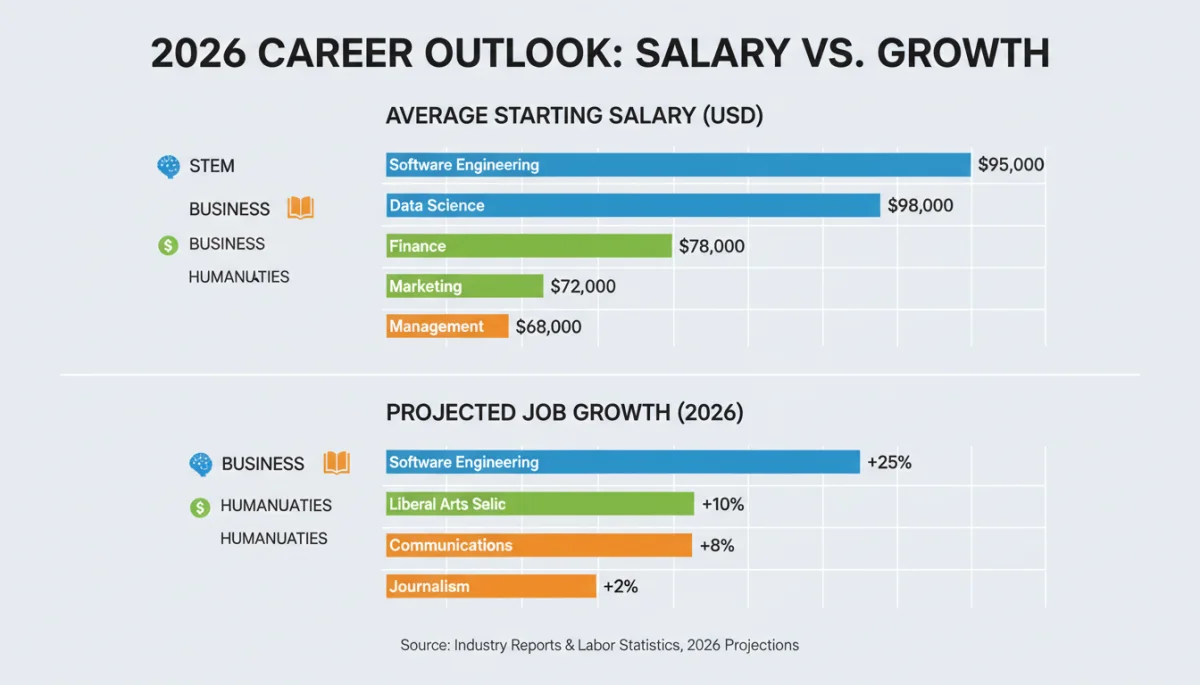
When it comes to earning potential, STEM (Science, Technology, Engineering, and Mathematics) fields consistently demonstrate superior outcomes. Data from 2026 continues to reinforce this trend, with graduates in these disciplines often commanding higher starting salaries and experiencing faster career progression. The demand for analytical and technical skills remains paramount across industries.
Engineering disciplines, particularly software, electrical, and mechanical engineering, show strong salary figures and robust job security. Computer science and data science majors are also at the forefront, driven by the pervasive need for digital innovation and data interpretation in nearly every sector of the economy. These fields are not only well-compensated but also offer diverse career paths, from research and development to product management and consulting.
Top STEM Majors for Earning Potential
- Computer Science: High demand for software developers, data scientists, and cybersecurity analysts.
- Engineering (Software, Electrical, Mechanical): Essential for innovation in technology, infrastructure, and manufacturing.
- Data Science and Analytics: Critical for businesses making data-driven decisions.
- Actuarial Science: Specialized field with strong demand in insurance and finance.
Beyond the immediate financial benefits, many STEM careers offer intellectual stimulation and opportunities to contribute to groundbreaking advancements. The problem-solving nature of these roles appeals to individuals who enjoy analytical challenges and continuous learning. Furthermore, the skills acquired in STEM fields are highly transferable, providing a solid foundation for pivoting into different roles or even entrepreneurship.
However, pursuing a STEM major requires a strong aptitude for mathematics and science, as well as a commitment to rigorous coursework. Students considering these paths should assess their strengths and interests carefully to ensure a good fit. The consistent high demand and earning potential make STEM majors a compelling choice for many aspiring professionals in 2026.
Emerging Growth Sectors and Their Educational Paths
While STEM fields maintain their dominance, several emerging sectors are rapidly expanding, creating new avenues for career success. These areas often blend technology with other disciplines, highlighting the increasing importance of interdisciplinary studies. Students looking to future-proof their careers should pay close attention to these burgeoning industries.
One such area is renewable energy and sustainability. As global concerns about climate change intensify, the demand for professionals in solar, wind, and other green technologies is soaring. This includes roles in engineering, policy, and project management. Another significant growth area is health informatics, which combines healthcare knowledge with information technology to improve patient care and system efficiency.
The digital creative economy, encompassing fields like UX/UI design, digital marketing, and multimedia production, also continues to expand. As businesses increasingly rely on online presence and engaging digital experiences, skilled professionals in these areas are highly sought after. These roles often require a blend of technical proficiency and creative thinking.
Majors for Emerging Industries
- Environmental Science/Engineering: Focus on sustainable solutions and resource management.
- Health Informatics/Biomedical Engineering: Merging healthcare with data and technology.
- User Experience (UX) Design: Crafting intuitive and effective digital interfaces.
- Digital Marketing: Strategies for online brand promotion and consumer engagement.
These emerging fields often demand a combination of specialized knowledge and soft skills such as adaptability, critical thinking, and collaboration. Many universities are now offering specialized programs or concentrations within traditional majors to prepare students for these roles. Exploring these options can provide a significant advantage in a competitive job market.
Ultimately, embracing these emerging sectors can lead to fulfilling careers at the cutting edge of innovation. They offer opportunities to make a tangible impact while also providing strong earning potential and job security. Staying informed about these trends is key to making a forward-thinking decision about your major.
The Enduring Value of Humanities and Social Sciences
While discussions often revolve around high-paying STEM careers, the humanities and social sciences continue to offer immense value, both personally and professionally. These disciplines cultivate critical thinking, communication, ethical reasoning, and cultural awareness—skills that are increasingly vital in a world dominated by technology. Employers recognize the importance of these ‘soft skills’ for leadership, problem-solving, and effective team collaboration.
Graduates with degrees in history, philosophy, literature, sociology, and political science are well-prepared for careers in law, education, journalism, public policy, and non-profit management. While starting salaries might not always match those in STEM, the long-term career trajectories can be equally rewarding, often leading to senior leadership positions where strategic thinking and communication are paramount.
Many successful leaders across various industries have backgrounds in the humanities, demonstrating that these majors provide a versatile foundation. The ability to analyze complex information, articulate ideas clearly, and understand human behavior is invaluable in any professional setting. Furthermore, the ethical frameworks and critical perspectives gained are essential for navigating complex societal challenges.
Strengths of Humanities and Social Sciences Majors
- Critical Thinking & Analysis: Essential for complex problem-solving.
- Communication Skills: Verbal and written proficiency crucial for leadership roles.
- Cultural Awareness: Important for globalized workplaces and diverse teams.
- Ethical Reasoning: Guiding principles for responsible decision-making.
For students passionate about these subjects, combining a humanities or social science major with a minor in a more technical field, such as data analytics or project management, can create a powerful and marketable skill set. This interdisciplinary approach allows individuals to leverage their strengths in both areas, making them highly attractive to employers seeking well-rounded candidates.
In conclusion, the enduring value of humanities and social sciences lies in their ability to foster essential human skills that complement technological advancements. These majors prepare individuals not just for jobs, but for meaningful careers and active civic engagement, contributing to a more thoughtful and informed society.
Business and Finance: Stability and Strategic Growth
Majors in business and finance remain a cornerstone of higher education, consistently providing graduates with stable career paths and opportunities for significant earning potential. These fields are dynamic, adapting to economic shifts and technological innovations, ensuring their continued relevance in the 2026 job market. From corporate finance to marketing and supply chain management, a business degree opens doors to a wide array of roles.
Accounting, finance, and economics degrees are particularly strong, with steady demand for professionals who can manage budgets, analyze markets, and advise on financial strategies. These roles are critical for the health and growth of any organization. Business analytics, a growing specialization, combines business acumen with data science, making graduates highly sought after for their ability to derive insights from complex datasets.
The entrepreneurial spirit is also well-supported by business education, with programs often including courses on innovation, startup management, and venture capital. This empowers students to not only seek employment but also to create their own opportunities, contributing to economic growth and job creation. The practical skills gained, such as negotiation, project management, and strategic planning, are universally applicable.
Popular Business and Finance Majors
- Finance: Investment banking, financial analysis, wealth management.
- Accounting: Auditing, tax consulting, corporate accounting.
- Marketing: Digital marketing, brand management, market research.
- Supply Chain Management: Logistics, operations, global procurement.
Many business programs also emphasize internships and experiential learning, providing students with valuable real-world experience before graduation. This practical exposure enhances employability and helps students build professional networks. The versatility of a business degree means graduates can find roles in virtually any industry, from technology to healthcare to entertainment.
Ultimately, business and finance majors offer a blend of stability, growth potential, and diverse career options. For those with an interest in commerce, management, and strategic decision-making, these fields provide an excellent foundation for a successful and impactful career in 2026 and beyond.
Making an Informed Decision: Beyond the Numbers
While data on earning potential and job growth is invaluable, choosing a major extends beyond mere statistics. Your personal interests, aptitudes, values, and long-term career aspirations play an equally critical role in making an informed decision. A major that aligns with your passions is more likely to lead to a fulfilling career, even if the initial earning potential isn’t the highest.
Consider your strengths: Are you naturally analytical, creative, or people-oriented? Reflect on what truly excites you and what kind of work environment you thrive in. Pursuing a major solely for its high earning potential without genuine interest can lead to burnout and dissatisfaction. A balanced approach, integrating both data-driven insights and personal reflection, is often the most effective.
Factors Beyond Earning Potential
- Personal Interest & Passion: Sustained motivation and job satisfaction.
- Skill Alignment: Matching your natural talents with academic demands.
- Work-Life Balance: Considering the typical demands of various professions.
- Impact & Purpose: Desiring to contribute to society or a specific cause.
Engage in informational interviews with professionals in fields that interest you. Seek out internships or volunteer opportunities to gain firsthand experience. These practical experiences can provide clarity that statistics alone cannot offer, helping you understand the day-to-day realities of different careers. University career services departments are also excellent resources for guidance and exploration.
Remember that your major is not necessarily a lifelong sentence. Many professionals successfully pivot into different fields throughout their careers, often leveraging transferable skills and continuous learning. The goal is to choose a major that provides a strong foundation and opens up opportunities, rather than boxing you into a single path.
Ultimately, making an informed decision about your major involves a thoughtful blend of objective data and subjective self-assessment. By considering both the numbers and your personal aspirations, you can set yourself on a path towards a rewarding and successful future.
| Key Major Category | 2026 Outlook |
|---|---|
| STEM Fields | Strongest earning potential and job growth, driven by tech and innovation. |
| Emerging Sectors | Rapid expansion in green energy, health informatics, and digital creative roles. |
| Humanities/Social Sciences | Cultivate essential soft skills, leading to versatile careers in various sectors. |
| Business/Finance | Consistent demand and stable growth in accounting, finance, and management. |
Frequently Asked Questions About Choosing a Major
While earning potential and job growth are crucial, personal interest and aptitude are equally important. A balance between market demand and your passions typically leads to greater career satisfaction and long-term success, ensuring you stay motivated in your chosen field.
Not necessarily. While STEM fields often have high starting salaries, many non-STEM majors, especially in business, finance, and even some humanities, can lead to very high earnings over time, particularly in leadership or specialized roles. Strategic career planning is key.
Job market data for 2026 is based on current trends and projections, offering valuable insights. However, markets can shift. It’s best to use this data as a guide, combining it with continuous learning and adaptability, rather than a rigid prediction of the future.
Absolutely. Many students change their majors, and it’s a normal part of the exploration process. Universities offer resources to help with this. Additionally, skills are transferable, and continuous learning allows for career pivots even after graduation, making flexibility vital.
Yes, interdisciplinary majors are increasingly valuable. They equip graduates with diverse skill sets that are highly sought after in complex, modern workplaces. Combining fields like data science with humanities or engineering with business can create a unique competitive advantage in the job market.
Conclusion
The decision of choosing the right major in 2026 is a pivotal step towards a successful career. By carefully analyzing data on earning potential and job growth across various fields, while also considering personal interests and aptitudes, prospective students can make informed and strategic choices. Whether it’s the high-demand STEM fields, the evolving emerging sectors, the foundational humanities, or the stable business disciplines, understanding the landscape is key. Ultimately, a balanced approach that combines objective data with self-awareness will pave the way for a fulfilling and prosperous future.
