Career Portfolio 2026: Showcase Skills for US Employers
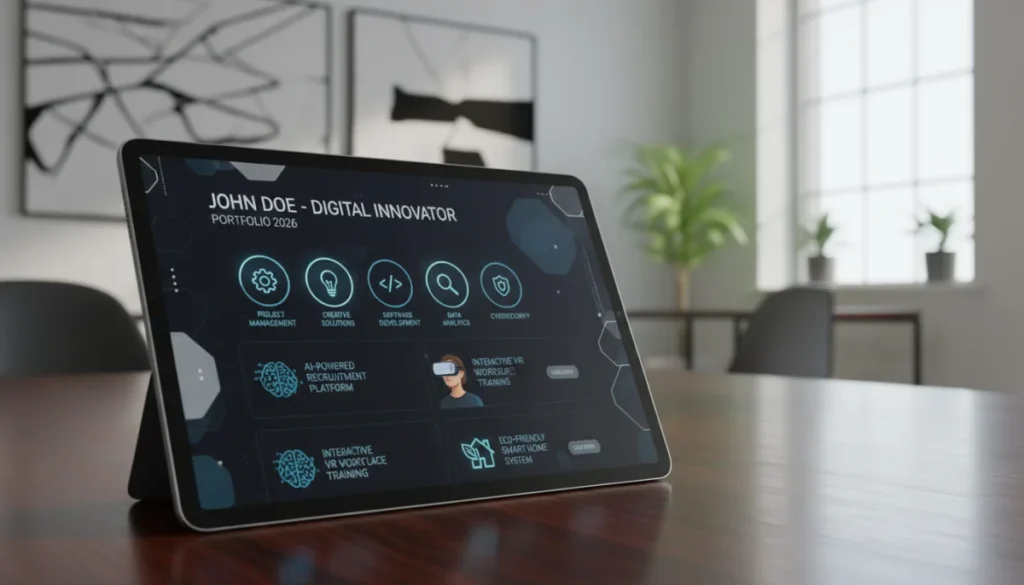
Building a robust career portfolio in 2026 is crucial for US job seekers to effectively demonstrate their skills and experience to prospective employers, moving beyond traditional resumes.
Are you ready to truly stand out to American employers? In today’s dynamic job market, merely having a resume isn’t enough. Building a Career Portfolio: Showcasing Your Skills for US Employers in 2026 is not just an advantage; it’s a necessity for demonstrating your capabilities and securing your next opportunity.
Understanding the Modern Career Portfolio in 2026
The concept of a career portfolio has evolved significantly. Gone are the days of bulky binders; today’s portfolios are primarily digital, dynamic, and highly interactive. For US employers in 2026, a portfolio serves as a visual and tangible testament to your skills, experience, and achievements, offering a comprehensive look beyond bullet points on a resume.
This section delves into what a modern career portfolio entails, its purpose, and why it’s become an indispensable tool for job seekers across various industries. It’s about telling your professional story in a way that resonates with hiring managers and recruiters.
Why a portfolio matters more than ever
The US job market is increasingly competitive, with employers seeking concrete evidence of a candidate’s abilities. A well-crafted portfolio provides this evidence, transforming abstract skills into demonstrable successes. It allows you to present not just what you can do, but what you have done.
- Demonstrates practical application: Shows how your skills translate into real-world results.
- Highlights unique strengths: Differentiates you from other candidates with similar qualifications.
- Enhances credibility: Provides tangible proof of your expertise and experience.
- Facilitates deeper engagement: Offers employers a more immersive understanding of your professional journey.
Key components of an effective portfolio
An effective career portfolio for US employers in 2026 is not just a collection of documents; it’s a curated experience. It should include a diverse range of materials that collectively paint a holistic picture of your professional identity. Think of it as your personal marketing brochure.
From project samples to testimonials, every element should serve a purpose in showcasing your value. The key is to be selective and strategic, ensuring each piece contributes to your overall narrative and aligns with the types of roles you are targeting.
In conclusion, a modern career portfolio is your strategic advantage in the 2026 US job market. It moves beyond traditional credentials to provide a compelling, evidence-based narrative of your professional capabilities, directly addressing the needs and expectations of contemporary employers.
Identifying Your Core Skills and Achievements
Before you even begin assembling your portfolio, a critical first step is to thoroughly identify your core skills and significant achievements. This introspective process will guide the entire construction of your portfolio, ensuring it is focused, relevant, and impactful. For US employers in 2026, clarity and directness in showcasing your abilities are paramount.
This section will help you pinpoint what truly makes you a valuable asset, allowing you to select the most compelling content for your portfolio.
Mapping your transferable skills
Transferable skills are highly valued by employers across all industries. These are abilities like communication, problem-solving, leadership, and adaptability that can be applied in various contexts. Identifying these skills and providing examples of how you’ve utilized them effectively is crucial.
Consider past experiences, both professional and personal, where you demonstrated these competencies. Quantify your achievements whenever possible, as numbers speak volumes to hiring managers.
- Communication: Examples of presentations, reports, or successful team collaborations.
- Problem-solving: Instances where you identified a challenge and implemented an effective solution.
- Leadership: Roles where you guided a team, mentored colleagues, or initiated projects.
- Adaptability: Situations where you quickly learned new technologies or adjusted to changing environments.
Highlighting quantifiable achievements
Employers are always interested in results. Quantifiable achievements provide concrete evidence of your impact and value. Instead of simply stating you ‘improved efficiency,’ aim to say ‘improved efficiency by 15% through process optimization.’
Review your work history, projects, and volunteer experiences for opportunities to add metrics. This could include revenue generated, costs saved, projects completed ahead of schedule, or customer satisfaction improvements. These details make your contributions tangible and impressive.
Ultimately, a strong portfolio begins with a deep understanding of your own capabilities and accomplishments. By meticulously identifying your core skills and highlighting quantifiable achievements, you lay a solid foundation for a portfolio that effectively communicates your value to US employers in 2026.
Choosing the Right Portfolio Format and Platform
The format and platform you choose for your career portfolio are just as important as its content. In 2026, digital portfolios are the standard, offering flexibility, accessibility, and a dynamic way to present your work. Selecting the right platform ensures your portfolio is professional, user-friendly, and easily discoverable by US employers.
This section explores the various options available and guides you in making an informed decision that aligns with your career goals and industry.
Digital vs. traditional portfolios
While physical portfolios still have niche applications, digital portfolios offer unparalleled advantages. They can be easily shared, updated, and accessed from anywhere, which is crucial in a globalized and remote-friendly job market. Digital platforms also allow for multimedia integration, making your portfolio more engaging.
Consider the types of media you’ll be including. If your work involves video, audio, or interactive elements, a digital platform is essential. Even for text-heavy professions, a digital presence offers a professional edge.
Popular online portfolio platforms
Several platforms cater specifically to portfolio creation, each with its own strengths. Your choice should depend on your industry, the types of work samples you have, and your technical comfort level. Some platforms offer drag-and-drop interfaces, while others provide more customization options.
- Personal website/blog: Offers maximum control and branding opportunities, ideal for creative professionals.
- Behance/Dribbble: Excellent for designers, artists, and photographers to showcase visual work.
- GitHub: Essential for software developers and programmers to display code and projects.
- LinkedIn: While not a dedicated portfolio site, it allows for project uploads and recommendations, serving as a professional hub.
- Clippings.me/Journo Portfolio: Popular choices for writers and journalists to display articles and publications.
Ensuring mobile responsiveness and accessibility
With a significant portion of internet traffic coming from mobile devices, your portfolio must be mobile-responsive. Employers may view your portfolio on a smartphone or tablet, and a poorly optimized site can create a negative impression. Test your portfolio’s appearance and functionality across various devices.
Additionally, ensure your portfolio is accessible to all users, including those with disabilities. This includes using appropriate alt text for images, clear navigation, and legible font sizes. Accessibility not only broadens your audience but also reflects positively on your attention to detail.
In summary, choosing the right format and platform is a strategic decision that impacts how your work is perceived. Prioritize digital solutions, select a platform that aligns with your profession, and always ensure your portfolio is mobile-responsive and accessible to make the best impression on US employers in 2026.
Curating and Organizing Your Portfolio Content
Once you’ve identified your key skills and chosen a platform, the next crucial step is to meticulously curate and organize your portfolio content. This is where you transform a collection of work into a compelling narrative that showcases your professional journey and capabilities to US employers in 2026. Thoughtful organization makes your portfolio easy to navigate and highly impactful.
This section will guide you through the process of selecting, presenting, and structuring your work samples effectively.
Selecting your best work samples
Quality over quantity is a golden rule for portfolio content. Include only your strongest, most relevant pieces that directly demonstrate the skills and achievements you want to highlight. Each item should serve a purpose and contribute to your overall professional story.
Consider the types of roles you’re applying for and tailor your selections accordingly. A portfolio for a marketing role will differ significantly from one for a software engineering position. Always aim for diversity in your samples if your skills span multiple areas, but keep them focused on your target.
Providing context with project descriptions
Simply displaying a work sample isn’t enough; you need to provide context. For each item in your portfolio, include a brief yet informative description that outlines:
- The project’s objective: What problem were you trying to solve?
- Your role and responsibilities: What specific contributions did you make?
- The tools and technologies used: Relevant software, programming languages, or methodologies.
- The results and impact: Quantifiable outcomes and lessons learned.
These descriptions turn a static sample into a story of achievement, helping employers understand the value you brought to the project.

Structuring for easy navigation
A well-organized portfolio is intuitive and user-friendly. Categorize your work samples logically, perhaps by skill, project type, or industry. Use clear headings and a consistent layout to guide the viewer through your content. A strong introduction and a clear call to action can also enhance the user experience.
Think about the journey an employer will take through your portfolio. Make it easy for them to find the information they need quickly and efficiently. A chaotic or confusing portfolio can detract from even the most impressive work.
In essence, curating and organizing your portfolio content is about storytelling. By carefully selecting your best work, providing rich context, and structuring it for effortless navigation, you create a powerful tool that effectively showcases your skills and achievements to US employers in 2026.
Tailoring Your Portfolio for Specific US Employers
One of the most effective strategies for maximizing your portfolio’s impact is to tailor it for specific US employers and roles. A generic portfolio, while a good starting point, often fails to resonate as strongly as one that directly addresses the needs and interests of a particular company. In 2026, personalization is key to standing out.
This section will explain how to customize your portfolio to make a powerful and targeted impression on prospective employers.
Researching target companies and roles
Before you begin tailoring, conduct thorough research on the companies and specific job descriptions you’re interested in. Look for keywords related to required skills, company values, ongoing projects, and their overall mission. This information will inform which aspects of your portfolio to emphasize.
Understand the company’s culture and what they prioritize. Do they value innovation, collaboration, or specific technical expertise? Your portfolio should subtly reflect these insights.
Highlighting relevant skills and projects
Once you have a clear understanding of what a company is looking for, adjust your portfolio to prominently display the most relevant skills and projects. This might involve reordering your samples, adding new project descriptions that emphasize certain outcomes, or even creating a custom landing page for a specific application.
If a job description emphasizes ‘data analysis,’ ensure your portfolio features projects where you excelled in that area, supported by data-driven results. Don’t make the employer search for relevance; bring it to the forefront.
Crafting a personalized introduction
A personalized introduction within your portfolio can make a significant difference. This could be a brief video message, a custom ‘About Me’ section, or a cover letter integrated into the portfolio itself. Use this space to directly address the company, explain why you’re a good fit, and highlight how your portfolio showcases the skills they need.
Mention specific aspects of their company or the role that excite you, demonstrating genuine interest and that you’ve done your homework. This personal touch can create a strong connection with the hiring team.
In conclusion, tailoring your career portfolio for specific US employers is a strategic move that significantly increases your chances of success. By researching thoroughly, highlighting relevant content, and adding a personalized touch, you demonstrate not only your capabilities but also your genuine interest and fit for the role and company.
Leveraging Your Portfolio for Job Applications and Interviews
A beautifully crafted career portfolio is only effective if it’s actively leveraged throughout your job search process. For US employers in 2026, your portfolio isn’t just a static display; it’s a dynamic tool that can enhance your applications and significantly strengthen your performance during interviews. Knowing how and when to use it is key.
This section focuses on integrating your portfolio seamlessly into every stage of your job application and interview journey.
Integrating portfolio links into applications
Ensure your portfolio link is prominently featured on your resume, LinkedIn profile, and any online application forms. Make the URL clean, professional, and easy to remember. A dedicated section on your resume for ‘Portfolio’ or ‘Work Samples’ can draw immediate attention.
When applying for roles, consider including a direct link to a specific project within your portfolio that is most relevant to the job description. This shows initiative and helps the recruiter quickly see your most pertinent work.
Using your portfolio during interviews
Your portfolio is an invaluable asset during interviews. It provides concrete examples to illustrate your answers and can serve as a talking point to guide the conversation. Be prepared to walk interviewers through specific projects, explaining your process, challenges, and outcomes.
- Visual aid: Use it to visually demonstrate your problem-solving process or creative solutions.
- Storytelling tool: Each project can be a story of your skills in action.
- Answer specific questions: Refer to portfolio items when asked about challenges, successes, or specific skill applications.
- Leave a lasting impression: A well-presented portfolio makes you memorable.
Following up with portfolio references
After an interview, consider including a link to your portfolio, or a specific project within it, in your thank-you note. This reinforces your discussion points and provides another opportunity for the interviewer to revisit your work. If you discussed a particular project in detail, linking directly to it can be very effective.
This proactive approach ensures your portfolio continues to work for you even after the interview has concluded, keeping your skills and achievements top of mind for the hiring team.
In essence, actively leveraging your career portfolio throughout the job application and interview process transforms it from a mere collection of work into a powerful advocacy tool. For US employers in 2026, it’s about demonstrating your value and leaving a memorable, impactful impression.
Maintaining and Updating Your Career Portfolio
A career portfolio is not a static document; it’s a living, evolving representation of your professional journey. For US employers in 2026, demonstrating ongoing growth and relevance is crucial. Regular maintenance and strategic updates ensure your portfolio remains fresh, impactful, and reflective of your current skill set and aspirations.
This section emphasizes the importance of continuous improvement and provides practical advice for keeping your portfolio at its best.
Regularly reviewing and refreshing content
Set a schedule to review your portfolio at least quarterly, or whenever you complete a significant project or acquire a new skill. Remove outdated samples, replace weaker pieces with stronger ones, and update project descriptions to reflect new insights or achievements. A stagnant portfolio can give the impression of a stagnant career.
Think about what new technologies or methodologies have emerged in your field and ensure your portfolio demonstrates your engagement with these advancements. This shows initiative and a commitment to continuous learning.
Adding new skills and achievements
As you gain new experiences, complete courses, or earn certifications, make sure to integrate these new skills and achievements into your portfolio. This could involve adding new project categories, updating your ‘Skills’ section, or even creating new case studies around recent successes.
The job market in 2026 is rapidly changing, and your portfolio should reflect your ability to adapt and grow with it. New skills, especially those in high demand, should be prominently featured.
Seeking feedback and making improvements
Don’t be afraid to solicit feedback on your portfolio from trusted mentors, colleagues, or career advisors. A fresh pair of eyes can spot areas for improvement that you might have overlooked. Ask for honest critiques on clarity, navigation, visual appeal, and overall impact.
Use this feedback constructively to refine your portfolio. Small adjustments can sometimes make a big difference in how your work is perceived by potential employers. Continuous improvement is not just about your skills, but also about how you present them.
In conclusion, maintaining and updating your career portfolio is an ongoing commitment that pays dividends in the competitive US job market of 2026. By regularly refreshing content, adding new achievements, and actively seeking feedback, you ensure your portfolio remains a powerful and relevant tool for showcasing your professional growth and value.
| Key Aspect | Brief Description |
|---|---|
| Modern Format | Digital, interactive, and multimedia-rich for accessibility and engagement. |
| Content Curation | Select strongest, most relevant samples with detailed context and quantifiable results. |
| Targeted Approach | Tailor portfolio for specific US employers and roles, highlighting relevant skills. |
| Continuous Updates | Regularly refresh content, add new achievements, and seek feedback for improvement. |
Frequently asked questions about career portfolios
The primary purpose is to provide tangible evidence of your skills and achievements, moving beyond resume bullet points. It allows US employers to see practical applications of your abilities and understand your professional value more deeply.
In 2026, digital portfolios are overwhelmingly preferred. They offer greater accessibility, ease of sharing, and the ability to integrate multimedia, making them more dynamic and engaging for US employers compared to traditional physical portfolios.
You should aim to update your portfolio regularly, ideally quarterly or whenever you complete a significant project or acquire a new skill. This ensures it remains current, relevant, and reflects your ongoing professional growth for US employers.
Include your strongest work samples, project descriptions with quantifiable results, testimonials, and relevant certifications. Focus on quality over quantity and tailor content to the specific roles and US employers you are targeting.
Yes, absolutely. A well-constructed portfolio can highlight your transferable skills and demonstrate how your experience is relevant to a new industry. By carefully selecting projects and emphasizing adaptable competencies, you can bridge the gap for US employers.
Conclusion
In the competitive landscape of the 2026 US job market, building and maintaining a dynamic career portfolio is no longer optional; it’s a strategic imperative. By meticulously curating your best work, providing compelling context, and tailoring your presentation to specific employers, you transform your job search from a passive application process into an active demonstration of your unique value. Your portfolio serves as a powerful testament to your skills, experience, and potential, enabling you to confidently showcase your capabilities and secure the career opportunities you deserve. Embrace this essential tool, and unlock new possibilities in your professional journey.
