State-Specific College Savings Plans 2026: A US Family Guide

Understanding state-specific college savings plans in 2026 is essential for US families aiming to secure their children’s educational future, leveraging various 529 plan options and their unique tax advantages.
Are you a US family grappling with the complexities of funding higher education? Navigating the landscape of state college savings plans can seem daunting, but it’s a critical step toward securing your child’s future. This guide will demystify the various options available in 2026, helping you make informed decisions tailored to your family’s unique financial goals and circumstances.
The foundational role of 529 plans in college savings
For many US families, 529 plans stand as the cornerstone of college savings. These tax-advantaged investment vehicles are sponsored by states, state agencies, or educational institutions, designed to encourage saving for future education costs. Understanding their fundamental structure and benefits is the first step in formulating a robust college savings strategy.
While 529 plans share common federal tax advantages, their state-specific nuances are what truly differentiate them. Each state offers its own plan, sometimes multiple, with unique features ranging from state tax deductions to diverse investment portfolios. It’s crucial not to assume all 529 plans are created equal, as their individual characteristics can significantly impact your savings growth and overall financial benefit.
Types of 529 plans: savings vs. prepaid tuition
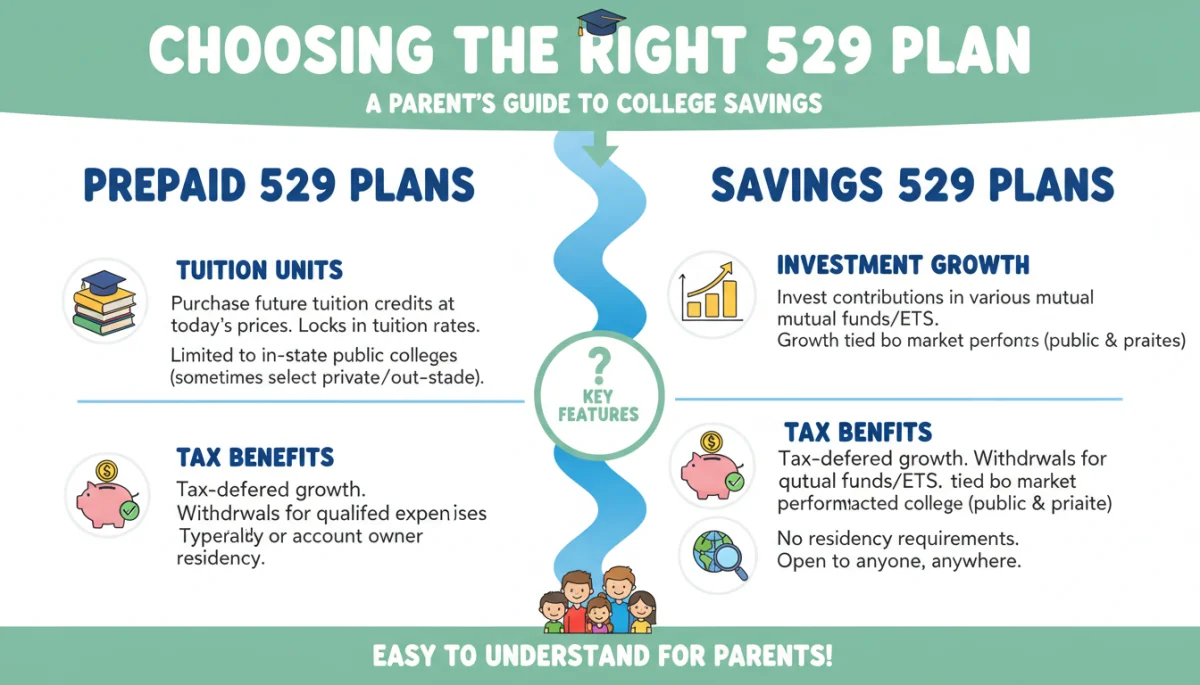
- College savings plans: These are investment accounts that allow your savings to grow tax-deferred. Withdrawals are tax-free when used for qualified education expenses. They offer a range of investment options, from age-based portfolios to individual fund choices.
- Prepaid tuition plans: These plans allow you to purchase future tuition credits at today’s prices. They typically guarantee to cover a percentage of tuition at in-state public colleges, providing protection against tuition inflation. Some also offer private college options.
Choosing between a savings plan and a prepaid plan often depends on your comfort with market fluctuations and your certainty about where your child might attend college. Savings plans offer more flexibility and potential for higher returns but also carry market risk, while prepaid plans offer certainty regarding tuition costs but less flexibility.
In conclusion, 529 plans are powerful tools for college savings, offering significant tax benefits. However, the choice between a savings plan and a prepaid plan, and indeed which state’s plan to choose, requires careful consideration of your financial goals and risk profile.
Navigating state-specific tax benefits and incentives
One of the most compelling reasons to consider a state-specific 529 plan lies in the potential for state income tax benefits. While all 529 plans offer federal tax advantages, many states sweeten the deal with additional incentives for their residents. These can vary significantly, making a detailed comparison essential for maximizing your savings.
Some states offer a full tax deduction for contributions to their own 529 plans, while others provide a more limited credit. A few states even extend tax benefits to residents who invest in out-of-state plans, though this is less common. Understanding these specific incentives is crucial, as they can effectively boost your investment returns and reduce your overall tax burden.
Key state tax advantages to look for
When evaluating different state plans, pay close attention to the following tax-related features:
- State income tax deductions/credits: Many states offer deductions or credits for contributions, which can be a significant benefit, especially for high-income earners. The amount and conditions vary widely.
- Tax-free withdrawals: All qualified withdrawals from 529 plans are federally tax-free. Some states also offer state income tax exemptions on these withdrawals, further enhancing their appeal.
- Recapture provisions: Be aware that some states have ‘recapture’ provisions, meaning if you withdraw funds for non-qualified expenses, you might have to pay back previously claimed state tax deductions or credits.
It’s important to remember that these state-specific benefits are primarily for residents of that state. If you live in a state with no income tax, or one that offers no specific 529 tax benefits, you might consider an out-of-state plan with strong investment performance and low fees, as the state tax incentive wouldn’t apply to you anyway.
Ultimately, the state tax benefits of a 529 plan can be a powerful factor in your decision-making. Thorough research into your home state’s offerings, and potentially those of other states if your own provides limited incentives, is highly recommended to optimize your college savings strategy.
Comparing investment options and performance across states
Beyond tax benefits, the investment options and historical performance of different state 529 plans are critical considerations. The growth of your college savings largely depends on the underlying investments within the plan. While all plans offer a selection of investment portfolios, the quality, diversity, and fee structures can vary dramatically from state to state.
Most 529 plans offer age-based portfolios, which automatically adjust asset allocation to become more conservative as the beneficiary approaches college age. They also typically provide static portfolios, allowing you to choose a fixed allocation based on your risk tolerance. The specific mutual funds, exchange-traded funds (ETFs), or other investment vehicles available within these portfolios will differ.
Evaluating plan investment quality
When comparing investment options, consider these factors:
- Underlying investments: Look at the specific funds offered. Are they from reputable fund families? Do they have a strong track record? Are the expense ratios competitive?
- Diversification: Does the plan offer a broad range of asset classes (stocks, bonds, money market) to ensure proper diversification?
- Performance history: While past performance is not indicative of future results, consistent strong performance can be a positive indicator of a well-managed plan.
- Fees: High fees can erode your returns over time. Compare administrative fees, underlying fund expense ratios, and any other charges across different plans.
Some states partner with well-known financial institutions to manage their 529 plans, often resulting in access to a wider array of high-quality investment options. Other states may manage their plans internally, which can sometimes lead to lower fees but potentially fewer investment choices. It’s important to balance the appeal of low fees with the quality and diversity of investment options.
The investment component of your 529 plan is where your money will grow, so a thorough review of each plan’s offerings, fees, and historical performance is essential. Don’t be afraid to look beyond your home state if another plan offers superior investment choices that align better with your financial objectives.
Understanding residency requirements and portability
While many state 529 plans are designed with their residents in mind, it’s important to understand that you are generally not restricted to investing in your home state’s plan. This flexibility is a significant advantage, allowing families to choose the plan that best fits their needs, regardless of their geographical location. However, residency can impact certain benefits.
As discussed, state income tax deductions or credits are typically reserved for residents contributing to their own 529 plans. If you choose an out-of-state plan, you generally forgo these specific state-level tax benefits, though federal tax advantages still apply. This is a crucial trade-off to weigh when considering plans from other states.
Portability and beneficiary changes
One of the great strengths of 529 plans is their portability. This means that if your child decides to attend college in a different state, the funds saved in your 529 plan can still be used for qualified expenses at virtually any accredited institution nationwide, and even some abroad. This flexibility ensures that your savings aren’t tied to a specific institution or state.
- Changing beneficiaries: You can typically change the beneficiary of a 529 plan to another eligible family member without penalty. This is useful if your initial beneficiary decides not to pursue higher education, or if there are leftover funds after their education.
- Rolling over plans: You can also roll over funds from one state’s 529 plan to another state’s 529 plan once every 12 months without incurring federal tax consequences. This offers flexibility if you move states or if a different plan’s features become more appealing.
The ability to use funds at any eligible institution and the flexibility to change beneficiaries or roll over plans make 529 plans highly adaptable. This portability ensures that your investment remains valuable regardless of future changes in residency or educational paths, providing peace of mind for families planning for the long term.
In summary, while state residency can impact specific tax benefits, the overall flexibility and portability of 529 plans mean you’re not locked into a single option. This allows for strategic planning and adjustments as your family’s circumstances evolve.
The impact of plan fees and administrative costs
While often overlooked, the fees and administrative costs associated with 529 plans can significantly impact the long-term growth of your college savings. Even seemingly small percentages can accumulate over decades, eroding your potential returns. Understanding and comparing these costs across different state plans is a vital part of making an informed decision.
Fees typically fall into a few categories: annual maintenance fees, asset-based fees (expense ratios of the underlying investments), and sometimes sales charges or commissions if you purchase a plan through a broker. Direct-sold plans, which you can open directly with the state or plan manager, often have lower fees than advisor-sold plans.
Minimizing your 529 plan costs
To ensure your savings grow as much as possible, consider these strategies for minimizing fees:
- Choose direct-sold plans: These plans typically have lower administrative fees and no sales charges, as you manage the account yourself without an intermediary.
- Scrutinize expense ratios: Look for plans that offer investment options with low expense ratios. Even a difference of 0.5% can translate to thousands of dollars over 18 years.
- Beware of unnecessary add-ons: Some plans might offer additional features that come with extra costs. Evaluate if these features are truly necessary for your financial strategy.
It’s worth noting that some states have highly competitive fee structures, offering low-cost index funds or passively managed portfolios. These plans can be very attractive, especially if your home state’s plan has higher-than-average fees and does not offer significant state-specific tax advantages.
The cumulative effect of fees over time cannot be overstated. A diligent comparison of fee structures across various state 529 plans is an essential due diligence step. Prioritizing low-cost, well-managed plans can significantly enhance your overall college savings outcome, ensuring more of your money goes towards education rather than administrative expenses.
Strategic considerations for 2026 and beyond
As we look towards 2026, the landscape of college savings continues to evolve. Recent legislative changes and economic trends can influence the effectiveness of different strategies. Staying informed about these developments is key to making the most of your 529 plan and adapting your approach as needed.
One significant development is the ongoing discussion around federal financial aid formulas and how 529 plans are treated. While 529 assets are generally considered parental assets (which have a lesser impact on financial aid eligibility compared to student assets), future changes could alter this dynamic. It’s wise to monitor any legislative proposals that might affect this aspect.
Adapting your college savings strategy
To ensure your college savings plan remains optimal, consider these strategic points:
- Review regularly: Periodically review your chosen 529 plan’s performance, fees, and investment options. Market conditions and your personal financial situation can change, warranting adjustments.
- Consider multi-state options: If your home state’s plan isn’t the best fit, don’t hesitate to explore plans from other states. Many offer excellent features accessible to non-residents.
- Understand evolving rules: Keep an eye on any new federal or state legislation that might impact 529 plans, such as changes to withdrawal rules or eligible expenses.
The flexibility of 529 plans, including the ability to change beneficiaries or roll over funds, provides a built-in mechanism for adapting to future needs. For instance, if a child decides not to attend college, funds can be transferred to a sibling or even used for other qualified educational expenses like vocational training or graduate school.
Planning for college is a long-term endeavor, and your chosen 529 plan should be viewed as a dynamic tool that requires occasional re-evaluation. By staying informed and proactive, US families can ensure their college savings strategy remains robust and aligned with their evolving goals through 2026 and beyond.
Making the best choice for your family’s future
Choosing the right state-specific college savings plan for your family in 2026 involves a comprehensive evaluation of several interconnected factors. There isn’t a single ‘best’ plan; rather, the optimal choice is one that aligns perfectly with your financial circumstances, risk tolerance, state of residency, and educational aspirations for your child.
Start by assessing your home state’s 529 plan, particularly its tax benefits for residents. If your state offers a generous deduction or credit, this might be a compelling reason to choose it, even if its investment options aren’t the absolute best. The immediate tax savings can often outweigh minor differences in investment performance or fees from out-of-state plans.
A holistic approach to selection
When making your final decision, consider a holistic approach:
- Prioritize tax benefits: For many, state income tax deductions are a significant draw. Calculate the real value of these benefits over the life of your savings.
- Evaluate investment quality: Look for plans with diversified, low-cost investment options and a solid track record.
- Understand fees: Compare all fees thoroughly, as they can significantly impact your net returns.
- Consider flexibility: Ensure the plan offers the flexibility you need regarding beneficiary changes and portability.
Don’t hesitate to consult with a financial advisor who specializes in college planning. They can provide personalized guidance, helping you navigate the complexities of different state plans and integrate your college savings strategy into your broader financial picture. An advisor can also help you understand the implications for financial aid and other long-term goals.
Ultimately, the goal is to build a robust college savings fund that minimizes taxes, maximizes growth, and provides the flexibility to adapt to future needs. By carefully researching and comparing the various state-specific college savings plans available in 2026, US families can confidently take control of their educational funding, paving the way for a brighter academic future.
| Key Aspect | Brief Description |
|---|---|
| 529 Plan Types | College savings plans offer investment growth; prepaid tuition plans lock in current tuition rates. |
| State Tax Benefits | Vary by state, including deductions/credits for contributions, typically for residents. |
| Investment Options | Range from age-based portfolios to individual funds; performance and fees differ significantly. |
| Portability | Funds can be used at any accredited institution nationwide; beneficiaries can be changed. |
Frequently asked questions about 529 plans
Yes, funds from a 529 plan can be used at any eligible educational institution across the United States and even some international schools, regardless of the state where the plan was opened. This offers significant flexibility for families.
No, contributions to 529 plans are not federally tax-deductible. However, the earnings grow tax-free, and qualified withdrawals are also tax-free at the federal level, providing a significant tax advantage.
If your child doesn’t attend college, you can change the beneficiary to another eligible family member. Alternatively, you can withdraw the funds, but non-qualified withdrawals may be subject to income tax and a 10% penalty on earnings.
Yes, you can open multiple 529 plans for the same beneficiary or for different beneficiaries. This can be useful for diversifying investments or taking advantage of different state tax benefits across various plans.
Assets held in a parent-owned 529 plan are generally considered parental assets, which have a minimal impact on financial aid eligibility (typically assessed at 5.64% of their value). Student-owned 529s might have a greater impact.
Conclusion
Embarking on the journey of college savings requires careful planning and an understanding of the diverse tools at your disposal. For US families in 2026, state-specific college savings plans, particularly 529 plans, offer an invaluable pathway to funding higher education. By diligently researching state tax benefits, comparing investment options, understanding fee structures, and appreciating the flexibility of these plans, you can construct a robust savings strategy. The decision is deeply personal, influenced by your unique financial picture and educational aspirations. Empowering yourself with knowledge and potentially seeking expert advice will ensure that your efforts today translate into a brighter, more accessible academic future for your children.
