Your 2026 Rights: Returning Defective Products for a Full Refund in US

Navigating your 2026 rights when returning defective products in the US for a full refund involves understanding specific consumer protection laws, warranty provisions, and effective communication strategies with retailers and manufacturers.
In today’s fast-paced consumer landscape, encountering a defective product can be frustrating and costly. Knowing your 2026 rights when returning defective products in the US: a step-by-step guide for a full refund is more important than ever. This comprehensive guide will equip you with the knowledge and actionable steps to confidently navigate the return process, ensuring you receive the full refund you deserve for faulty goods.
Understanding the Legal Framework for Defective Product Returns in 2026
The legal landscape governing consumer rights in the US, particularly concerning defective products, is a complex yet crucial area. By 2026, while the core principles remain, there may be subtle shifts in interpretation or new state-specific regulations. Consumers are generally protected by various laws designed to ensure products meet certain quality and performance standards. These protections are not just courtesies offered by retailers; they are fundamental rights.
Federal laws, such as the Magnuson-Moss Warranty Act, play a significant role in dictating the responsibilities of manufacturers and sellers regarding product warranties. This act ensures that consumers are provided with clear, detailed warranty information and establishes legal recourse if these warranties are not honored. State laws often supplement these federal protections, sometimes offering even stronger safeguards for consumers. Understanding these layers of protection is the first step in asserting your right to a full refund for a defective item.
The Magnuson-Moss Warranty Act and Its Implications
The Magnuson-Moss Warranty Act is a cornerstone of consumer protection in the US. It doesn’t require manufacturers to provide warranties, but if they do, it sets standards for those warranties. This act is particularly relevant for consumers dealing with defective products, as it differentiates between “full” and “limited” warranties.
- Full Warranty: Under a full warranty, a defective product must be fixed or replaced free of charge. If it cannot be fixed after a reasonable number of attempts, you are entitled to a full refund or a free replacement.
- Limited Warranty: A limited warranty offers less protection and may cover only certain parts, labor, or require you to pay a service fee.
- Implied Warranties: Even without an express written warranty, most products come with implied warranties of merchantability and fitness for a particular purpose, meaning they should work as expected and be suitable for their intended use.
It is important to note that these warranties provide a legal basis for your claim, regardless of a store’s specific return policy. If a product is genuinely defective, your rights extend beyond a simple change of mind return policy. Documenting the defect and understanding your warranty terms are critical steps in this process.
State-Specific Consumer Protection Laws
Beyond federal legislation, each state in the US has its own set of consumer protection laws that can impact your ability to return defective products. These laws vary significantly and can offer additional rights or different timelines for returns. For instance, some states have specific “lemon laws” that extend beyond vehicles to other consumer goods, providing robust protections for repeatedly defective items. Researching your state’s specific regulations can empower you with additional leverage.
Always consult your state’s Attorney General’s office or consumer affairs department for the most up-to-date information on local laws. This proactive approach ensures you are fully aware of all available avenues for recourse. The interplay between federal and state laws means consumers often have multiple layers of protection, making it challenging for retailers to deny legitimate claims.
In conclusion, understanding the legal framework is paramount. It establishes the foundation upon which your right to return defective products for a full refund stands. Federal acts like Magnuson-Moss, combined with varied state-specific consumer protection statutes, create a comprehensive safety net for consumers, ensuring that manufacturers and retailers are held accountable for the quality of their goods.
Identifying a Defective Product and Gathering Evidence
Before initiating any return process, it’s crucial to clearly identify what constitutes a defective product and meticulously gather all necessary evidence. A product is generally considered defective if it fails to perform its intended function, has a manufacturing flaw, or is unsafe under normal use. Simply disliking a product or finding a better alternative typically does not qualify it as defective for the purpose of a full refund claim based on product failure.
The strength of your claim heavily relies on the evidence you present. This evidence not only proves the defect but also demonstrates that the product was used as intended and the defect wasn’t due to misuse or accidental damage. Taking the time to document everything thoroughly will significantly streamline the return process and increase your chances of a successful resolution.
Defining ‘Defective’ and Documenting the Issue
A product is defective if it deviates from its intended design or manufacturing specifications, or if it poses an unexpected danger during normal use. This can range from a critical component failing to a software glitch making a device unusable. The key is that the fault lies with the product itself, not with how it was used.
- Detailed Description: Write down a clear and concise description of the defect. When did you first notice it? What exactly is not working?
- Photographic/Video Evidence: Capture photos or videos of the defect. This visual proof is often the most compelling evidence you can provide, especially for physical damage or operational failures.
- Replication Steps: If the defect is intermittent, try to document the steps that lead to its occurrence. This helps technicians diagnose the problem.
Having a clear and objective account of the defect is essential. Avoid emotional language and stick to the facts. This professional approach will be more effective when communicating with customer service representatives.
Collecting Purchase Records and Warranty Information
Your purchase records are vital for proving ownership, date of purchase, and often, the terms of sale. Without proof of purchase, retailers may be unable or unwilling to process a return or refund, even for a defective item.
The receipt, invoice, or order confirmation serves as your primary evidence of purchase. This document typically contains crucial information such as the item description, purchase date, price paid, and the retailer’s details. Many retailers now offer digital receipts, which can be easier to store and retrieve. Always keep these records, whether physical or digital, in a safe and accessible place.
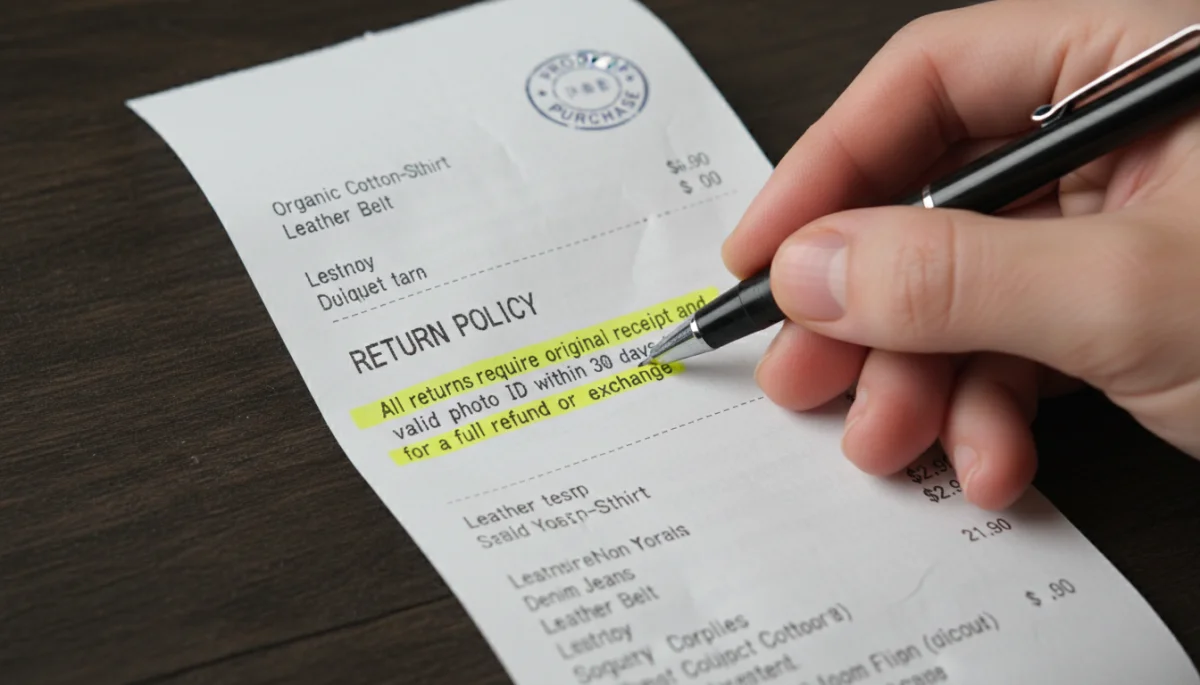
Furthermore, locate any warranty cards or documents that came with the product. These documents outline the manufacturer’s promises regarding the product’s quality and performance. They often specify the duration of the warranty, what defects are covered, and the procedure for making a claim. Even if the store’s return window has passed, a manufacturer’s warranty might still cover the defect, entitling you to a repair, replacement, or refund.
In summary, preparing thoroughly by identifying the defect, documenting it with evidence, and gathering all purchase and warranty information creates a strong foundation for your return claim. This meticulous preparation will save you time and frustration, increasing the likelihood of a swift and successful resolution.
Navigating Retailer Return Policies and Manufacturer Warranties
Once you’ve identified a defective product and gathered your evidence, the next critical step is to understand and navigate the specific return policies of the retailer and the warranty terms of the manufacturer. While consumer protection laws provide a baseline, individual store policies and manufacturer warranties often dictate the immediate procedure for returns and refunds. These policies can vary widely, from generous, no-questions-asked returns to very strict conditions and timelines.
It’s important not to confuse a retailer’s general return policy, which often applies to non-defective items, with your rights concerning defective goods. For defective products, your legal rights generally supersede standard return policies, especially if the product is covered by an implied or express warranty. However, knowing both sets of rules will help you approach the situation strategically.
Understanding Retailer-Specific Return Policies
Each retailer typically has a published return policy, which should be readily available on their website, in-store, or printed on your receipt. These policies usually outline the timeframe for returns, whether a receipt is required, and the condition the product must be in. For defective items, the policy might have specific clauses or exceptions.
- Timeframes: Be aware of the return window. While your rights for defective items might extend beyond this, it’s always best to initiate the return as soon as possible.
- Original Packaging: Some retailers require original packaging for returns. While this can be challenging for defective items used for a period, it’s good to keep if possible.
- Proof of Purchase: Almost all retailers require proof of purchase. Digital receipts or credit card statements can often suffice if the original receipt is lost.
Remember that a retailer’s policy cannot diminish your statutory rights under consumer protection laws. If a product is genuinely defective, and the retailer refuses a return based solely on their policy, you have grounds to escalate the issue.
Leveraging Manufacturer Warranties for Defective Items
Manufacturer warranties are separate from retailer return policies and often provide longer-term protection against defects. These warranties are a direct promise from the manufacturer that the product will be free from defects in material and workmanship for a specified period.
If the retailer’s return window has closed, or if they refuse to accept the return, contacting the manufacturer directly is your next step. The manufacturer’s warranty typically outlines the process for making a claim, which often involves:
- Contacting Customer Service: Reach out to the manufacturer’s dedicated customer service or warranty department.
- Providing Proof of Purchase: You’ll need your receipt or invoice to prove the purchase date.
- Describing the Defect: Be prepared to clearly explain the issue, ideally with your documented evidence.
- Shipping the Product: You may be required to ship the defective product to the manufacturer for inspection or repair.
Many manufacturers prefer to repair defective items first. However, if the product cannot be repaired after a reasonable number of attempts, or if the repair is not feasible, you are generally entitled to a replacement or a full refund. Being persistent and clearly articulating your rights under the warranty can lead to a successful resolution.
In essence, understanding both retailer return policies and manufacturer warranties provides a dual approach to handling defective products. Start with the retailer for convenience, but be prepared to engage with the manufacturer if the retailer is uncooperative or if their return window has passed. Both avenues are valid paths to securing a full refund for a defective item.
Step-by-Step Guide: Initiating the Return Process
Once you have gathered all your evidence and understand your rights, it’s time to initiate the return process. Approaching this systematically can significantly improve your chances of a smooth and successful outcome. The key is to be prepared, polite, and persistent. Remember, customer service representatives are often the first point of contact, and a clear, calm approach can help them assist you more effectively.
This section will walk you through the practical steps, from your initial contact with the retailer or manufacturer to escalating the issue if necessary. Each step builds on the previous one, ensuring you present a strong case for a full refund for your defective product.
Contacting the Retailer or Manufacturer
Your first point of contact should generally be the retailer where you purchased the item. If their return window has expired, or they are unhelpful, then contact the manufacturer. Always start with a clear, concise explanation of the problem, referencing your evidence.
- In-Person: If returning to a physical store, bring the product, all original packaging, your receipt, and any other evidence. Be prepared to demonstrate the defect if possible.
- Online/Phone: When contacting customer service, have all your documentation ready. Note down the date, time, and the name of the representative you speak with. Keep a record of any reference numbers provided.
- Email/Chat: These methods offer a written record of your communication, which can be invaluable if further escalation is needed. Attach photos or videos of the defect if possible.
Clearly state that the product is defective and you are seeking a full refund as per your consumer rights and/or warranty terms. Avoid aggressive language, as this can hinder resolution.
Following Up and Escalating the Issue
If your initial attempt to return the defective product is met with resistance or denial, don’t give up. Persistence is often key. Follow up on your initial claim within the timeframe given by the representative, or within a reasonable period if no timeframe was specified.
If you’re still facing issues, it’s time to escalate. This typically means requesting to speak with a supervisor or manager. Clearly and calmly reiterate your case, referencing previous communications and your documented evidence. Explain that you believe your consumer rights are not being honored. Many companies have internal escalation procedures designed to handle more complex customer complaints.
If internal escalation fails, consider sending a formal written complaint. This letter should detail the product, the defect, your attempts to resolve the issue, and your request for a full refund. Mention relevant consumer protection laws or warranty provisions. Sending this via certified mail provides proof of delivery.
By systematically following these steps, you build a strong case and demonstrate your commitment to resolving the issue. This structured approach increases the likelihood of achieving a full refund for your defective product, even in challenging situations.
When Retailers or Manufacturers Refuse a Refund
Despite your best efforts and thorough preparation, there might be instances where a retailer or manufacturer still refuses to issue a full refund for a defective product. This can be incredibly frustrating, but it does not mean your options are exhausted. Several avenues exist for consumers to pursue their rights when facing such a roadblock. Knowing these next steps can empower you to continue fighting for the refund you are legally entitled to.
It’s important to remember that consumer protection laws are in place precisely for these situations. While the process may become more involved, the legal framework is designed to ensure fairness and prevent businesses from shirking their responsibilities regarding faulty goods. Do not be deterred by initial rejections.
Contacting Consumer Protection Agencies
If direct negotiations fail, your next step should be to contact relevant consumer protection agencies. These governmental and non-governmental organizations are established to mediate disputes and enforce consumer laws. They can provide guidance, intervene on your behalf, or initiate investigations into unfair business practices.
- Better Business Bureau (BBB): The BBB mediates disputes between consumers and businesses. Filing a complaint can often prompt a business to reconsider its stance to maintain its rating.
- State Attorney General’s Office: Your state’s Attorney General has a consumer protection division that handles complaints about unfair business practices. They can offer legal advice and may take action against businesses that violate state laws.
- Federal Trade Commission (FTC): While the FTC primarily handles broader consumer issues and deception, filing a complaint can help identify patterns of misconduct, even if they don’t directly intervene in individual cases.
When contacting these agencies, provide all the documentation you’ve gathered, including purchase records, evidence of the defect, and records of your communication with the retailer or manufacturer. This comprehensive information helps them understand your case quickly and efficiently.
Exploring Legal Recourse: Small Claims Court and Legal Aid
If all other avenues are exhausted, pursuing legal action might be necessary. For disputes involving amounts typically within the small claims court limits (which vary by state, often a few thousand dollars), this can be a relatively straightforward and inexpensive option that doesn’t require an attorney.
- Small Claims Court: You can file a lawsuit yourself in small claims court. You will present your evidence to a judge, who will then make a ruling. This process is designed to be accessible to individuals without legal representation.
- Legal Aid Societies: If you meet certain income requirements, legal aid societies can offer free or low-cost legal assistance and advice.
- Consumer Rights Attorneys: For more complex cases or higher value items, consulting with a consumer rights attorney might be beneficial. Many offer free initial consultations.
Before taking legal action, send a formal demand letter outlining your claim and intent to sue if a resolution isn’t reached. This often prompts businesses to settle to avoid the costs and negative publicity associated with a lawsuit. Remember, your rights as a consumer are protected by law, and you have legitimate recourse if those rights are violated.
In conclusion, a refusal to refund a defective product is not the end of the road. By leveraging consumer protection agencies and, if necessary, exploring legal options, you can effectively advocate for your rights and secure the full refund you are entitled to for a faulty purchase.
Preventative Measures and Smart Consumer Habits for 2026
While knowing your rights and the steps to take when returning a defective product is crucial, adopting smart consumer habits can significantly reduce the likelihood of encountering such issues in the first place. Prevention is always better than cure, and in the evolving market of 2026, being an informed and proactive consumer is more important than ever. These habits extend beyond the point of purchase, encompassing research, careful inspection, and diligent record-keeping.
By integrating these practices into your purchasing routine, you not only protect yourself against defective products but also become a more empowered and confident buyer. This proactive approach minimizes stress and potential financial losses associated with faulty goods.
Researching Products and Retailers Thoroughly
Before making a purchase, especially for significant investments, thorough research is paramount. This involves looking beyond just product features and price to delve into reviews, reliability, and the reputation of both the product and the seller.
- Read Reviews: Look for comprehensive reviews from multiple sources. Pay attention to recurring complaints about defects or poor customer service.
- Check Retailer Reputation: Research the retailer’s return policies, customer service track record, and how they handle disputes. Retailers with clear, fair policies are generally more reliable.
- Understand Warranty Terms: Before buying, familiarize yourself with the manufacturer’s warranty. A robust warranty often indicates confidence in product quality.
Websites like the Better Business Bureau, consumer reports, and various product review sites can be invaluable resources. A little research upfront can save you a lot of hassle later on.
Inspecting Products and Retaining Documentation
Upon receiving a product, especially if ordered online, conduct an immediate and thorough inspection. Don’t wait until you need to use it to discover a defect. Any signs of damage or malfunction should be noted immediately.
- Immediate Inspection: Check for physical damage, missing parts, and ensure the product powers on and functions correctly according to its basic instructions.
- Keep Original Packaging: Retain all original packaging, manuals, and accessories. Many retailers require these for returns, even for defective items.
- File All Receipts and Warranties: Create a system for organizing your purchase receipts, invoices, and warranty information. Digital copies are excellent for this purpose. Consider using cloud storage for important documents.
By being diligent in these preventative measures, you significantly reduce the chances of purchasing a defective item or, if you do, you’ll be fully prepared to handle the return process efficiently. These smart consumer habits empower you in the 2026 marketplace, making you a more resilient and informed buyer.
In essence, adopting preventative measures and smart consumer habits is a powerful strategy. By thoroughly researching products and retailers, and by diligently inspecting items and retaining all relevant documentation, you can proactively protect your interests and minimize the frustrations associated with defective products, ensuring a smoother consumer experience in 2026 and beyond.
The Role of Technology and Digital Tools in 2026 Returns
As we move further into 2026, technology plays an increasingly pivotal role in almost every aspect of our lives, and consumer returns are no exception. Digital tools and technological advancements have streamlined many processes, making it easier for consumers to document issues, communicate with retailers, and track their return requests. Understanding how to leverage these tools can significantly enhance your efficiency and effectiveness when dealing with defective products and seeking a full refund.
From digital receipts to AI-powered customer service bots, the landscape of consumer interaction is evolving. Embracing these technological aids can provide a significant advantage in navigating what can sometimes be a cumbersome process, ensuring your rights are upheld with minimal friction.
Digital Receipts and Automated Communication
The widespread adoption of digital receipts has revolutionized how consumers manage their purchase records. No longer reliant on easily lost paper slips, consumers can now store receipts securely in emails, cloud storage, or dedicated apps. This makes retrieving proof of purchase for a defective item significantly easier.
- Centralized Storage: Use apps or cloud services to centralize all your digital receipts. This ensures you always have access to them when needed.
- Automated Communication Platforms: Many retailers and manufacturers now offer automated chat support or email systems. While sometimes frustrating, these platforms often provide a written record of your initial contact and can guide you through the first steps of a return.
- AI-Powered Assistance: AI chatbots are becoming more sophisticated, capable of answering common questions and even initiating return requests. While they may not resolve complex issues, they can often direct you to the correct department or provide necessary forms.
Leveraging these digital tools ensures that your essential documentation is always at hand and that your initial communications are recorded, providing a clear audit trail should further action be required.
Utilizing Consumer Review Platforms and Social Media
In 2026, consumer review platforms and social media have become powerful tools for both sharing experiences and seeking resolution for product issues. While not a direct return mechanism, these platforms can exert significant pressure on companies to address customer complaints, especially when conventional methods fail.
- Public Reviews: Posting a detailed, factual review about a defective product and your experience with customer service on platforms like Yelp, Google Reviews, or product-specific sites can attract the attention of the company.
- Social Media Engagement: Publicly tweeting at a company’s official support handle or posting on their Facebook page can sometimes lead to a quicker response, as companies are often sensitive to public perception.
- Consumer Forums: Online forums dedicated to consumer rights or specific product categories can offer advice, shared experiences, and even direct contacts for resolving issues.
While using these platforms, always maintain a professional and factual tone. Emotional or aggressive posts are less likely to be taken seriously and can reflect poorly on your credibility. The goal is to highlight the issue and encourage the company to act responsibly.
In essence, the intelligent use of technology and digital tools in 2026 can significantly empower consumers. From maintaining organized digital records to leveraging public platforms for resolution, these advancements provide additional layers of support and efficiency in the process of returning defective products for a full refund, making the consumer journey smoother and more transparent.
| Key Aspect | Description |
|---|---|
| Consumer Rights | Federal (Magnuson-Moss) and state laws protect against defective products, ensuring repair, replacement, or refund. |
| Evidence Collection | Document defects with photos/videos, retain all purchase receipts and warranty information. |
| Return Process | Contact retailer first, then manufacturer. Escalate to supervisors or consumer agencies if unresolved. |
| Preventative Steps | Research products/retailers, inspect items upon receipt, and maintain organized documentation. |
Frequently asked questions about defective product returns
In 2026, a defective product generally refers to an item that fails to perform its intended function safely and effectively, possesses a manufacturing flaw, or deviates from its advertised specifications. This typically excludes damage caused by misuse or accidental consumer actions.
While some retailers prefer original packaging, its absence usually doesn’t negate your right to a refund for a truly defective product under consumer law. Focus on providing proof of purchase and evidence of the defect; packaging is often secondary in these cases.
A retailer’s return policy covers general returns, while a manufacturer’s warranty is a guarantee from the maker against defects for a specific period. Your rights for defective products often extend beyond the retailer’s return window, relying on the manufacturer’s warranty and consumer protection laws.
There isn’t a single federal standard. Retailer return windows vary, often 30-90 days. However, for truly defective products covered by implied or express warranties, your rights can extend much longer, sometimes for years, depending on the product and state laws.
If denied, escalate by contacting consumer protection agencies like the Better Business Bureau or your State Attorney General’s office. For higher-value items, consider legal aid or small claims court. Document every interaction for a stronger case.
Conclusion
Navigating the process of returning a defective product in 2026 for a full refund in the US can seem daunting, but armed with the right knowledge and a systematic approach, consumers are well-positioned to assert their rights. Understanding the legal landscape, meticulously documenting defects, and strategically engaging with retailers and manufacturers are key steps. Even when faced with resistance, various avenues, from consumer protection agencies to legal recourse, exist to ensure fairness. By adopting smart consumer habits and leveraging modern technology, individuals can protect their investments and foster a more accountable marketplace, ensuring that defective products do not lead to unnecessary financial loss or frustration.
