2026 Tax Code Changes: Crucial Updates for Your Investments

Navigating the 2026 tax code changes is essential for protecting and growing your personal investments, requiring proactive planning to adapt to new regulations and maximize financial opportunities.
As 2026 approaches, understanding the impending shifts in tax legislation is paramount for every investor.
These significant modifications to the 2026 tax code changes will profoundly impact personal investments,
necessitating a proactive approach to financial planning and strategy.
Understanding the Sunset of TCJA Provisions
The Tax Cuts and Jobs Act (TCJA) of 2017 brought about sweeping changes to the U.S. tax landscape,
many of which are set to expire, or “sunset,” at the end of 2025. This means that starting in 2026,
taxpayers will likely see a reversion to some pre-TCJA rules, alongside potential new legislation.
This shift will affect various aspects of personal finance, from individual income tax rates to estate planning.
For investors, the sunset of these provisions is not just a technicality; it represents a fundamental
recalibration of the financial environment. It’s crucial to recognize that this isn’t merely a return
to the old ways, as new economic realities and legislative priorities may introduce additional complexities.
Being informed about these expiring provisions allows for timely adjustments to investment portfolios and tax strategies.
Individual Income Tax Brackets and Rates
One of the most direct impacts of the TCJA sunset will be on individual income tax brackets and rates.
Many of the lower rates introduced by the TCJA are scheduled to revert to their higher pre-2018 levels.
- Higher Marginal Rates: Expect marginal tax rates to increase for many income levels, potentially affecting net investment income.
- Bracket Adjustments: The income thresholds for each tax bracket will also likely revert, pushing some taxpayers into higher brackets.
- Impact on Taxable Accounts: Investments held in taxable brokerage accounts will see a direct impact on their annual tax burden from income and short-term capital gains.
This change alone can significantly alter the after-tax returns on investments.
Investors should review their income projections and consider strategies to mitigate the impact of higher rates,
such as tax-loss harvesting or increasing contributions to tax-advantaged accounts.
The reversion of these tax brackets and rates underscores the importance of tax-efficient investing.
Understanding where your income falls within the new structure will be key to optimizing your financial decisions.
Proactive planning now can soften the blow of these impending increases.
Changes to Capital Gains and Dividends Taxation
The taxation of capital gains and qualified dividends is another area poised for significant alteration
with the 2026 tax code changes. While the TCJA did not dramatically overhaul capital gains rates,
their interaction with individual income tax brackets means that changes in one will inevitably
affect the other.
Long-term capital gains and qualified dividends typically enjoy preferential tax treatment,
often at rates lower than ordinary income. However, if ordinary income tax brackets increase,
more individuals may find themselves pushed into higher capital gains tax tiers.
Potential Rate Increases for Long-Term Capital Gains
The current long-term capital gains rates (0%, 15%, 20%) are tied to specific income thresholds.
Should the ordinary income tax brackets revert to pre-TCJA levels, these thresholds will also shift,
potentially subjecting more investors to the 15% or 20% rates. For high-income earners,
this could mean a substantial increase in the tax liability on their investment profits.
- Threshold Adjustments: Be aware of new income thresholds that determine your capital gains tax rate.
- Strategic Selling: Consider realizing capital gains strategically in 2025 if you anticipate being in a higher tax bracket in 2026.
- Tax-Efficient Funds: Explore tax-managed funds or exchange-traded funds (ETFs) designed to minimize capital gains distributions.
The interplay between ordinary income and capital gains rates makes tax planning particularly complex.
Investors with significant unrealized gains should consult with a financial advisor to understand
the optimal timing for selling assets to minimize tax impact. This foresight can protect a substantial
portion of their investment returns.
Ultimately, the changes to capital gains and dividends taxation will require a careful re-evaluation
of investment strategies, particularly for those approaching retirement or with substantial portfolios.
Understanding these nuances is critical for maintaining overall portfolio health.
Estate and Gift Tax Exemption Reductions
One of the most impactful provisions of the TCJA for high-net-worth individuals was the dramatic increase
in the estate and gift tax exemption amount. This exemption, which allows individuals to pass on
a significant amount of wealth free of federal estate or gift tax, is also scheduled to revert
to pre-TCJA levels in 2026.
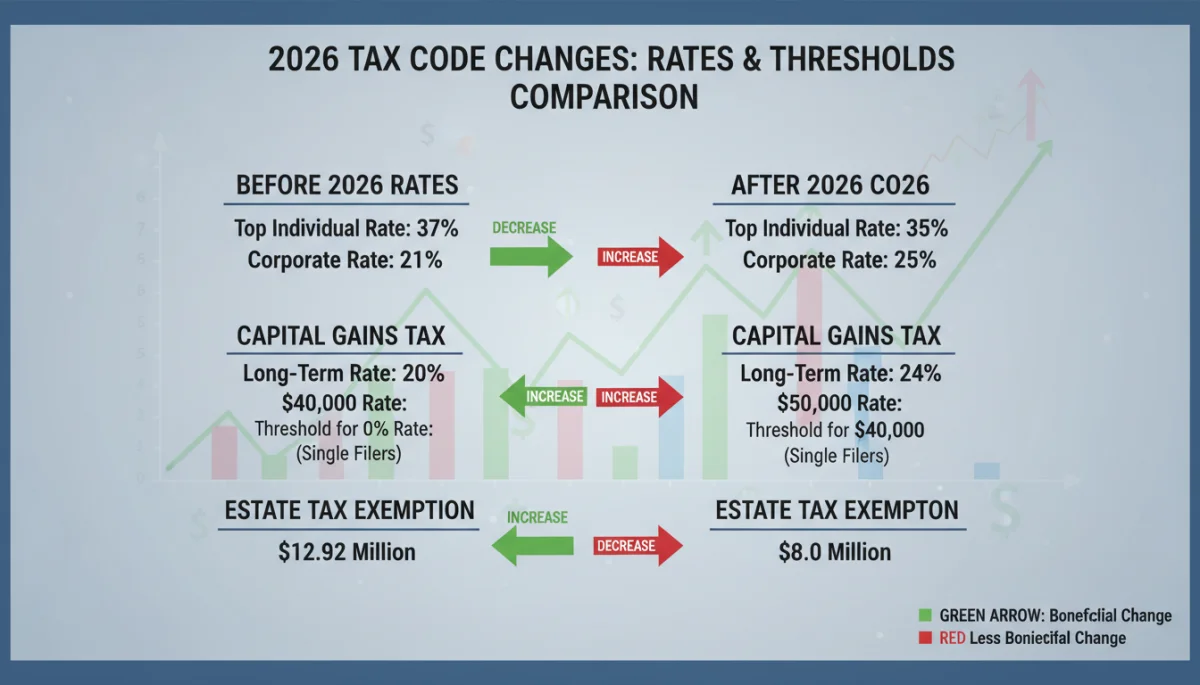
The current exemption is over $13 million per individual, but come 2026, it is expected to drop
to roughly half that amount, adjusted for inflation. This reduction will have profound implications
for estate planning, particularly for families with substantial assets.
Revisiting Your Estate Plan
With the exemption amount set to decrease, many individuals who previously thought their estates
were exempt from federal estate tax may find themselves subject to it. This necessitates an immediate
review of existing estate plans.
- Utilize Current Exemption: Consider making substantial gifts in 2025 to take advantage of the higher exemption before it sunsets.
- Trust Planning: Explore various trust structures, such as irrevocable trusts, to remove assets from your taxable estate.
- Life Insurance Strategies: Review life insurance policies, as they can play a crucial role in providing liquidity to cover potential estate taxes.
Estate planning is not just for the ultra-wealthy; it’s a vital component of comprehensive financial planning
for anyone with significant assets. The impending reduction in the estate and gift tax exemption
serves as a strong call to action for everyone to consult with estate planning attorneys and financial advisors.
Ignoring these changes could result in a significant portion of your legacy being subject to taxation,
thus diminishing the wealth passed on to your heirs. Proactive planning can ensure your wishes are honored
and your beneficiaries are protected.
Modifications to Retirement Account Contributions and Distributions
Retirement accounts are cornerstones of personal investment strategies, offering tax advantages
that help grow wealth over the long term. While the core structure of 401(k)s and IRAs may remain,
the 2026 tax code changes could introduce subtle yet significant shifts in contribution limits,
distribution rules, and overall tax efficiency.
It’s unlikely that major overhauls to the existence of these accounts will occur, but adjustments
to catch-up contributions, required minimum distributions (RMDs), or even the tax treatment of
Roth conversions could be on the table. These changes, even minor ones, can alter the optimal
strategy for maximizing retirement savings.
Strategic Retirement Planning Adjustments
Investors should pay close attention to any announcements regarding changes to retirement account rules.
These adjustments can influence decisions on how much to contribute, whether to choose traditional
or Roth options, and when to take distributions.
- Maximize Current Contributions: Ensure you are maximizing contributions to your 401(k)s and IRAs, especially if limits are expected to change.
- Roth Conversion Considerations: Evaluate if a Roth conversion makes sense in 2025, particularly if you anticipate higher future tax rates.
- RMD Planning: Understand how potential changes to RMD age or calculation methods might affect your income in retirement.
The tax-advantaged nature of retirement accounts makes them powerful tools for wealth accumulation.
Staying informed about evolving regulations is essential to harness their full potential.
A well-structured retirement plan can adapt to these changes and continue to provide secure financial futures.
These modifications, though perhaps less dramatic than others, can collectively impact long-term financial health.
Regular reviews of your retirement strategy with a financial advisor will be crucial to staying ahead.
Impact on Business Pass-Through Income Deduction (Section 199A)
For individuals who own pass-through businesses – such as sole proprietorships, partnerships,
S corporations, and some LLCs – the Section 199A deduction has been a significant tax benefit.
This deduction allows qualified business owners to deduct up to 20% of their qualified business income (QBI).
Like many other provisions of the TCJA, the Section 199A deduction is scheduled to expire at the end of 2025.
Its sunset will eliminate a substantial tax break for many small business owners and investors in pass-through entities,
directly impacting their taxable income and overall investment capacity.
Rethinking Business Structures and Income Strategies
The loss of the QBI deduction will necessitate a re-evaluation of how pass-through businesses are structured
and how their income is managed. This is particularly relevant for those who rely on this deduction to
offset their personal income tax liabilities.
- Business Structure Review: Consult with tax professionals to assess if your current business structure remains optimal without the 199A deduction.
- Income Diversification: Explore strategies to diversify income streams or reallocate profits to minimize tax exposure.
- Expense Management: Intensify focus on qualified business expenses to reduce taxable income if the deduction is gone.
The expiration of Section 199A will likely lead to higher tax burdens for many business owners,
which could in turn affect their ability to reinvest in their businesses or contribute to personal investments.
Understanding this change is critical for maintaining business profitability and personal wealth.
Proactive planning, including exploring alternative tax-saving strategies and potentially adjusting
business operations, will be essential to navigate this particular aspect of the 2026 tax code changes effectively.
Potential for New Investment-Related Tax Credits and Deductions
While many provisions are set to expire, the legislative landscape is dynamic, and there’s always
the potential for new tax credits and deductions to emerge. Policymakers often use tax incentives
to encourage certain behaviors, such as investing in specific sectors, promoting energy efficiency,
or supporting education and family care.
Keeping an eye on proposed legislation and congressional priorities can provide clues about
what new investment-related tax benefits might be introduced. These could range from expanded
credits for renewable energy investments to new deductions for educational savings or childcare expenses,
all of which can indirectly free up capital for personal investments.
Staying Informed on Emerging Tax Opportunities
For savvy investors, being aware of potential new tax incentives is just as important as understanding
expiring ones. These new opportunities could provide avenues for tax savings or direct investment advantages.
- Monitor Legislative Updates: Regularly follow financial news and government announcements regarding tax policy proposals.
- Consult Tax Professionals: Work with advisors who stay current on legislative changes and can identify new applicable credits or deductions.
- Adapt Investment Strategy: Be prepared to adjust your investment portfolio to take advantage of new tax-advantaged areas if they align with your financial goals.
New tax credits and deductions, even if they don’t directly target investment accounts, can still
significantly impact your overall financial picture by reducing your taxable income or providing
direct savings. This freed-up capital can then be channeled into personal investments, enhancing
your wealth-building efforts.
The evolving nature of tax law means that opportunities can arise as well as challenges.
A flexible and informed approach will be key to capitalizing on any new benefits that emerge.
The Importance of Proactive Tax Planning and Professional Guidance
The impending 2026 tax code changes underscore the critical importance of proactive tax planning.
Waiting until the last minute to address these shifts can lead to missed opportunities and increased tax liabilities.
Effective planning involves not just reacting to changes but anticipating them and positioning your
investments accordingly.
Given the complexity and scope of the anticipated changes, relying solely on self-guidance can be risky.
The nuances of tax law, particularly as they interact with diverse investment portfolios, require a
level of expertise that most individuals do not possess.
Engaging with Financial and Tax Professionals
Working with qualified financial advisors and tax professionals is perhaps the most crucial step
investors can take in preparing for 2026. These experts can provide personalized advice tailored
to your specific financial situation and investment goals.
- Personalized Strategy Development: Professionals can help you develop a comprehensive tax strategy that aligns with your financial objectives.
- Stay Ahead of Changes: Advisors are continuously monitoring legislative developments, ensuring you are informed about potential impacts.
- Optimize Portfolio: They can recommend adjustments to your investment portfolio to maximize after-tax returns and minimize liabilities.
A professional can help you navigate complex decisions, such as whether to realize capital gains
early, adjust retirement contributions, or restructure your estate plan. Their guidance can translate
into significant tax savings and enhanced investment growth over time.
Investing in expert advice now can be a wise decision that pays dividends well into the future,
ensuring your financial plan remains robust and resilient against the shifting tax landscape.
| Key Tax Change | Brief Impact on Investments |
|---|---|
| Income Tax Brackets Reversion | Likely higher marginal tax rates, affecting taxable investment income and short-term capital gains. |
| Capital Gains Rate Shifts | Potential for more individuals to fall into higher long-term capital gains tax tiers due to income bracket changes. |
| Estate Tax Exemption Reduction | Significant decrease in the federal estate and gift tax exemption, impacting high-net-worth individuals’ estate plans. |
| Section 199A Deduction Sunset | Elimination of the 20% pass-through business income deduction, affecting owners of sole proprietorships, partnerships, etc. |
Frequently Asked Questions About 2026 Tax Changes
The main driver is the scheduled expiration of many provisions from the Tax Cuts and Jobs Act of 2017 (TCJA). These provisions, including individual income tax rates and certain deductions, were set to sunset at the end of 2025, reverting to pre-TCJA law unless new legislation is passed.
While the capital gains tax rates themselves may not drastically change, the income thresholds determining which rate applies are expected to revert. This could push more investors into higher capital gains tax brackets, especially for long-term gains and qualified dividends.
It’s advisable to review your retirement strategy. While core account structures likely remain, potential shifts in contribution limits, RMD rules, or Roth conversion tax treatment could influence your optimal saving approach. Maximizing current contributions is generally a good strategy.
The expiration of the Section 199A deduction means that owners of pass-through businesses will lose the ability to deduct up to 20% of their qualified business income. This will likely result in a higher personal tax burden for many small business owners and investors.
It is highly recommended to seek professional advice now, well before 2026. A financial advisor or tax professional can help you understand the specific impacts on your investments and develop a proactive strategy to mitigate risks and capitalize on potential opportunities.
Conclusion
The impending 2026 tax code changes represent a pivotal moment for personal investors.
From shifts in individual income tax rates and capital gains taxation to significant adjustments
in estate and gift tax exemptions and the sunset of the Section 199A deduction, the landscape
of personal finance is set for a substantial recalibration. While these changes present challenges,
they also offer opportunities for those who are prepared. Proactive planning, informed decision-making,
and particularly, timely consultation with financial and tax professionals are not just advisable
but essential. By understanding these crucial updates and strategically adapting your investment
portfolio and tax strategy, you can navigate the evolving tax environment effectively, safeguard
your wealth, and continue on your path toward financial success.
