AI’s Impact on US Education: 4 Innovations for 2026
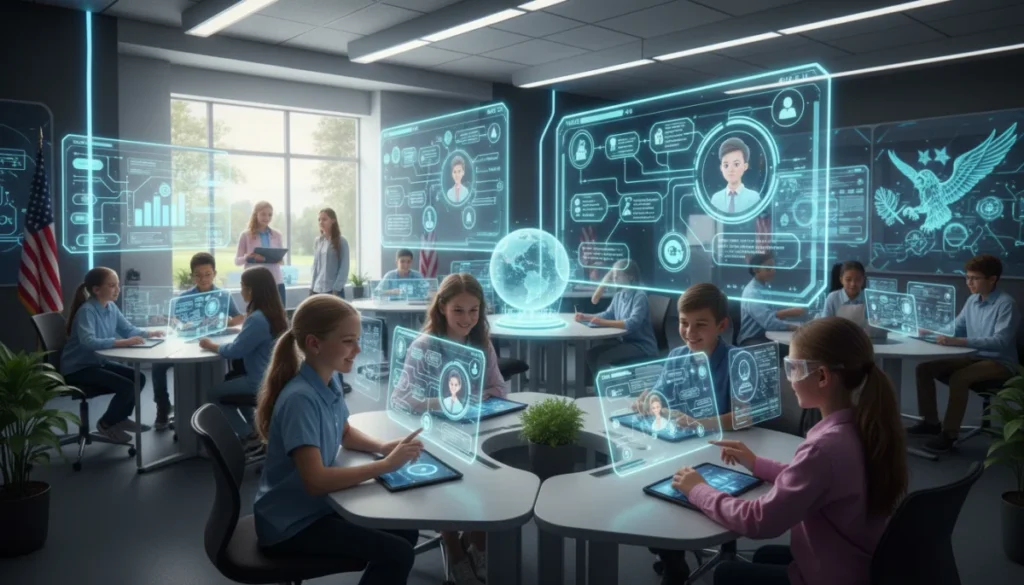
Artificial intelligence is set to revolutionize US education, with four transformative innovations expected to profoundly impact learning experiences and outcomes for students across the nation by 2026.
The landscape of learning in the United States is on the brink of a profound transformation, largely driven by advancements in artificial intelligence. By 2026, the impact of AI on US education will be undeniable, reshaping how students learn, how educators teach, and how institutions operate. This shift isn’t just about integrating new tools; it’s about fundamentally rethinking the educational paradigm to foster more personalized, efficient, and engaging environments. We’re moving beyond traditional classrooms into an era where AI acts as a catalyst for innovation, promising a future where every student can unlock their full potential.
Personalized Learning Paths: Tailoring Education to Every Student
One of the most significant innovations AI brings to US education is the creation of truly personalized learning paths. Traditional education often struggles with a one-size-fits-all approach, leaving many students either bored or overwhelmed. AI changes this by adapting content, pace, and teaching methods to individual student needs, preferences, and learning styles. This ensures that each student receives an education uniquely suited to them, maximizing engagement and comprehension.
Adaptive Content Delivery
AI algorithms can analyze a student’s performance, identify areas of strength and weakness, and then dynamically adjust the curriculum. This means content is presented in a way that is challenging enough to promote growth but not so difficult as to cause frustration. The system learns with the student, evolving its approach as their understanding deepens.
- Real-time Assessment: AI continuously assesses student progress, not just through formal tests but through every interaction.
- Curriculum Customization: Educational materials are tailored on the fly, offering different explanations or examples based on individual needs.
- Engagement Optimization: AI can suggest learning activities that align with a student’s interests, making the process more enjoyable.
Individualized Pacing and Remediation
No two students learn at the same pace. AI allows students to progress through material at their own speed, spending more time on difficult concepts and accelerating through those they quickly grasp. If a student struggles, the AI can provide immediate, targeted remediation, offering alternative explanations or practice problems until mastery is achieved. This eliminates the need for students to wait for a teacher’s attention or feel left behind.
The goal of personalized learning paths is to create an educational experience that is as unique as each student. By leveraging AI, educators can move from being content deliverers to facilitators of learning, focusing on guiding students through their customized journeys. This innovation promises to close achievement gaps and foster a deeper, more meaningful understanding of subjects across the board in US education.
Intelligent Tutoring Systems: AI as a Personal Academic Coach
Intelligent Tutoring Systems (ITS) represent another groundbreaking AI innovation set to transform US education by 2026. These systems go far beyond simple educational software, acting as virtual one-on-one tutors that can provide personalized feedback, answer questions, and guide students through complex problems. They are designed to mimic the effectiveness of human tutors, but at scale, making high-quality, individualized instruction accessible to millions of students.
Immediate and Contextual Feedback
One of the core benefits of ITS is their ability to provide instant feedback. Unlike waiting for a teacher to grade an assignment, an ITS can tell a student immediately where they went wrong and, more importantly, why. This real-time feedback loop is crucial for effective learning, allowing students to correct misconceptions before they become deeply ingrained. The feedback is also contextual, meaning it’s directly related to the specific problem or concept the student is working on.
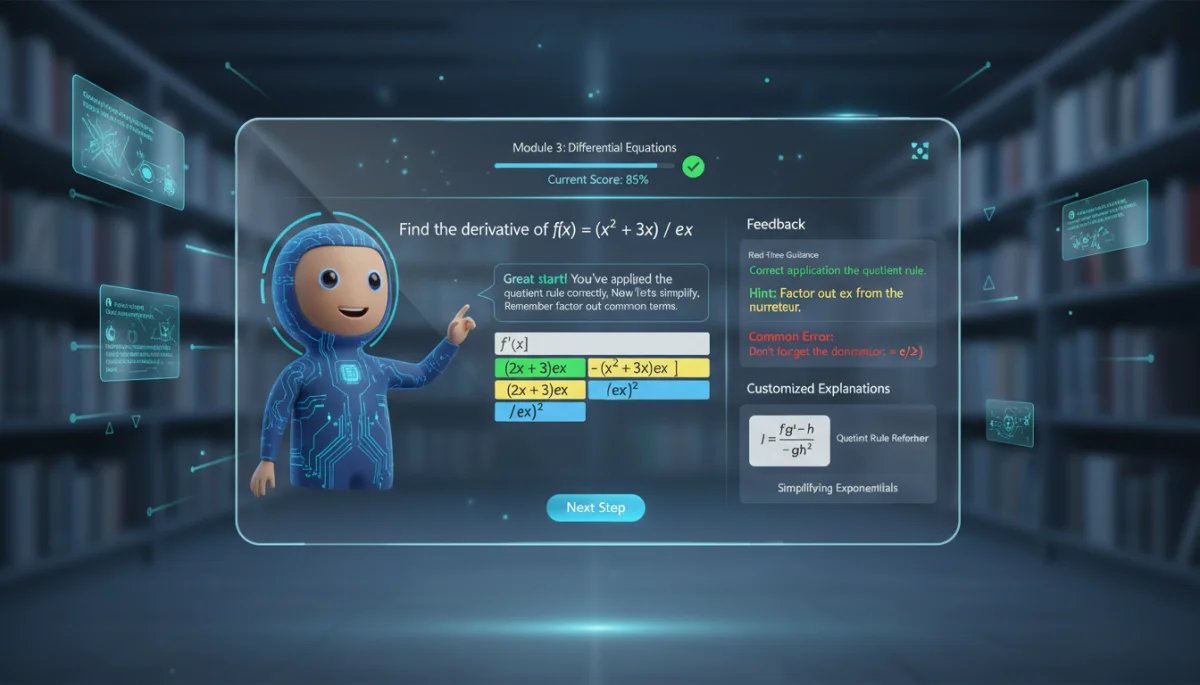
These systems often employ natural language processing to understand student queries and responses, allowing for more natural and intuitive interactions. They can identify patterns in student errors, suggesting targeted practice or reviewing foundational concepts that might be missing. This proactive approach helps build a stronger understanding from the ground up.
Scalability and Accessibility
The beauty of ITS lies in their scalability. A human tutor can only work with a limited number of students, but an AI tutor can support thousands, if not millions, simultaneously. This makes high-quality tutoring accessible to students in remote areas, those with special needs, or those who might not otherwise afford private tutoring. It democratizes access to personalized academic support, leveling the playing field for many.
- 24/7 Availability: Students can access tutoring support anytime, anywhere, fitting learning into their schedules.
- Reduced Teacher Burden: While not replacing teachers, ITS can free up educators to focus on higher-level instruction and individual student needs.
- Data-Driven Insights: ITS collect vast amounts of data on student learning, providing valuable insights for educators and curriculum developers.
Intelligent Tutoring Systems are poised to become indispensable tools in US education, providing a layer of individualized support that was previously unattainable. They empower students to take more control over their learning, fostering independence and deeper understanding, while also providing valuable data to improve overall educational strategies.
Automated Administrative Tasks: Freeing Educators for Teaching
The administrative burden on educators is a well-documented challenge in US education. Teachers often spend countless hours on tasks that detract from their primary role: teaching. By 2026, AI will significantly alleviate this pressure through automated administrative tasks, allowing educators to reclaim valuable time and focus more on student interaction and instructional design. This shift is crucial for improving teacher morale and effectiveness.
Streamlining Grading and Feedback
AI-powered tools are becoming increasingly sophisticated at grading various types of assignments, from multiple-choice questions to essays. While human oversight remains essential for nuanced assessments, AI can handle the bulk of routine grading, providing consistent and quick feedback. This not only saves teachers time but also ensures students receive timely responses, which is critical for learning.
- Automated Quizzes and Tests: Instant grading and performance reports for objective assessments.
- Essay Scoring: AI can analyze grammar, spelling, style, and even logical coherence in written assignments, providing preliminary feedback.
- Plagiarism Detection: Sophisticated AI tools can quickly identify instances of plagiarism, ensuring academic integrity.
Optimizing Scheduling and Resource Management
Beyond grading, AI can revolutionize school administration. Complex tasks like scheduling classes, allocating resources, and managing student records can be optimized by AI algorithms. These systems can factor in various constraints and preferences to create efficient schedules, ensuring optimal use of facilities and personnel. This can lead to smoother operations and better resource utilization across school districts.
The automation of administrative tasks by AI is not about replacing educators; it’s about empowering them. By taking over mundane, time-consuming duties, AI allows teachers to dedicate more energy to what truly matters: inspiring and educating students. This innovation will lead to a more efficient and human-centered educational system in the US, where educators can thrive and students benefit from their renewed focus.
Data-Driven Insights for Educational Improvement
The fourth major innovation shaping the impact of AI on US education by 2026 involves the use of data-driven insights to continuously improve educational outcomes. AI’s ability to collect, analyze, and interpret vast amounts of educational data provides unparalleled opportunities for educators, administrators, and policymakers to make informed decisions. This leads to more effective teaching strategies, better curriculum design, and targeted interventions for students.
Predictive Analytics for Student Success
AI can analyze historical and real-time student data to identify patterns and predict potential challenges. For example, an AI system might flag a student who is showing early signs of disengagement or academic difficulty, allowing educators to intervene proactively. This predictive capability can be a game-changer in preventing students from falling behind and ensuring they receive the support they need to succeed.
- Early Warning Systems: AI identifies students at risk of dropping out or failing courses.
- Intervention Planning: Based on predictions, AI can suggest specific interventions or support resources.
- Personalized Recommendations: AI can recommend courses or career paths aligned with student strengths and interests.
Optimizing Curriculum and Teaching Strategies
Beyond individual students, AI can provide insights into the effectiveness of entire curricula and teaching methodologies. By analyzing how different approaches impact student learning outcomes, AI can help educators refine their strategies and develop more effective instructional materials. This continuous feedback loop ensures that educational practices are constantly evolving and improving, based on empirical evidence rather than intuition.
Furthermore, AI can help identify biases in educational materials or assessment methods, promoting more equitable and inclusive learning environments. By providing a clear, objective view of what works and what doesn’t, data-driven insights powered by AI will be instrumental in shaping the future direction of US education, ensuring that resources are allocated effectively and that every student has the best possible chance to thrive.
| Key Innovation | Brief Description |
|---|---|
| Personalized Learning Paths | AI tailors educational content and pace to individual student needs and learning styles. |
| Intelligent Tutoring Systems | AI provides real-time, one-on-one academic support and personalized feedback to students. |
| Automated Administrative Tasks | AI streamlines grading, scheduling, and other administrative duties, freeing up educators. |
| Data-Driven Insights | AI analyzes educational data to improve curricula, teaching strategies, and student outcomes. |
Frequently Asked Questions About AI in US Education
AI will analyze individual student performance, learning styles, and progress to adapt content, pace, and teaching methods. This ensures each student receives a customized educational experience that caters to their unique needs, enhancing engagement and comprehension in US schools.
No, AI tutoring systems are designed to supplement, not replace, human teachers. They provide personalized support and feedback, handling routine tasks and allowing teachers to focus on more complex instructional strategies, emotional support, and fostering critical thinking skills.
AI can automate various administrative tasks, including grading objective assignments, providing preliminary feedback on essays, managing student records, optimizing class scheduling, and detecting plagiarism. This frees up educators to dedicate more time to direct student interaction and instructional planning.
AI provides data-driven insights by analyzing student performance across different curricula and teaching methods. This allows educators and administrators to identify effective strategies, refine learning materials, and continuously improve educational programs based on empirical evidence of what works best for students.
Ethical considerations include data privacy and security, algorithmic bias, ensuring equitable access to AI tools, and maintaining the human element in education. It’s crucial to develop policies that address these concerns to ensure AI benefits all students fairly and responsibly.
Conclusion
The rapid advancements in artificial intelligence are poised to fundamentally redefine US education by 2026. From creating highly personalized learning paths and deploying intelligent tutoring systems to automating administrative burdens and providing invaluable data-driven insights, AI’s transformative potential is immense. These innovations promise a future where education is more accessible, efficient, and tailored to the unique needs of every student. While challenges related to implementation and ethics remain, the overarching goal is to leverage AI to empower both learners and educators, fostering a more dynamic and effective educational landscape across the United States. The journey into AI-powered learning is not just about technology; it’s about unlocking human potential on an unprecedented scale.
