Salary Negotiation Secrets: Get Your Deserved 2026 Offer

Mastering salary negotiation is crucial for career advancement, and in 2026, it requires strategic preparation, understanding market value, and confident communication to secure the compensation you deserve.
In today’s competitive job market, understanding how to approach salary negotiation secrets is more critical than ever, especially as we look towards 2026. Securing the offer you deserve isn’t just about asking for more; it’s a strategic process that can significantly impact your financial well-being and career trajectory. This guide will walk you through the essential strategies to confidently navigate these crucial conversations.
The evolving landscape of compensation in 2026
The job market is constantly shifting, and 2026 presents its own unique set of challenges and opportunities. Understanding these dynamics is the first step in successful salary negotiation. Factors like inflation, remote work trends, and industry-specific demand all play a significant role in determining compensation packages.
Companies are increasingly focused on attracting and retaining top talent, which means they are often willing to be flexible for the right candidate. However, this flexibility doesn’t translate into automatic higher offers. Candidates must be prepared to articulate their value and justify their salary expectations with solid data and a clear understanding of market trends. The shift towards skills-based hiring and the increasing importance of soft skills also influence how compensation is structured.
Understanding market value and industry benchmarks
Before entering any negotiation, thorough research into market value is non-negotiable. This involves looking beyond base salary to encompass total compensation, including benefits, bonuses, and equity. Utilize reliable data sources to get an accurate picture of what professionals with your experience and skill set are earning in your target industry and location.
- Online salary aggregators: Websites like Glassdoor, LinkedIn Salary, and Payscale provide valuable insights into salary ranges for various roles.
- Industry reports: Many professional organizations publish annual compensation surveys specific to their sectors.
- Networking: Discreet conversations with peers and mentors can offer anecdotal evidence and help validate your research.
By having a firm grasp of these benchmarks, you position yourself as an informed candidate, capable of making a well-reasoned argument for your desired compensation. This foundational research empowers you to approach the negotiation table from a position of strength, not guesswork.
In conclusion, the 2026 compensation landscape demands a proactive and informed approach. By understanding the broader economic factors and meticulously researching your market value, you lay the groundwork for effective salary negotiations, ensuring your expectations are realistic yet ambitious.
Strategy 1: comprehensive preparation and self-assessment
Effective salary negotiation doesn’t begin when an offer is extended; it starts long before, with comprehensive preparation and a critical self-assessment of your value. This foundational work is paramount to securing the offer you deserve in 2026.
Begin by meticulously documenting your accomplishments and contributions. Think beyond your daily tasks and focus on quantifiable results. Did you exceed sales targets? Streamline a process, saving the company time or money? Lead a successful project? These specific examples form the bedrock of your value proposition. Quantify these achievements whenever possible, using percentages, dollar amounts, or time saved. This data provides concrete evidence of your impact, making your case for a higher salary much more compelling.
Articulating your unique value proposition
Beyond your past achievements, consider your unique skills, experiences, and how they align with the prospective role and company needs. What specialized knowledge do you possess? What unique perspective do you bring? How do your soft skills, like leadership, problem-solving, or communication, contribute to organizational success? Your value proposition should clearly articulate how you will solve their problems and contribute to their goals.
- Identify key skills: List all relevant hard and soft skills that differentiate you.
- Connect skills to company needs: Research the company’s challenges and show how your skills provide solutions.
- Practice your pitch: Rehearse how you will articulate your value concisely and confidently.
This self-assessment isn’t just about boosting your confidence; it’s about providing you with an arsenal of compelling arguments during the negotiation. When you fully understand and can articulate your value, you’re better equipped to advocate for the compensation that reflects it.
In essence, thorough preparation and an honest self-assessment are not merely good practices; they are indispensable elements of a successful negotiation strategy. By taking the time to understand and articulate your unique value, you build a robust case for the salary you desire.
Strategy 2: strategic communication during the negotiation phase
Once you’ve done your homework, the next critical step in successful salary negotiation is strategic communication. This phase requires finesse, confidence, and an understanding of psychological principles to guide the conversation effectively. It’s not just about what you say, but how you say it, and when.
When the initial offer comes, resist the urge to accept or reject immediately. Express enthusiasm for the offer and the opportunity, but request time to review it thoroughly. This demonstrates professionalism and provides you with valuable time to strategize your counter-offer. During this review period, analyze the entire compensation package, not just the base salary. Consider benefits, bonuses, equity, vacation time, professional development opportunities, and even work flexibility.
Crafting and delivering your counter-offer
Your counter-offer should be well-researched and presented with confidence, backed by the market data and your self-assessment. Aim for a figure slightly above your target, allowing room for negotiation. Frame your request positively, focusing on your excitement for the role and how the adjusted compensation aligns with your value and market rates.
- Be specific: Clearly state your desired salary figure and any other non-monetary requests.
- Justify your request: Refer to your accomplishments, market research, and unique contributions.
- Maintain a collaborative tone: Position the negotiation as a discussion, not a demand.
Remember, the goal is to find a mutually beneficial agreement. Be prepared for potential pushback and have alternative requests in mind if direct salary increases are not possible. Perhaps more vacation days, a signing bonus, or a clear path for promotion and salary review might be acceptable alternatives. Active listening is key here; pay attention to their responses and adjust your approach accordingly.
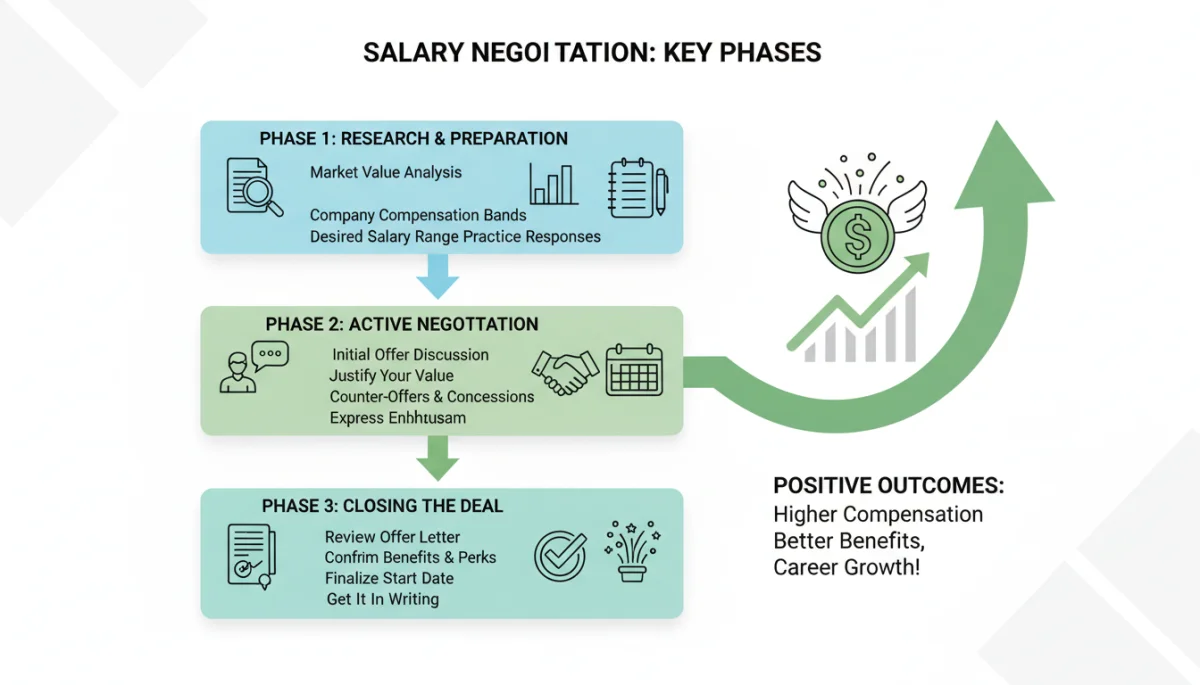
Strategic communication during negotiation is a delicate dance. By being prepared, confident, and collaborative, you significantly increase your chances of securing a compensation package that truly reflects your worth. This phase is where your preparation truly pays off.
Strategy 3: leveraging non-monetary benefits and long-term growth
While base salary is often the primary focus, a truly successful negotiation in 2026 extends beyond the immediate paycheck. Smart negotiators understand the power of non-monetary benefits and long-term growth opportunities in shaping a comprehensive and appealing compensation package. These elements can significantly enhance your job satisfaction and overall career trajectory.
Consider the value of benefits such as health insurance, retirement plans, and paid time off. These can represent a substantial portion of your total compensation. If a company cannot meet your desired salary, exploring enhancements in these areas can be a fruitful alternative. For example, a higher employer contribution to your 401(k) or more generous health coverage can have a significant financial impact over time.
Negotiating for career development and flexibility
Beyond traditional benefits, look for opportunities that foster your professional growth and work-life balance. These can be incredibly valuable, especially for long-term career success. Articulate your desire for these elements as part of your overall compensation discussion.
- Professional development: Ask about budgets for courses, certifications, or conference attendance directly related to your career path.
- Mentorship programs: Inquire about formal or informal mentorship opportunities within the organization.
- Flexible work arrangements: Discuss options for remote work, flexible hours, or compressed workweeks if these are important to your work-life integration.
These elements demonstrate your commitment to growth and can differentiate you as a forward-thinking candidate. A company that invests in your development is often a company committed to your long-term success. Furthermore, flexibility can translate into significant personal benefits, improving well-being and productivity.
By strategically integrating non-monetary benefits and long-term growth opportunities into your negotiation, you create a holistic package that caters to both your immediate financial needs and your future career aspirations. This comprehensive approach is a hallmark of truly effective negotiation.
Common pitfalls to avoid in salary discussions
Even with solid strategies, salary negotiations can be fraught with potential missteps. Being aware of common pitfalls can help you navigate these conversations more smoothly and avoid inadvertently undermining your position. A single mistake can derail an otherwise promising negotiation.
One common error is disclosing your current salary too early or being dishonest about it. Ideally, you should defer this question by stating your focus is on the value you bring to the new role and the compensation for that specific position. If pressed, provide a salary range that reflects your market value rather than your current earnings, which might be lower than what the new role commands. Another pitfall is failing to articulate your value clearly and confidently. If you don’t believe in your worth, neither will the hiring manager.
Maintaining professionalism and patience
Impatience can also be a significant hurdle. Salary negotiations often take time, involving multiple stakeholders and internal approvals. Rushing the process or issuing ultimatums can backfire, making you appear demanding or difficult to work with. Maintain a respectful and professional demeanor throughout the entire process, even if you feel frustrated or the process is taking longer than expected.
- Avoid ultimatums: Never present a ‘take it or leave it’ stance.
- Don’t badmouth previous employers: Keep all discussions positive and forward-looking.
- Be prepared for ‘no’: Understand that not all requests will be granted, and be ready to pivot.
Finally, neglecting to get the final offer in writing is a critical oversight. Always ensure all negotiated terms, including salary, benefits, start date, and any other agreed-upon conditions, are explicitly stated in a written offer letter before you formally accept. This protects both parties and provides clarity.
By being mindful of these common pitfalls, you can approach salary discussions with greater awareness and increase your chances of a successful outcome. Professionalism, patience, and clear communication are your allies in this process.
Future-proofing your career through negotiation in 2026
In the rapidly evolving professional landscape of 2026, salary negotiation is not just about securing a better immediate offer; it’s a strategic tool for future-proofing your career. The skills and confidence you develop in these discussions will serve you well throughout your professional journey, positioning you for sustained growth and success.
Successful negotiation demonstrates a range of valuable professional attributes. It shows that you are assertive, value your contributions, and possess strong communication and problem-solving skills. These are qualities that employers seek in leaders and key contributors. By effectively advocating for yourself, you signal your potential for greater responsibility and impact within an organization.
Continuous learning and adaptability in compensation discussions
The job market will continue to change, and so will compensation structures. Staying informed about industry trends, emerging skill demands, and new forms of total rewards will be crucial. This means not just negotiating once, but being prepared to have ongoing discussions about your compensation as your role evolves and your contributions grow.
- Stay updated on industry salaries: Regularly review market data for your role and industry.
- Track your achievements: Continuously document your contributions and impact.
- Develop new skills: Invest in learning that increases your market value and leverage.
Furthermore, the ability to negotiate effectively extends beyond initial job offers. It applies to performance reviews, promotion discussions, and even when exploring internal transfers. Each successful negotiation builds your confidence and refines your approach, making future discussions progressively easier and more impactful.
Ultimately, viewing salary negotiation as an ongoing strategic process, rather than a one-time event, is vital for long-term career success. By continuously refining your negotiation skills and staying adaptable, you empower yourself to consistently align your compensation with your growing value in the dynamic job market of 2026 and beyond.
| Key Strategy | Brief Description |
|---|---|
| Comprehensive Preparation | Research market value, assess your unique contributions, and quantify accomplishments before any discussion. |
| Strategic Communication | Express enthusiasm, take time to review offers, craft a confident counter-offer, and justify your requests professionally. |
| Leveraging Non-Monetary Benefits | Consider health, retirement, professional development, and work flexibility as part of the total compensation package. |
Frequently asked questions about salary negotiation
Ideally, salary discussions should be deferred until after you’ve received a job offer. Focusing on your qualifications and fit for the role first allows you to build a strong case for your value, putting you in a better negotiating position.
It is generally advisable not to accept the first offer immediately. Express gratitude and ask for time to review the complete package. This shows professionalism and allows you to formulate a well-reasoned counter-offer based on your research and value.
Try to politely redirect the question by focusing on your desired salary range for the new role, based on market value and your skills, rather than disclosing your current earnings. In some states, it’s illegal for employers to ask this.
Justify your request by providing concrete examples of your achievements, quantifying your contributions, and referencing market data for similar roles with your experience and skill set. Focus on the value you will bring to the company.
Absolutely. Many aspects of a compensation package are negotiable, including signing bonuses, vacation time, health benefits, retirement contributions, professional development, and flexible work arrangements. Consider the total value of the offer.
Conclusion
Mastering salary negotiation is an indispensable skill for navigating the modern job market, especially in 2026. By diligently preparing, communicating strategically, and considering the full spectrum of compensation, you empower yourself to secure offers that truly reflect your worth. These skills not only impact your immediate financial gain but also lay a strong foundation for continuous career growth and satisfaction. Approach each negotiation as an opportunity to advocate for your value and shape your professional future.
