Subscription Traps of 2026: Identify, Cancel, Save $50 Monthly

Understanding and dismantling subscription traps in 2026 is essential for consumers aiming to identify and cancel unwanted services, thereby saving an average of $50 monthly and regaining financial control.
In an increasingly digital world, the convenience of subscriptions often comes with a hidden cost: the proliferation of unwanted services. By 2026, navigating these digital landscapes has become even more complex, making the ability to identify and cancel subscription traps 2026 a crucial financial skill. This comprehensive guide will empower you to recognize deceptive practices, streamline your subscriptions, and ultimately save an average of $50 monthly.
The evolving landscape of subscription traps in 2026
The digital economy thrives on recurring revenue, and while many subscriptions offer genuine value, others are designed to ensnare consumers in cycles of unnoticed payments. In 2026, these tactics have evolved, becoming more sophisticated and harder to detect. From free trials that seamlessly roll into paid plans to services buried deep within bundled packages, consumers face a constant battle against financial drain.
Understanding the current state of these traps is the first step toward regaining control. Companies now leverage advanced analytics to predict user behavior, optimize pricing structures, and even personalize offers that subtly encourage long-term commitment. The sheer volume of digital services available means that a forgotten subscription can easily slip through the cracks, quietly siphoning funds from your bank account month after month.
Common tactics used by companies
Subscription services employ a variety of strategies to retain customers, sometimes bordering on deceptive. Recognizing these tactics is key to avoiding them.
- Automatic renewals after free trials: Many services offer a ‘free’ period, requiring credit card details upfront and automatically charging once the trial ends, often without a clear reminder.
- Bundled services: You might subscribe to one service and unknowingly gain access to others that also carry a recurring charge, often hidden in the fine print.
- Difficult cancellation processes: Some companies intentionally make it hard to cancel, requiring multiple steps, phone calls, or obscure website navigation.
- Price increases without clear notification: Subscription fees can subtly increase over time, with notifications easily overlooked in cluttered inboxes or vague terms of service updates.
The shift towards digital-first consumption means nearly every aspect of our lives, from entertainment to productivity tools, is now subscription-based. This convenience comes with the responsibility of vigilance. Consumers must arm themselves with knowledge and practical strategies to combat these pervasive financial pitfalls.
In conclusion, the 2026 subscription landscape demands a proactive approach. By being aware of the subtle and overt ways companies attempt to lock in recurring payments, you can begin to safeguard your finances and prevent unnecessary spending.
Identifying hidden subscriptions: where to look
Uncovering hidden subscriptions can feel like a detective mission, but with a systematic approach, you can pinpoint exactly where your money is going. Many consumers are surprised to find payments for services they no longer use or even remember signing up for. The average American could be spending hundreds annually on these forgotten charges.
Start by scrutinizing your financial statements. This is often the most revealing step. Digital banking tools and apps have made this easier than ever, allowing you to categorize expenses and identify recurring charges quickly. Don’t just glance at the total; dig into each line item, especially those with vague descriptors.
Auditing your bank statements and credit card bills
Regularly reviewing your financial transactions is paramount. Look for patterns and unfamiliar names.
- Monthly check-ins: Dedicate 15-20 minutes each month to review all transactions.
- Unfamiliar merchant names: Some companies use different names for billing than their brand name, making them harder to recognize.
- Small, recurring charges: Be wary of small charges that might seem insignificant individually but add up over time. These are often the sneakiest traps.
Beyond bank statements, consider your email inboxes. Many subscription services send confirmation emails, renewal notices, or promotional offers. Searching for keywords like ‘subscription,’ ‘renewal,’ ‘trial,’ or ‘membership’ can unearth forgotten services. Even checking your spam folder might reveal important notifications you’ve missed.
Another often-overlooked area is app store subscriptions. Both Apple App Store and Google Play Store manage subscriptions tied to your account. Many users forget about these, assuming they’ve canceled an app when they’ve only deleted it from their device. Always check your app store settings for active subscriptions.
Ultimately, identifying hidden subscriptions requires diligence and a routine. By consistently reviewing your financial records and digital accounts, you can catch these unwanted charges before they significantly impact your budget.
Leveraging technology: apps and tools for subscription management
In 2026, managing subscriptions doesn’t have to be a manual chore. A new generation of financial technology (fintech) tools and apps has emerged to help consumers track, categorize, and even cancel recurring payments. These platforms offer a centralized view of your financial commitments, making it easier than ever to identify subscription traps 2026.
These tools often connect directly to your bank accounts and credit cards, automatically scanning transactions for recurring payments. They can alert you to upcoming renewals, price changes, and even offer suggestions for services you might want to cancel based on your usage patterns. The automation provided by these apps can save significant time and prevent costly oversights.
Popular subscription management platforms
Several apps stand out for their effectiveness in helping consumers manage their digital subscriptions.
- Truebill (now Rocket Money): This app helps users identify and cancel unwanted subscriptions, negotiate bills, and track spending.
- Trim: Trim analyzes your spending, finds subscriptions, and can even negotiate your bills for you, all through SMS or email.
- Bobby: While simpler, Bobby helps you keep track of all your subscriptions and their due dates, reminding you when payments are coming up.
Beyond dedicated subscription management apps, many personal finance tools like Mint or YNAB (You Need A Budget) also offer features to track recurring expenses. While their primary focus isn’t solely on subscriptions, their comprehensive overview of your finances can still be invaluable in spotting unwanted charges. Integration with banking institutions has also improved, meaning these tools can often provide real-time updates on your spending.
The key to effectively using these tools is to grant them the necessary permissions to access your financial data securely. Always choose reputable applications with strong privacy policies. By harnessing the power of these technological aids, you can transform a daunting task into a streamlined, automated process, ensuring no subscription goes unnoticed.
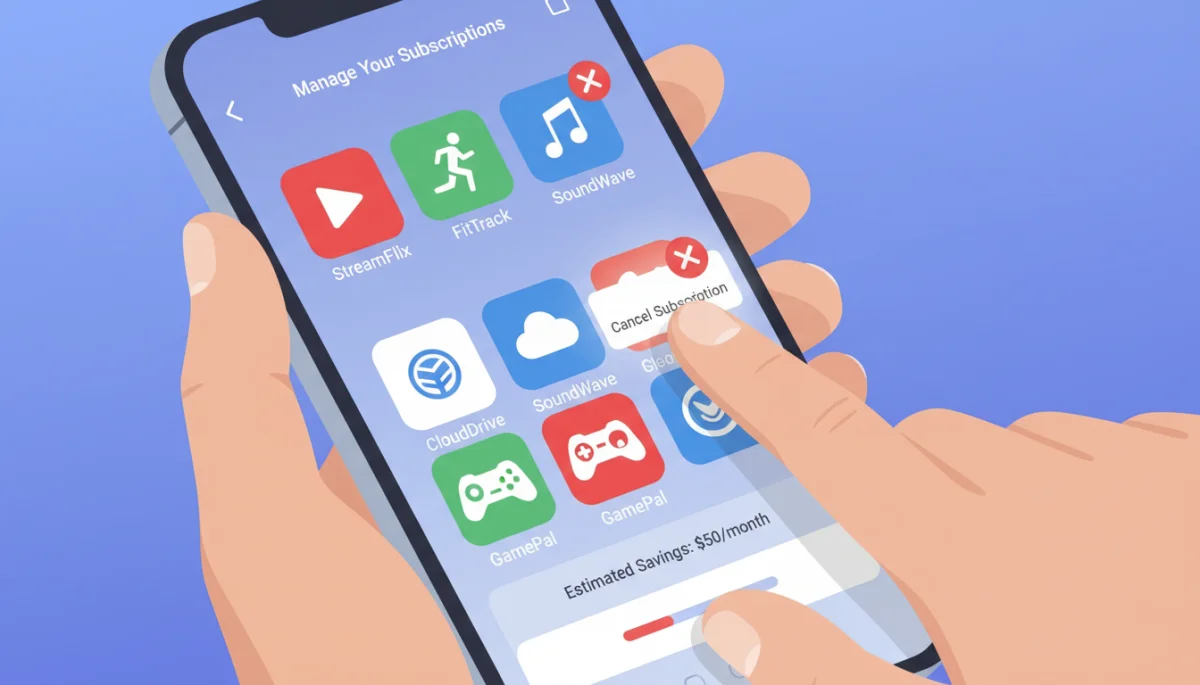
In summary, embracing technology for subscription management is a smart financial move in 2026. These tools provide the necessary visibility and control to prevent overspending on services you no longer need or want.
Strategic cancellation: best practices for ending unwanted services
Canceling unwanted subscriptions can sometimes be more challenging than signing up. Companies often employ tactics to make the process cumbersome, hoping consumers will give up. However, with a strategic approach, you can navigate these hurdles effectively and ensure your cancellations stick. The goal is to make the process as swift and definitive as possible, preventing any further charges.
Before attempting to cancel, gather all necessary information: account details, billing dates, and any relevant login credentials. This preparedness will streamline the process, especially if you encounter automated systems or unhelpful customer service representatives. Remember, persistence is key when dealing with deliberately complex cancellation flows.
Step-by-step cancellation guide
Follow these steps to ensure a successful cancellation without unnecessary hassle.
- Review terms and conditions: Understand the cancellation policy, notice periods, and any potential fees.
- Prioritize direct methods: Whenever possible, use the company’s official cancellation portal or direct contact methods (phone, email).
- Document everything: Keep records of cancellation confirmations, reference numbers, and the date and time of your requests.
- Follow up: If you don’t receive confirmation within a reasonable timeframe, follow up to ensure the cancellation was processed.
If you encounter significant resistance or deliberately obscure cancellation paths, don’t hesitate to leverage consumer protection resources. In the United States, the Federal Trade Commission (FTC) and the Better Business Bureau (BBB) can be valuable allies. Reporting deceptive practices not only helps you but also protects other consumers from similar subscription traps 2026.
For subscriptions tied to credit cards, some card companies offer virtual card numbers or one-time use cards that automatically expire. This can be a proactive way to prevent automatic renewals for services you only intend to use for a short period. Additionally, if a company refuses to cancel or continues to charge you after a confirmed cancellation, your credit card provider may be able to dispute the charges on your behalf.
Effectively canceling unwanted services requires a combination of preparation, persistence, and knowing when to escalate. By adopting these best practices, you can confidently sever ties with services that no longer serve your financial interests.
Saving an average of $50 monthly: real-world impact
The cumulative effect of identifying and canceling unwanted subscriptions goes far beyond simply stopping a few dollars from leaving your account. For many, it translates into a tangible and significant monthly saving, often averaging $50 or more. This reclaimed money can then be redirected toward more meaningful financial goals, demonstrating the real-world impact of proactive subscription management.
Consider what an extra $50 per month could mean for your personal finances. Over a year, that’s $600. This amount could contribute significantly to an emergency fund, pay down debt, boost retirement savings, or fund a desired purchase. The psychological benefit of feeling in control of your finances, rather than being at the mercy of forgotten charges, is also invaluable.
Redirecting your savings
Once you’ve identified and canceled your unwanted subscriptions, consider how to best utilize your newfound savings.
- Emergency fund: Build or bolster your emergency savings to create a financial safety net.
- Debt reduction: Use the extra funds to pay down high-interest credit card debt or personal loans faster.
- Investment: Start or increase contributions to a retirement account or other investment vehicles.
- Discretionary spending: Allocate a portion for guilt-free spending on experiences or items you truly value.
Many individuals underestimate how quickly small, recurring charges accumulate. A $9.99 streaming service here, a $12.99 software subscription there, and a $4.99 app membership can easily add up to $50 or more each month. By actively managing these expenses, you’re not just saving money; you’re optimizing your budget and making your money work harder for you.
The process also cultivates better financial habits. Regular review of your subscriptions instills a discipline that can extend to other areas of your spending. It encourages a more mindful approach to consumption, prompting you to evaluate the true value of every service you pay for. This conscious spending is a cornerstone of long-term financial health.
In conclusion, the average $50 monthly saving is not just a number; it’s a gateway to greater financial freedom and security. By taking action against subscription traps 2026, you’re investing in your own economic well-being.
Preventing future subscription traps: proactive strategies
While identifying and canceling existing subscription traps is crucial, the ultimate goal is to prevent them from happening in the first place. Proactive strategies can safeguard your finances and ensure you only pay for services you genuinely intend to use. This forward-thinking approach is essential in the dynamic digital landscape of 2026, where new services and billing models constantly emerge.
One of the most effective preventive measures is to be highly selective about signing up for free trials. Always read the terms and conditions carefully, paying close attention to what happens after the trial period ends. Set immediate reminders in your calendar to cancel before the trial converts to a paid subscription if you don’t intend to continue the service.
Establishing smart subscription habits
Cultivate habits that minimize your risk of falling into future subscription traps.
- Use virtual credit cards: Many banks offer virtual card numbers with spending limits or expiration dates, perfect for one-time trials.
- Consolidate payments: Whenever possible, use a single credit card for all subscriptions, making it easier to track and manage.
- Annual review: Schedule a yearly financial audit specifically for subscriptions to ensure they still align with your needs.
- Question every sign-up: Before committing, ask yourself if the service is truly essential and if you’ll use it consistently.
Educating yourself about common marketing tactics is another powerful defense. Companies often use urgency, perceived value, or social proof to encourage sign-ups. By recognizing these psychological triggers, you can make more rational decisions about your spending. Be skeptical of offers that seem too good to be true, as they often come with hidden commitments.
Furthermore, consider adopting a ‘minimalist’ approach to subscriptions. Before adding a new service, evaluate if it truly enhances your life or if an existing, paid-for service already fulfills that need. This mindset promotes conscious consumption and reduces the likelihood of accumulating unnecessary recurring expenses. The less you sign up for, the fewer potential traps you’ll encounter.
By implementing these proactive strategies, you can build a robust defense against future subscription traps 2026. This approach not only saves you money but also instills greater financial discipline and peace of mind.
Consumer rights and advocacy in the digital age
As subscription models continue to evolve, so too do the consumer protection mechanisms designed to safeguard individuals from unfair practices. In 2026, understanding your rights and knowing where to turn for advocacy is more important than ever. While individual vigilance is crucial, collective action and regulatory oversight play a significant role in curbing predatory subscription traps.
Various government agencies and non-profit organizations are dedicated to protecting consumers from deceptive billing practices. These bodies investigate complaints, enforce regulations, and provide resources to help individuals resolve disputes with companies. Familiarizing yourself with these resources can be a powerful tool when self-cancellation proves difficult or impossible.
Key consumer protection resources
Knowing which organizations can assist you is vital when facing subscription challenges.
- Federal Trade Commission (FTC): The FTC works to prevent fraudulent, deceptive, and unfair business practices. You can file a complaint directly on their website.
- Better Business Bureau (BBB): The BBB allows consumers to file complaints against businesses and provides a platform for dispute resolution.
- State Attorney General’s Office: Your state’s attorney general can intervene in cases of unfair business practices within your state.
- Consumer Financial Protection Bureau (CFPB): While primarily focused on financial products, the CFPB can offer guidance on billing disputes related to financial services offered through subscriptions.
Beyond formal complaints, consumer advocacy groups actively work to raise awareness about subscription traps and push for stronger regulations. Supporting these organizations or participating in their campaigns can contribute to a safer digital marketplace for everyone. They often provide valuable insights into emerging threats and effective strategies for consumers.
The legal landscape surrounding digital subscriptions is constantly adapting to new business models. Recent legislative efforts aim to simplify cancellation processes and mandate clearer disclosure of terms. Staying informed about these developments can empower you to leverage new protections as they become available. Companies are increasingly being held accountable for their billing practices, which benefits consumers.
In conclusion, consumer rights and advocacy are critical pillars in the fight against subscription traps 2026. By understanding your rights and utilizing available resources, you can effectively challenge unfair practices and contribute to a more transparent and equitable subscription economy.
| Key Strategy | Brief Description |
|---|---|
| Audit Statements Monthly | Regularly review bank/credit card statements for unfamiliar or recurring charges. |
| Use Management Apps | Leverage fintech tools like Rocket Money or Trim to track and cancel subscriptions. |
| Document Cancellations | Keep records of all cancellation requests and confirmations to avoid future charges. |
| Proactive Prevention | Be selective with trials, use virtual cards, and schedule annual subscription reviews. |
Frequently asked questions about subscription traps
The most common traps include free trials that automatically convert to paid subscriptions, services bundled without clear disclosure, and intentionally complex cancellation processes. Many companies also implement subtle price increases, relying on consumers overlooking these changes in their billing statements.
Regularly review your bank and credit card statements for unfamiliar merchant names or small, recurring charges. Look for any transaction you don’t immediately recognize. Many digital banking apps allow you to filter transactions by category or vendor, simplifying the process of spotting recurring payments.
Yes, several apps like Rocket Money (formerly Truebill) and Trim specialize in identifying and managing subscriptions. They connect to your financial accounts, highlight recurring charges, and can even assist with cancellation or bill negotiation. These tools offer a centralized view of your commitments.
Document all your attempts to cancel. If direct methods fail, contact your credit card company to dispute charges or block future payments. You can also file a complaint with consumer protection agencies like the Federal Trade Commission (FTC) or the Better Business Bureau (BBB) for assistance.
Many consumers report saving an average of $50 monthly, and often more, by actively managing and canceling unwanted subscriptions. This can amount to $600 annually, which can then be redirected towards savings, debt reduction, or other important financial goals, significantly impacting your budget.
Conclusion
Navigating the complex world of digital subscriptions in 2026 requires diligence and strategic action. By understanding the evolving nature of subscription traps 2026, leveraging technological tools for management, and adopting proactive habits, consumers can effectively identify and cancel unwanted services. The tangible benefit of saving an average of $50 monthly not only improves personal finances but also fosters greater financial control and peace of mind, empowering individuals to make informed choices about their spending.
