Personal Finance Resolutions 2026: 10% Net Worth Increase
Setting effective personal finance resolutions for 2026 is crucial for significant wealth growth, with a clear target of increasing your net worth by 10% within 12 months through strategic planning and disciplined execution.
As we approach a new year, the opportunity to redefine our financial trajectory becomes paramount. For many, the goal of improving financial health is a perennial resolution, but for 2026, let’s aim for something concrete: a 10% increase in net worth. Achieving this ambitious yet attainable target requires more than just good intentions; it demands a strategic, disciplined approach to your money. This guide will walk you through actionable personal finance resolutions 2026 designed to help you reach this significant milestone.
Understanding Your Starting Point: The Net Worth Snapshot
Before you can chart a course to increase your net worth, you must first understand where you currently stand. A net worth statement is a simple yet powerful tool that provides a snapshot of your financial health at a specific moment in time. It’s the difference between what you own (assets) and what you owe (liabilities).
To begin, gather all your financial statements. This includes bank accounts, investment portfolios, retirement accounts, credit card statements, mortgage documents, and any other loans you might have. Be thorough, as an accurate assessment is the foundation for effective planning.
Calculating Your Net Worth
The calculation is straightforward: total assets minus total liabilities. Assets include cash, checking and savings accounts, investment accounts (stocks, bonds, mutual funds), retirement accounts (401k, IRA), real estate equity, vehicles, and other valuable possessions. Liabilities encompass credit card debt, personal loans, student loans, car loans, and your mortgage.
- Assets: Cash, bank accounts, investments, retirement funds, real estate equity, vehicles.
- Liabilities: Credit card debt, personal loans, student loans, auto loans, mortgage.
- Net Worth: Total Assets – Total Liabilities.
Once you have this number, you have your baseline. This initial figure will serve as your benchmark against which you’ll measure your 10% growth throughout 2026. Regularly reviewing this snapshot will keep you on track and motivated.
Crafting a Realistic Budget: Your Financial Roadmap
A well-structured budget is the cornerstone of any successful financial plan. It allows you to track your income and expenses, identify areas for savings, and ensure your spending aligns with your financial goals. For 2026, your budget isn’t just about cutting back; it’s about optimizing your cash flow to fuel your net worth growth.
Start by categorizing your spending. Many people find it helpful to use the 50/30/20 rule: 50% of your income for needs, 30% for wants, and 20% for savings and debt repayment. While this is a good guideline, adapt it to your unique circumstances and income level.
Identifying Spending Leaks
Review your past few months of expenditures. Are there recurring subscriptions you no longer use? Can you negotiate lower rates on insurance or utilities? Even small, consistent savings can add up significantly over a year. Consider a temporary spending freeze on non-essential items to jumpstart your savings.
- Track all income and expenses: Use apps or spreadsheets to monitor your money.
- Categorize spending: Differentiate between needs, wants, and savings/debt.
- Automate savings: Set up automatic transfers to your savings or investment accounts.
Your budget should be a living document, reviewed and adjusted monthly. As your income or expenses change, so should your budget. This flexibility ensures it remains a relevant and effective tool for achieving your 10% net worth increase.
Strategic Debt Reduction: Freeing Up Future Capital
High-interest debt is a significant impediment to wealth accumulation. Every dollar spent on interest payments is a dollar that cannot be invested or saved. Therefore, a key resolution for 2026 must be strategic debt reduction, particularly focusing on liabilities with the highest interest rates.
Prioritize credit card debt, personal loans, and any other unsecured loans that carry steep interest charges. Two popular strategies for debt repayment are the debt snowball and the debt avalanche methods.
Debt Snowball vs. Debt Avalanche
The debt snowball method focuses on paying off the smallest debts first, providing psychological wins that keep you motivated. The debt avalanche method, conversely, targets debts with the highest interest rates first, saving you more money in the long run. Choose the method that best suits your personality and financial situation.
Beyond these methods, explore options for debt consolidation or refinancing if it results in a lower interest rate. Be cautious, however, not to extend the repayment period unnecessarily, which could lead to paying more in the long run. The goal is to eliminate debt efficiently, freeing up more capital for investments.
By diligently attacking your high-interest debts, you not only reduce your liabilities but also liberate a portion of your monthly income that can then be redirected towards growing your assets, directly contributing to your 10% net worth goal.
Smart Investing for Growth: Making Your Money Work for You
Simply saving money won’t be enough to achieve a 10% net worth increase in 2026. You need to make your money work harder through smart investing. This doesn’t mean taking excessive risks, but rather understanding your risk tolerance and allocating your capital strategically.
For beginners, diversified index funds or exchange-traded funds (ETFs) are excellent starting points. They offer broad market exposure and diversification at a low cost. Consider increasing your contributions to employer-sponsored retirement plans like a 401(k), especially if your employer offers a matching contribution, which is essentially free money.
Diversification and Long-Term Vision
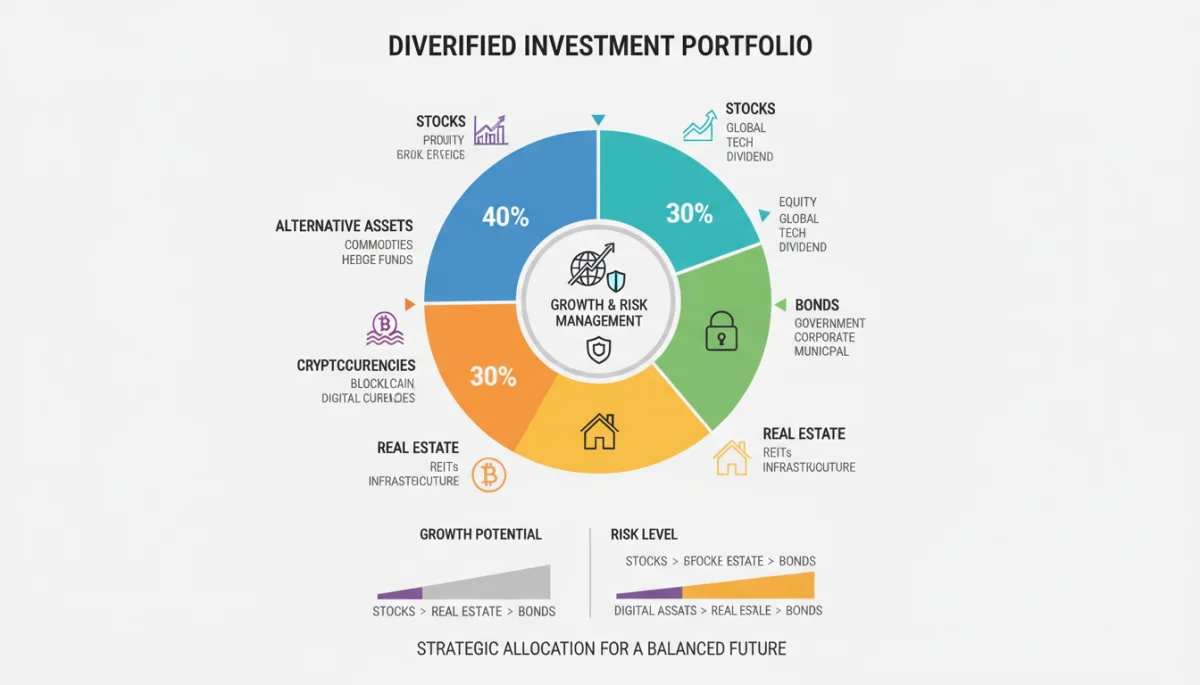
Diversification is crucial to mitigate risk. Don’t put all your eggs in one basket. Spread your investments across different asset classes, industries, and geographies. While aiming for a 10% net worth increase in 12 months, maintain a long-term perspective with your investments, as market fluctuations are normal.
- Increase retirement contributions: Maximize 401(k) or IRA contributions.
- Explore low-cost index funds/ETFs: Achieve diversification easily.
- Consider a brokerage account: For additional investment opportunities beyond retirement.
- Regularly review and rebalance: Ensure your portfolio aligns with your goals and risk tolerance.
Educate yourself on basic investment principles. Resources like reputable financial news outlets, books, and online courses can provide valuable insights. The more informed you are, the more confident you’ll be in making investment decisions that support your net worth growth.
Maximizing Income Streams: Beyond Your Primary Job
While budgeting and investing are essential, increasing your income can significantly accelerate your journey towards a 10% net worth increase. In 2026, consider exploring additional income streams beyond your primary employment.
This could involve freelancing, consulting, starting a small side business, or even monetizing a hobby. The gig economy offers numerous opportunities to earn extra money using existing skills or developing new ones. Think about what you’re good at and how you can offer that value to others.
Leveraging Skills for Side Gigs
Platforms like Upwork, Fiverr, or even local community boards can connect you with opportunities. If you have a car, ridesharing or delivery services can provide flexible income. For those with creative talents, selling handmade goods online or offering art commissions might be viable.
- Identify marketable skills: What are you good at that others would pay for?
- Explore online platforms: Freelancing sites, e-commerce platforms.
- Develop new skills: Invest in courses or certifications to increase your earning potential.
- Negotiate salary or seek promotions: Don’t overlook opportunities within your current role.
Every extra dollar earned, especially if directed towards savings or investments, will bring you closer to your net worth goal. The key is to be proactive and consistent in pursuing these additional income avenues.
Protecting Your Wealth: Insurance and Emergency Funds
Increasing your net worth is not just about growing assets; it’s also about protecting what you already have and mitigating potential financial setbacks. An often-overlooked aspect of personal finance resolutions for 2026 is ensuring adequate insurance coverage and building a robust emergency fund.
An emergency fund acts as a financial safety net, covering unexpected expenses like job loss, medical emergencies, or car repairs without forcing you to dip into investments or incur high-interest debt. Aim for at least three to six months’ worth of essential living expenses stored in an easily accessible, high-yield savings account.
Reviewing Insurance Policies
Take the time to review your existing insurance policies: health, auto, home, and life. Are your coverages adequate? Are you paying too much for them? Shopping around and comparing quotes can often lead to significant savings without compromising protection. For example, if your family depends on your income, life insurance is a critical consideration.
- Build a robust emergency fund: 3-6 months of living expenses.
- Review health insurance: Ensure adequate coverage for medical needs.
- Assess auto and home insurance: Look for better rates and suitable coverage.
- Consider life and disability insurance: Protect your income and dependents.
By safeguarding your current assets and preparing for the unexpected, you create a stable foundation upon which your net worth can grow, ensuring that your efforts towards a 10% increase are not derailed by unforeseen circumstances.
Monitoring Progress and Adjusting Your Plan
Setting personal finance resolutions for 2026 is only the first step; consistent monitoring and periodic adjustments are crucial for success. Your financial journey is dynamic, and your plan should be flexible enough to adapt to life changes, market shifts, and new opportunities.
Schedule regular financial reviews, perhaps monthly or quarterly, to assess your progress. Revisit your net worth calculation, compare your actual income and expenses against your budget, and evaluate the performance of your investments. Are you on track to achieve your 10% net worth increase?
Financial Check-ins and Adaptability
If you find yourself falling behind, don’t get discouraged. Instead, use it as an opportunity to analyze what went wrong and make necessary adjustments. Perhaps your budget was too restrictive, or an unexpected expense derailed your savings. Adaptability is key. Your financial plan isn’t set in stone; it’s a living document that evolves with your life.
- Monthly/Quarterly reviews: Check net worth, budget, and investment performance.
- Identify deviations: Understand why you might be off track.
- Adjust strategies: Modify your budget, investment approach, or debt repayment plan as needed.
- Celebrate milestones: Acknowledge small victories to maintain motivation.
By consistently monitoring your progress and being willing to adjust your strategies, you maintain control over your financial destiny and significantly increase your chances of achieving your ambitious goal of a 10% net worth increase in 2026.
| Key Resolution | Brief Description |
|---|---|
| Net Worth Assessment | Calculate current assets minus liabilities to establish a financial baseline. |
| Optimized Budgeting | Create and adhere to a budget that prioritizes savings and investment contributions. |
| Strategic Investing | Diversify investments and increase contributions to grow assets effectively. |
| Debt Prioritization | Focus on reducing high-interest debt to free up capital for wealth building. |
Frequently Asked Questions About 2026 Financial Goals
To accurately calculate your net worth, list all your assets (cash, investments, property value) and subtract your total liabilities (debts, loans, mortgages). Use current market values for assets like real estate and investments for the most precise figure.
The most effective way is to automate savings first, then track every expense using an app or spreadsheet. Regular weekly reviews help identify overspending quickly. Be flexible and adjust your budget as needed, rather than abandoning it entirely.
Generally, prioritize high-interest debt reduction (e.g., credit cards) as the guaranteed return often outweighs potential investment gains. Once high-interest debt is managed, a balanced approach of continued debt payment and investing is usually optimal.
Achieving 10% in one year with only ‘safe’ options can be challenging. A diversified portfolio including low-cost index funds or ETFs, combined with increased retirement contributions, offers a balanced approach for growth while managing risk effectively.
It’s recommended to review your financial progress at least monthly. This allows you to quickly identify any deviations from your budget or investment plan, make necessary adjustments, and stay motivated towards your 10% net worth increase target.
Conclusion
Achieving a 10% increase in your net worth by the end of 2026 is an ambitious yet entirely attainable goal with the right strategy and consistent effort. By meticulously calculating your starting net worth, implementing a disciplined budget, aggressively tackling high-interest debt, making informed investment decisions, and exploring additional income streams, you lay a solid foundation for financial growth. Remember to protect your gains with adequate insurance and an emergency fund, and critically, to regularly monitor and adjust your plan. Your financial future is a journey, not a destination, and 2026 can be the year you make substantial progress towards lasting financial well-being.
