Community College Transfers: Maximize 60 Credits for a 4-Year Degree
Maximizing 60 community college credits for a 4-year degree by 2026 involves meticulous planning, strategic course selection, and proactive engagement with transfer agreements to ensure a smooth academic transition.
Embarking on higher education is a significant step, and for many, beginning at a community college offers a smart, cost-effective pathway. This guide, The Ultimate Guide to Community College Transfers: Maximizing 60 Credits for a 4-Year Degree in 2026, will illuminate the path to successfully transferring your hard-earned credits, ensuring a seamless transition to a bachelor’s program.
Understanding the Transfer Landscape: Why 60 Credits Matter
Starting at a community college can be an excellent strategic move for aspiring four-year university graduates. The concept of maximizing 60 credits is pivotal because it often represents the equivalent of two full years of college coursework, laying the groundwork for junior status at a university. This approach saves money and provides a flexible entry point into higher education.
The landscape of higher education is constantly evolving, with more universities recognizing the value and rigor of community college education. By focusing on accumulating 60 transferable credits, students can streamline their academic journey, avoiding unnecessary courses and financial burdens. This initial phase requires careful planning and an understanding of how credits articulate between institutions.
The Strategic Advantage of Community Colleges
Community colleges offer numerous benefits beyond just cost savings. They provide smaller class sizes, personalized attention, and often more flexible schedules, which can be particularly advantageous for students balancing work or family commitments. These environments foster strong foundational learning before students transition to larger university settings.
- Cost-Effectiveness: Significantly lower tuition rates compared to four-year universities.
- Academic Support: Access to dedicated advising and tutoring services.
- Flexibility: Diverse course offerings and scheduling options.
- Smooth Transition: Opportunity to adapt to college-level academics in a supportive environment.
Understanding the value of these 60 credits is the first step towards a successful transfer. It’s not just about accumulating credits; it’s about accumulating the right credits that will seamlessly apply to your desired bachelor’s degree program. This strategic foresight is what truly maximizes your investment in community college education.
Crafting Your Academic Plan: Course Selection for Transfer Success
A well-defined academic plan is the cornerstone of a successful community college transfer. It involves more than just picking courses; it requires a deep understanding of your target university’s requirements and how your community college credits will articulate. This planning should ideally begin even before your first semester.
Selecting the right courses is critical to avoid wasting time and money on credits that won’t transfer. Students should focus on general education requirements, prerequisite courses for their chosen major, and any specific courses mandated by their target university. Being proactive in this stage can save immense frustration down the line.
Identifying Transferable Courses
Not all community college courses are created equal when it comes to transferability. Most states have established articulation agreements or transfer guides that explicitly list which courses from community colleges will transfer to public universities within the state. These resources are invaluable and should be consulted early and often.
- General Education: Prioritize courses that fulfill core general education requirements (e.g., English composition, mathematics, humanities, social sciences).
- Major Prerequisites: Identify and complete introductory courses specific to your intended major (e.g., Calculus for engineering, Introduction to Psychology for psychology majors).
- Electives: Choose electives carefully, ensuring they are academic in nature and have a high likelihood of transferring, even if not directly applied to a major requirement.
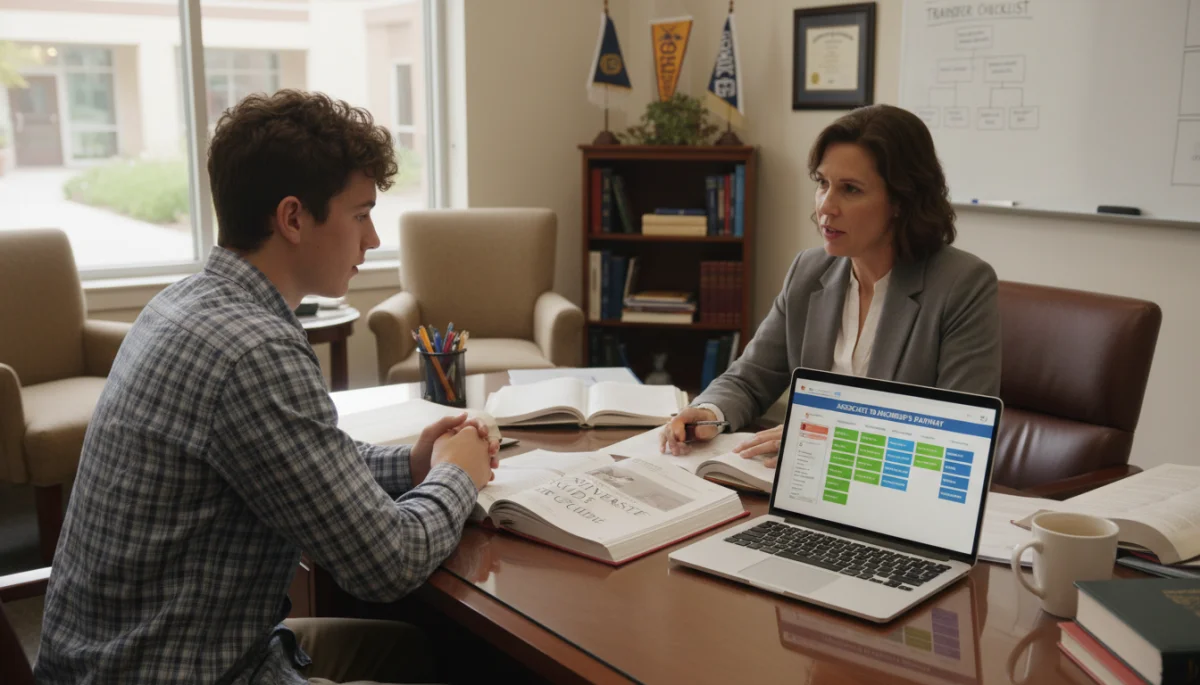
Working closely with both community college advisors and university admissions counselors is essential. Their expertise can help you navigate complex transfer policies and ensure your course selections align perfectly with your 4-year degree aspirations. This collaborative approach minimizes surprises and maximizes the impact of your 60 credits.
Navigating Transfer Agreements and Pathways
Transfer agreements are formal partnerships between community colleges and four-year universities designed to simplify the transfer process. These agreements are crucial tools for students aiming to maximize their 60 credits and ensure a smooth transition. Understanding and utilizing these pathways can significantly reduce uncertainty and enhance your chances of admission.
Many states have system-wide articulation agreements, such as the Associate of Arts (AA) or Associate of Science (AS) degrees guaranteeing admission to a state university upon completion. These agreements often specify general education requirements and, sometimes, major-specific courses that will transfer as a block.
Types of Transfer Agreements
There are several types of transfer agreements, each with its own advantages. Identifying which agreements apply to your situation is a critical step in your transfer journey. These agreements provide a structured roadmap to your bachelor’s degree.
- Guaranteed Admission Agreements: These agreements guarantee admission to a specific university or university system upon completion of an associate degree with a minimum GPA.
- Program-Specific Agreements: These agreements outline specific courses that will transfer for a particular major, ensuring that your community college coursework directly applies to your chosen field of study.
- Reverse Transfer Agreements: Some institutions allow students to transfer university credits back to their community college to earn an associate degree after transferring, even if they didn’t complete it initially.
Proactively researching and understanding these agreements is paramount. Students should consult their community college transfer center, university admissions offices, and state higher education websites for the most up-to-date information. Leveraging these established pathways is key to a successful transfer experience.
The Application Process: Standing Out as a Transfer Student
Applying as a transfer student has unique considerations compared to applying as a first-year student. While your community college transcript and GPA are paramount, universities also look at other factors to assess your readiness and fit. Presenting a strong application is crucial for maximizing your 60 credits and securing your spot.
Beyond academic performance, universities often consider essays, letters of recommendation, and extracurricular involvement. These elements provide a holistic view of your capabilities and commitment. A compelling application demonstrates your motivation and how your community college experience has prepared you for university-level studies.
Key Components of a Strong Transfer Application
To stand out, transfer applicants should meticulously prepare each part of their application. Every component offers an opportunity to showcase your strengths and explain your academic journey.
- Academic Transcript: A strong GPA in transferable courses is the most important factor. Aim for a GPA of 3.0 or higher, with even higher for competitive majors.
- Personal Statement/Essay: Use this to explain your reasons for transferring, your academic and career goals, and how your community college experience has shaped you.
- Letters of Recommendation: Seek recommendations from professors who know you well and can speak to your academic abilities and work ethic.
- Extracurricular Activities: Highlight any involvement in clubs, volunteer work, or leadership roles, demonstrating your engagement and well-roundedness.
Meeting application deadlines and understanding specific university requirements are also critical. Many universities have separate deadlines and procedures for transfer students. Early submission can sometimes be advantageous, allowing more time for review and potential follow-up if needed. A well-prepared application significantly boosts your chances of a successful transfer.
Financial Aid and Scholarships for Transfer Students
Financing a four-year degree after community college is a significant concern for many students. Fortunately, numerous financial aid options and scholarships are specifically available for transfer students, helping to make the transition more affordable. Understanding these resources is vital for maximizing your educational investment.
Just like first-year students, transfer students are eligible for federal and state financial aid programs, including grants, loans, and work-study. However, there are also scholarships exclusively designed for students transferring from community colleges, recognizing their unique pathway to a bachelor’s degree.
Exploring Financial Resources
Proactive research and application are key to securing financial assistance. Do not assume that because you are a transfer student, fewer options are available. In fact, many institutions actively seek to support transfer students.
- FAFSA Submission: Complete the Free Application for Federal Student Aid (FAFSA) as early as possible each year to determine your eligibility for federal and state aid.
- University-Specific Scholarships: Many universities offer scholarships specifically for incoming transfer students, often based on academic merit or financial need. Check their financial aid websites.
- Community College Scholarships: Your community college may have scholarships for students intending to transfer, sometimes in partnership with specific four-year institutions.
- External Scholarships: Look for national and local scholarships that target transfer students or students pursuing your specific major.
It is important to pay close attention to deadlines for both financial aid applications and scholarship opportunities, as these can vary widely. Consulting with financial aid advisors at both your community college and target university can provide personalized guidance and uncover opportunities you might otherwise miss.
The First Semester at a Four-Year University: Thriving After Transfer
Successfully transferring your 60 credits is a significant achievement, but the journey doesn’t end there. The first semester at a four-year university presents new academic and social environments that require adaptation. Thriving in this new setting involves proactive engagement, utilizing available resources, and building new connections.
Many transfer students find the academic pace and social dynamics at a university different from community college. Be prepared for larger classes, different teaching styles, and a broader range of extracurricular activities. Embracing these changes and actively seeking support will ensure a smooth integration.
Strategies for a Successful Transition
Making the most of your initial semester requires intentional effort. These strategies can help you settle in quickly and perform well academically and socially.
- Orientation Programs: Attend transfer student orientation sessions to learn about campus resources and meet other transfer students.
- Academic Advising: Schedule regular meetings with your new university advisor to confirm your degree plan and course selections.
- Get Involved: Join clubs, organizations, or intramural sports to build a social network and feel more connected to the campus community.
- Utilize Support Services: Don’t hesitate to use the writing center, tutoring services, or counseling resources if needed.
Remember that many students have successfully navigated this path before you. Your community college experience has provided you with a strong foundation. By being proactive, open to new experiences, and utilizing the resources available, you can confidently thrive in your new university environment and successfully complete your 4-year degree.
| Key Point | Brief Description |
|---|---|
| Strategic Course Selection | Carefully choose general education and major prerequisite courses that align with your target university’s requirements. |
| Leverage Transfer Agreements | Utilize state-wide and program-specific articulation agreements to ensure seamless credit transfer and guaranteed admission where applicable. |
| Strong Application Package | Maintain a high GPA, craft a compelling personal statement, gather strong recommendations, and highlight extracurriculars. |
| Seek Financial Aid | Actively apply for federal aid, university-specific, and external scholarships designed for transfer students. |
Frequently Asked Questions About Community College Transfers
Most universities accept up to 60-70 credits from community colleges, generally covering the first two years of a bachelor’s degree. However, the exact number depends on the specific university, major, and existing transfer agreements. It’s crucial to verify your credits with the target institution early in your planning.
An articulation agreement is a formal partnership between community colleges and universities that guarantees the transferability of specific courses or entire associate degrees. It simplifies the transfer process by outlining which credits will be accepted, often ensuring junior status upon admission, and can sometimes guarantee admission.
While requirements vary, most universities look for a minimum GPA of 2.0 or 2.5 for transfer admission. However, competitive programs or universities may require a GPA of 3.0 or higher. Maintaining a strong academic record significantly improves your chances of acceptance.
Academic advising is critically important. Advisors at both your community college and target university can help you select the right courses, understand transfer policies, navigate articulation agreements, and ensure your academic plan aligns with your degree goals. Regular consultations can prevent costly mistakes.
Yes, transfer students are fully eligible for federal, state, and institutional financial aid, including grants, loans, and scholarships. Many universities and external organizations offer scholarships specifically for transfer students. Completing the FAFSA is the first step to accessing these crucial financial resources.
Conclusion
Navigating the path from community college to a four-year university, especially with the goal of maximizing 60 credits for a 2026 degree, is a journey rich with opportunity. By embracing meticulous planning, strategic course selection, and diligent engagement with transfer agreements, students can achieve a seamless and cost-effective transition. The key lies in proactive communication with advisors, understanding financial aid options, and preparing a robust application. Your community college experience is a valuable foundation; with the right strategies, it will propel you successfully toward your bachelor’s degree and future career aspirations.
